Table of Contents
Learning how to enable battery saving mode on Windows 11 doesn't have to be complicated. This updated guide presents a clear workflow, practical checks, and troubleshooting advice you can use while completing the process.
Key Takeaways
- Learn how to use quick settings.
- Learn how to turn on power saving mode in settings.
- Follow the recommended steps in order to avoid common mistakes with enable battery saving mode on Windows 11.
1. Use Quick Settings
Click the area containing the Wi-Fi, battery, and speaker icons or press Windows + A to open the Quick Settings menu.

Then, just select Battery Saver.
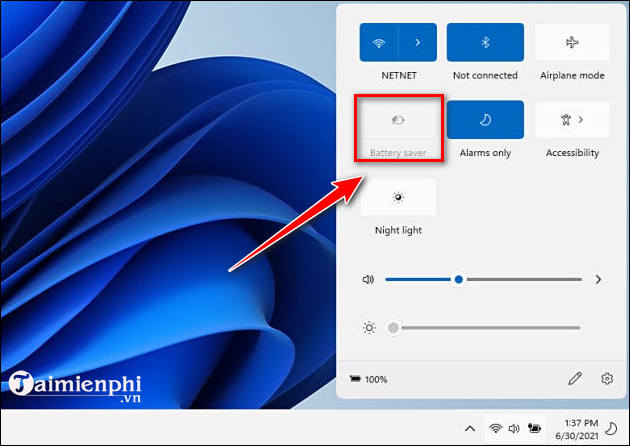
Open the quick settings menu and select Battery Saver. This helps you turn off battery saver.
You can also turn off the Windows 11 startup sound to reduce noise and save battery.
2. Turn on Power Saving Mode in Settings
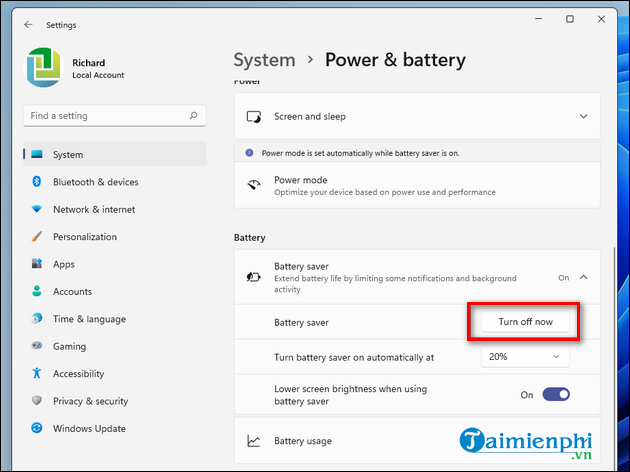
Step 1: Select the Windows icon => select Settings or press Windows + I to open the Settings application.

Step 2: In the Settings window, select System => click Power & battery.

Step 3: In the Power & battery window, select Turn on now under Battery.

Just follow the same steps => click Turn off now to turn it off if you want to turn off battery saving mode.
It means your laptop is plugged in if the Battery Saver option is grayed out and you can't click it. Unplug the charger to enable battery saver on Windows 11. Note that you won't see this option if you're using a desktop computer.
Final Thoughts
The most reliable way to handle enable battery saving mode on Windows 11 is to follow the process in order, verify each important setting, and test the result before moving on. Use the guidance above as a practical reference, then adjust the details for your device, software version, or specific goal.
FAQ
What should I check before I enable battery saving mode on Windows 11?
Use the latest available software, confirm that your device meets the requirements, and make sure you have the necessary permissions, account access, or backup before changing anything.
Why might I be unable to enable battery saving mode on Windows 11?
Common causes include outdated software, missing permissions, incompatible settings, incomplete setup steps, or a temporary network problem. Recheck the process from the beginning and restart the app or device if needed.
Is it safe to enable battery saving mode on Windows 11?
It is generally safe when you use official tools, review every permission, and back up important data before making system-level or account-level changes.
Related Articles
 How to Enable Battery Saving Mode on Opera3 minutes read
 Use Low Power Mode to Save Battery on iOS8 minutes read
 Instructions to Enable // Disable Windows 10 Battery Saver5 minutes read
 How to Enable the Battery Saver Function on Your Laptop6 minutes read
 How to Turn Off Battery Saving Mode on Android, Samsung, Xiaomi Phones4 minutes read
 How to Adjust Google Maps Settings to Save Battery Power6 minutes read
Reader Comments 0
Sign in with email or Google to join the discussion.