Table of Contents
This guide provides a clearer, better-organized overview of Instructions on Simple Ways to Back Up Outlook Data. It focuses on the essential facts, practical steps, and common questions readers are most likely to have.
Backing up Outlook data will help us get back all our emails and Outlook data If you have to reinstall your computer due to computer failure, or transfer Outlook data from one computer to another. So you will immediately have all Outlook data. this guide will guide you to backup Outlook data.
Things You Need to Consider Before Backing Up Outlook Data
- You need to prepare a little to ensure the Outlook backup process goes smoothly:
- Outlook allows you to use multiple email accounts. So, before you start exporting data, double check the email account you have chosen.
- Manage your mailbox size by cleaning it out regularly. You should only save the necessary data and discard the rest.
- Outlook is pre-configured by default, to download emails from one year ago. Open Outlook, open Account settings > Account Name > Sync Settings , then drag the slider to All to export Your emails.
- Export your . pst File to the OneDrive site. If automatic sync is enabled, make sure it syncs to a OneDrive location. OneDrive will stop automatically syncing Outlook. pst files.
What Data Can Be Backed Up in Outlook
- Outlook creates a copy of data when it exports email, contacts, and calendar information to a. pst file. In Outlook, no data is lost. Email, contacts, and calendars will all appear in your Outlook.
- Outlook includes email attachments when exporting emails.
- Metadata including folder properties (views, permissions, and AutoArchive settings), message rules, and blacklisted senders will not be exported by Outlook.
Instructions for Backing Up Outlook 2013 and Above
Step 1:
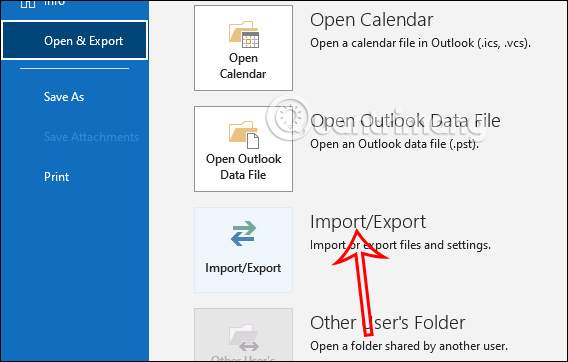
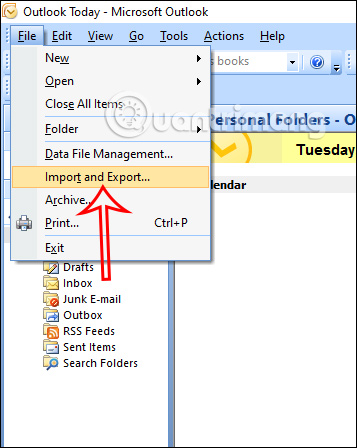
First, we open the Outlook interface then choose file, select Open & Export > Import/Export As shown below.
Step 2:
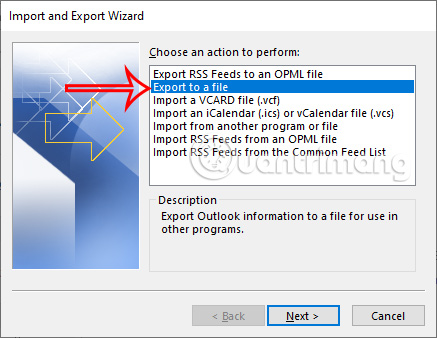
Now the Import and Export Wizard interface is displayed, select Export to a file And select Next.
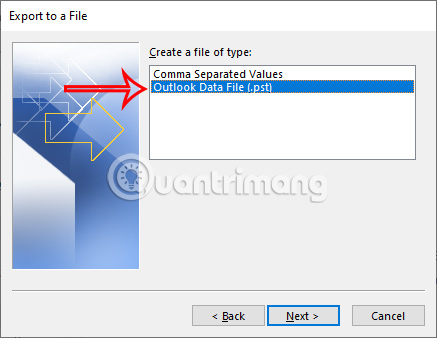
You will then Select Outlook Data file (. pst) And then choose Next below to continue.
Step 3:
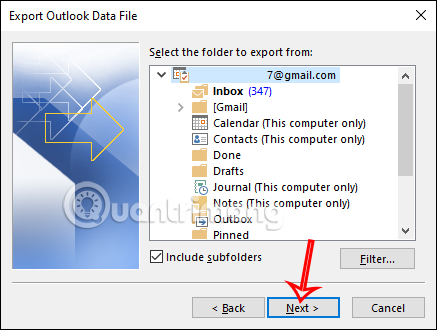
Now users will see all email addresses that you have logged in and used on Outlook. Here, select On the email address Where you want to backup data.
Next, Select the Include subfolders box To export all content in your Outlook account. Select Next To continue.
Step 4:
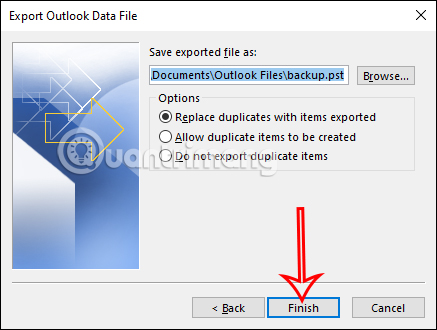
You will now see The interface to save a copy of the. pst file to the default location of drive C. If you like, select the Browse button to select another location if necessary. select Finish to proceed.
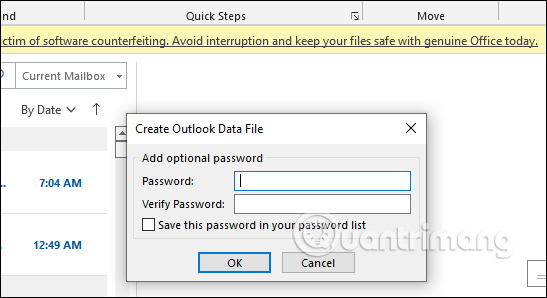
When creating a new. pst file, Outlook will ask you to Password protect it . Enter your password to complete the backup process.
How to Back Up Data on Outlook 2010
For Outlook 2010, we also open the Outlook interface and Select file , select Options . Then we Select Advanced In the list on the left, look to the right and Select Export .
Then also display the Import and Export dialog box interface, we do the same as with Outlook 2013 and above.

Instructions for Backing Up Outlook 2007 Emails
To backup emails and other content in Outlook 2007, Select file , then Select Import and Export In the displayed list.
The next operations you perform are similar to Outlook 2013.
How to Back Up Outlook Data by Manually Copying. Pst Files
For those who are proficient in using Outlook, they can quickly find pst files manually under different versions.
With Outlook 2013 Version or Higher
On Windows 8 and Windows 10, access 1 of the 2 folder paths below.
- C: UsersAppDataLocalMicrosoftOutlook
- C: UsersRoamingLocalMicrosoftOutlook
With Windows 7, you access the link:
- C: UsersDocumentsOutlook Files
In Outlook 2010 Version
If using Outlook 2010 or later, all Windows versions, the backup file is stored at C: UsersDocumentsOutlook Files.
With Outlook 2007 Version
With Outlook 2007 and earlier, the archive file will be saved at C: UsersAppDataLocalMicrosoftOutlook.
Instructions for Locating. Pst Files on Your Computer
To quickly locate the pst file on your computer, select File , select Account Settings , then choose Account Settings .
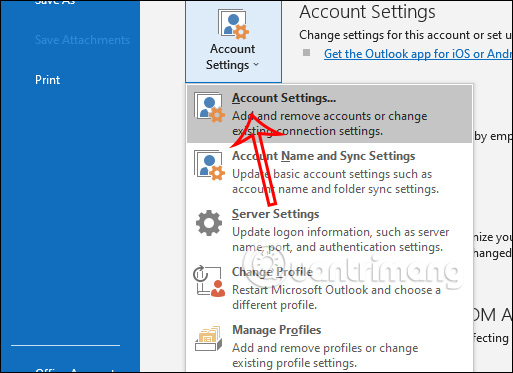
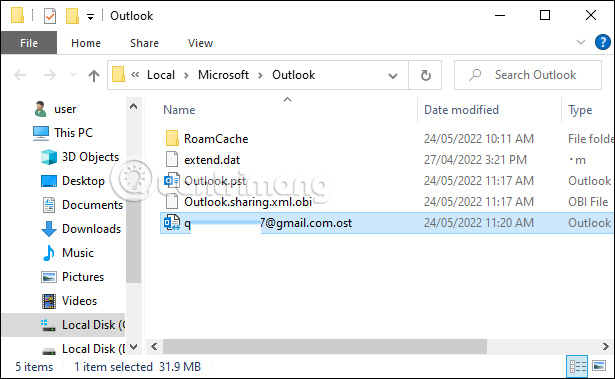
Display the new dialog box interface, select The Data Files tab , then Select the account You want to locate the file, then Select Open file Location.
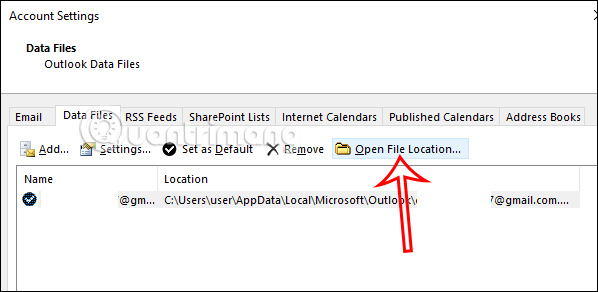
You will then be immediately transferred to the folder containing the. pst file on your computer. Now we can copy and move this backup file.
FAQ
What is the main point of Instructions on Simple Ways to Back Up Outlook Data?
Backing up Outlook data will help us get back all our emails and Outlook data If you have to reinstall your computer due to computer failure, or transfer Outlook data from one computer to another.
Why might the details change over time?
Software versions, prices, policies, services, and product availability can change. Check the official source before making a purchase or changing important settings.
How can I use this information safely?
Follow official instructions, verify downloads and claims, back up important data, and avoid sharing passwords or sensitive account information.
Related Articles
 How to Back Up Data in Outlook: Step-by-Step Guide3 minutes read
 Instructions for Basic Steps to Backup Outlook Data9 minutes read
 Instructions for Setting up Outlook Data Protection Password4 minutes read
 How to Reduce the Size of Outlook Data Files (. PST and. OST)5 minutes read
 How to Switch Between Old Outlook and New Outlook3 minutes read
 Install Add-In in Outlook: How to Install and Remove Add-Ins3 minutes read
Reader Comments 0
Sign in with email or Google to join the discussion.