Table of Contents
This updated guide examines Command: How to Use Cmd (Beginner) and organizes the essential facts, background, and practical takeaways in clear American English.
Part 1of 3:
Starting CMD
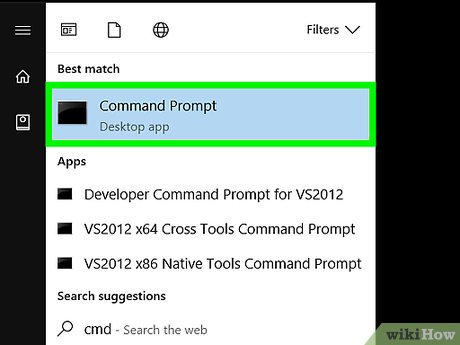 Open Command Prompt. Head over to the Start menu. Search "cmd" there.
- You can also hit Run, then search for it.
- If both of those don't work, you will need a slightly more complex method. Open Notepad. On the top line write "Command.com" (without the quotation marks.) Save it as CMD.bat. The.bat part is VERY important. And that's it. Open it using whichever method you chose.
Part 2of 3:
Using Basic Commands
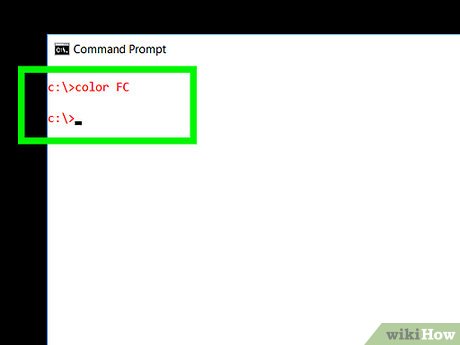 Change color. The first command, and one of the simplest, is "color". You can change the color of the text and the background. You start off with a gray-ish text and a black background. Type in "color help" for a full list of all the combinations you can make.
- A fun combo is "color FC" which provides with red text on a white background.
- "Color 0a" uses bright green on black, which may seem drab, but is actually a cool hacker look. Experiment!
 Try "cls". Another command, which is vital, is "cls". It's very simple. Basically, if you have a lot of mumbo-jumbo on the screen, "cls" will clear it to just showing the prompt. If you don't know what the prompt is, use "cls" and find out, though it's not important.
 Adjust the title, if desired. If you were to look at the top of the CMD window, you would notice it would say: C:Windowssystem32cmd.exe. A bit boring, isn't it? Type "title" followed by whichever text you wish to be there instead. For example, "title This Tutorial Rocks!" And... BOOM! It's there!
 Use "tree. " None of these will really blow the socks off your friends. If you really want to impress them try "tree" and wait for results. "Color 0a" is good for this. What "tree" does is it makes a graphical directory. For those who don't know what that means don't worry. It is very cool. However, if you are using a school computer, or anything like it, the tree will probably be small and stupid. It won't be cool.
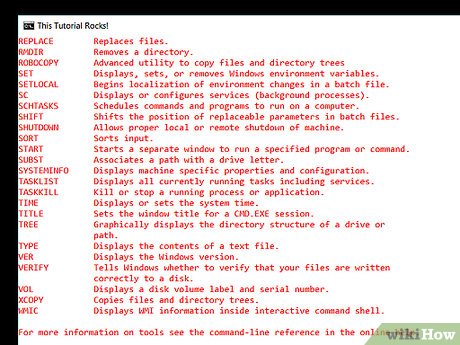 Experiment with "help. " And finally, the last basic command for a beginner - "help". It looks cool opening, and is very useful. It will provide a lot of room for experimentation.
- This last step in basic commands isn't actually a real command: "/?" Adding that to the end of a command will give a help menu to that specific command.
Part 3of 3:
Hacking
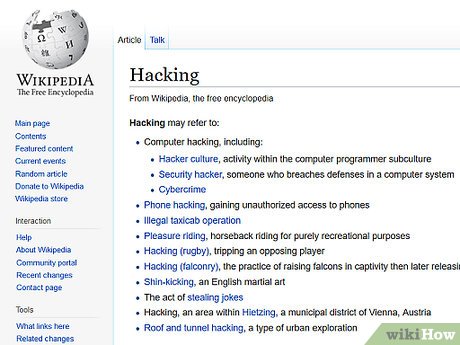 Be warned - hacking is Illegal! Use this information at your own risk.
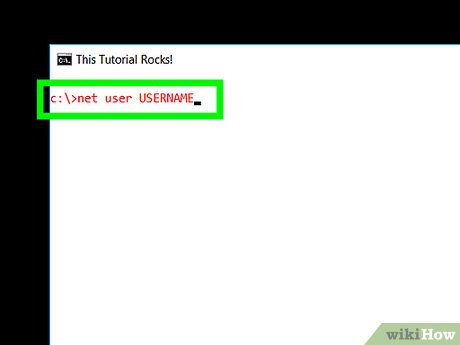 Change a password. Unfortunately, you need to have administrator privileges. Type "net user USERNAME * " (remember the SHIFT-8 for asterisk.) And that is that.
- Ddos a site. Type ping url of the site in cmd and press enter you will see the ip adress of the site. Then type ping ip adress of site -t -l 6650 and look at your target site after 1-2 hours it will fail. But now many sites have ddos protection
FAQ
What is Command: How to Use Cmd (Beginner) about?
It provides a structured overview of command, explains the main context, and highlights practical takeaways for readers.
Why does this topic matter?
Understanding the main concepts helps readers evaluate the issue, avoid common mistakes, and make better-informed decisions.
How should readers use this information?
Use the guidance as a practical starting point, confirm details that may have changed, and follow current product, safety, or security recommendations.
Related Articles
 These 4 Apps Are Great for Active Traders and Beginner7 minutes read
 Dragon Ball: Gekishin Squadra Beginner's Complete Guide and Tips13 minutes read
 Feign: a Beginner's Guide to Playing5 minutes read
 Kenshi Guide for Beginners4 minutes read
 XenoFeels Beginner Guide5 minutes read
 Honkai Star Rail: Gives You Some Beginner Tips: Main Insights9 minutes read
Reader Comments 0
Sign in with email or Google to join the discussion.