Table of Contents
This practical guide walks through how to turn off the automatic screen brightness change, explains the main requirements, and highlights common issues that may appear along the way.
What is the Automatic Brightness feature?
Before you start, you need to know that Automatic Brightness (or Adaptive Brightness) only applies to Windows devices with built-in screens such as laptops, tablets, and computers to all-in-one desk (all-in-one PC). For PCs that use dedicated monitors, you may not see adaptive brightness control options in the Settings Windows app.
Some Windows devices will automatically adjust screen brightness based on ambient lighting conditions, and some will not. These changes are usually made based on real-time data obtained from the light sensor built into the device.
Additionally, some PCs allow you to automatically change the brightness depending on what you're viewing on the screen, thereby saving battery life. Microsoft calls this feature 'content adaptive brightness control' (CABC). Depending on the specific features your Windows PC supports, you may see one or two different options for controlling these features in the Windows Settings app, which we'll cover below.
Turn off the automatic screen brightness change feature on Windows 11
First, open the Windows Settings application by pressing the Windows + i key combination. Or you can right-click the Start button on the taskbar and select 'Settings' from the list that appears.

When the Settings app opens, click 'System' in the list on the left, then select 'Display'.

On the respective settings screen that appears on the right, look at the 'Brightness and Color' section. Click the little arrow button next to the 'Brightness' slider to expand the settings menu. Then uncheck 'Help improve battery by optimizing the content shown and brightness'.
In case you also see the option 'Change brightness automatically when lighting changes', continue to uncheck that option.
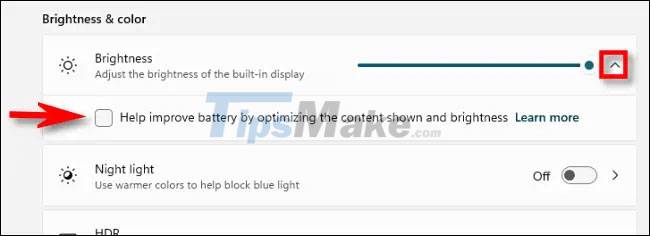
Then close the Settings app and all your changes have been saved. From now on, your screen brightness will always be maintained at a fixed level. Wish you have a good experience with Windows 11!
Key Takeaways
Use the information above as a practical reference for how to turn off the automatic screen brightness change. Review each step carefully, confirm any requirements, and choose the option that best fits your situation.
FAQ
What does this guide explain about Turn Off the Automatic Screen Brightness Change?
It explains the main concepts, practical considerations, and useful steps related to turn off the automatic screen brightness change without requiring advanced knowledge.
Who can benefit from learning about Turn Off the Automatic Screen Brightness Change?
This information is useful for readers who want a clear overview, practical guidance, and reliable steps related to turn off the automatic screen brightness change.
What should I check before applying this information?
Review the requirements, confirm that your device, software, or situation matches the instructions, and back up important data before making major changes.
Related Articles
 Automatic Shutdown Increases the Screen Brightness of Windows 106 minutes read
 Steps to Turn Off the Windows 10 Screen Brightness8 minutes read
 How to Disable Auto-brightness on Iphone3 minutes read
 Turn Off iPhone Screen Auto-Brightness When Touched: How-To Guide3 minutes read
 Turn Off Windows 10 Screen Brightness Auto-adjustment5 minutes read
 How to Turn Off Auto-light on iOS 114 minutes read
Reader Comments 0
Sign in with email or Google to join the discussion.