Table of Contents
This guide explains how to resolve Laptop Keyboard Error Does Not Type Any Keys, starting with the most likely causes and moving through practical troubleshooting steps.
Reboot the device
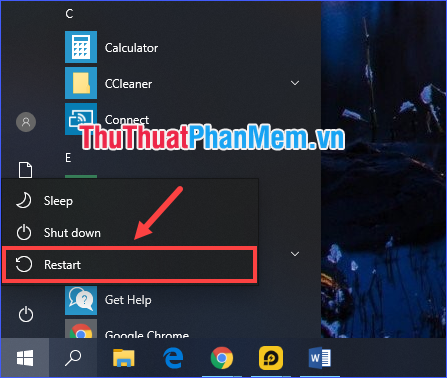
Regardless of the era, rebooting is always the first solution to think about whenever your computer has a problem. No need to touch the keyboard, just use your mouse to click Start Menu> Power and select Restart . After the device restarts, check to see if the keyboard problem persists.
Error checking is on software or hardware
Although the first method has to be thought of, restarting the computer rarely works. And if that's the case, next you need to determine if the problem is with the software or the hardware.
To check, turn the device off and on again. As soon as the device boots up, repeatedly press the access key to enter the BIOS or UEFI settings. Which key it depends on your laptop, will usually be displayed in the corner of the screen as soon as the machine has turned on (or you can search in the keyboard shortcut to the BIOS / UEFI of laptop manufacturers).

Successful access to BIOS / UEFI means that the keyboard problem will lie in the software. If even the BIOS / UEFI fails to access, it is most likely a hardware failure.
If the problem lies with the software?
At that time, the two main reasons for the keyboard not being able to type any key were not updating the driver or locking the keyboard. The case of a locked keyboard sounds like it is unlikely to happen, because if you are a locker then of course you have to know (unless someone has tricked you). So think about the next reason - keyboard driver.
* To update the driver, you can download it from the laptop manufacturer's homepage, or automatically update the following:
Right-click on This PC , select Manage . In the new window, click Device Manager (left column). Expand Keyboards , right-click PS / 2 Keyboard , select Update driver , select Search automatically for updated driver software .
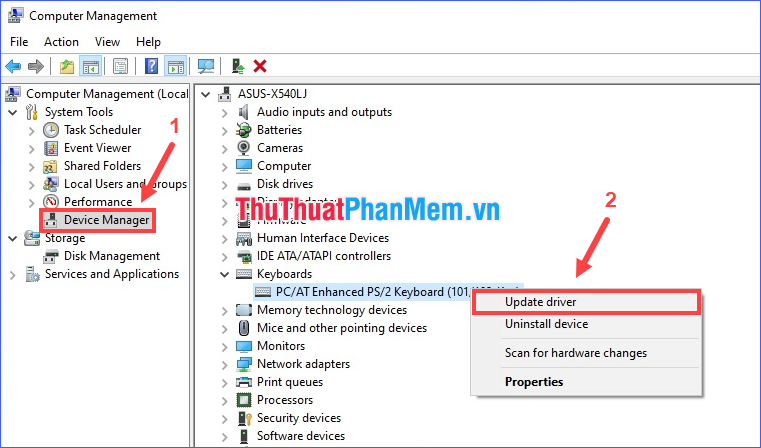
If there is a notice that the best driver version has been installed, or the update has occurred but the keyboard is still corrupted, right-click on PS / 2 Keyboard and select Uninstall device . This will remove the current driver, and after you restart the computer, it will be reinstalled by the system.
* In some cases, the keyboard stopped working due to some settings in the Control Panel . Go to Easy of Access Center , select Make the keyboard easier to use .
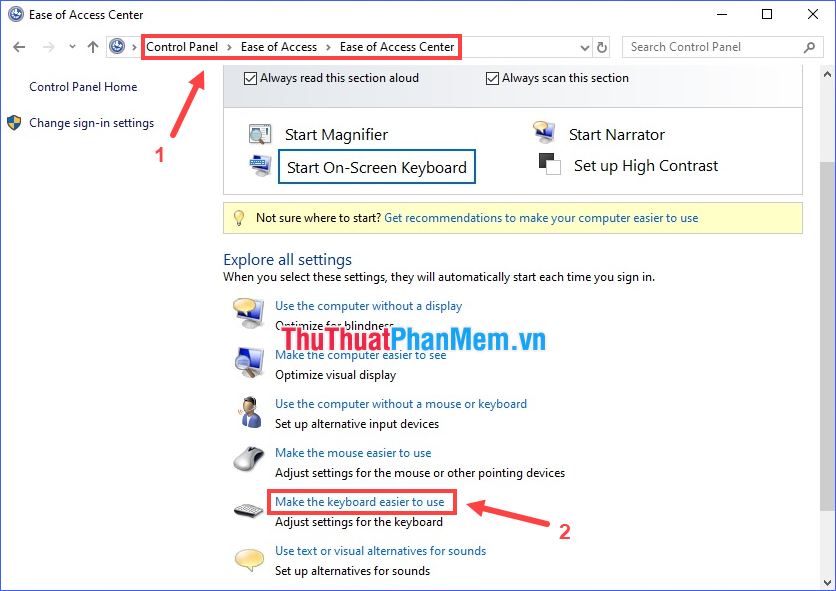
Here if there are many options being checked, uncheck them all and then click OK .

* The last measure you should take when the above solutions are not effective is scanning for viruses. Some viruses or malware can also cause a computer keyboard to malfunction. Use Malwarebytes or a powerful antivirus software that you feel reliable.
If hardware is the cause of the keyboard error?
This is a more complex cause, maybe even a lot more complicated. In the luckiest case, the keyboard failed to type just because there was too much dirt on the bottom. If you have the ability to disassemble a laptop, you can remove it yourself to clean, or not, bring the device to a laptop repair shop for them to help clean.
And the worst case: your keyboard has been damaged, or disconnected from the motherboard due to an internal problem. If the laptop is still under warranty, send it to a service center for repair. If not, you should accept to spend a "small amount" to bring it to a reputable laptop repair shop, professional.

Through the article, I have shared with you the main causes and how to fix laptop keyboard errors do not type any keys. Hope the information just shared above will help you!
FAQ
What usually causes Laptop Keyboard Error Does Not Type Any Keys?
The cause may involve incorrect settings, outdated software, damaged files, permission problems, device compatibility, or a temporary system issue.
What should I try first to resolve Laptop Keyboard Error Does Not Type Any Keys?
Restart the affected app or device, install pending updates, verify settings and connections, and follow the troubleshooting steps in order.
How can I prevent the issue from returning?
Keep software updated, maintain backups, avoid interrupted installations, and review system or device settings after major changes.
Related Articles
 Why Can't I Type on My Computer Keyboard? How to Fix It?10 minutes read
 4 Ways to Fix Laptop Keyboard Errors Should Try Before You Buy a New5 minutes read
 How to Unlock an ASUS Laptop Keyboard That Won't Type8 minutes read
 How to Fix the Error of Not Being Able to Type the Number on6 minutes read
 How to Turn Off Laptop Keyboard to Use Separate Keyboard Quickly6 minutes read
 How to Fix the Error of Not Typing in the Number on the Laptop Keyboard5 minutes read
Reader Comments 0
Sign in with email or Google to join the discussion.