Table of Contents
This practical guide walks through how to fix a Macbook Error Where the Keyboard Cannot Type. It organizes the required steps, settings, and checks so you can complete the task with fewer mistakes.
Several causes of The MacBook keyboard not being able to type, Such as dirt accumulating for a long time under the key slots causing sticky/stuck keys or software errors. However, you can use many different ways to fix MacBook keyboard errors instead of having to invest in a new MacBook or ask for help from a service provider.
How to Fix Macbook Keyboard Error
Method 1: Clean the Keyboard
In fact, dirt or food debris stuck under the keyboard can cause your MacBook keyboard to fail. Accordingly, follow the steps to properly clean the keyboard shared by TipsMake below to fix this problem:
Step 1: Power off your MacBook. Step 2: Hold your MacBook at a 75-degree angle from horizontal.
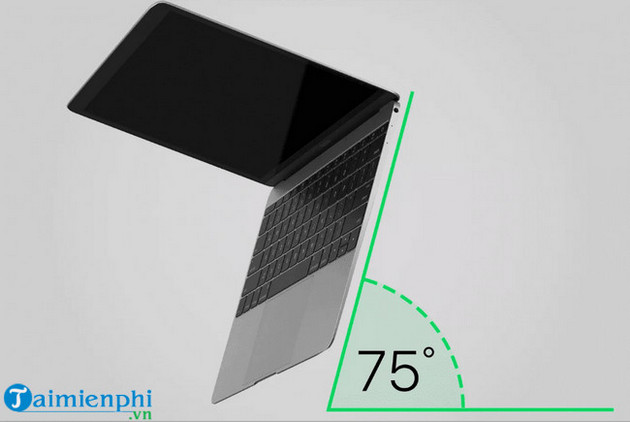
Step 3: Use a specialized cleaning bottle to spray between the keys in order from left to right and from top to bottom to remove dirt.

Step 4 : Rotate the MacBook left and right but keep it at a 75-degree angle to the horizontal and repeat the same process as step 2.
Additionally, besides using an air compressor, you can buy a specialized brush to clean your computer more thoroughly.
Method 2: Delete Recently Installed Applications
If after cleaning you still get a keyboard error, this is most likely a software error. In fact, some applications may conflict, causing MacBook keyboard errors. Therefore, you can check by clicking the Quit All Button on the bar to close all applications (including applications running in the background).

If your keyboard is working properly again, check the list of recently installed apps to see which app caused the keyboard error and uninstall that app on your device.
How to View Recently Installed Applications on Macbook
Step 1: Open the Finder window and navigate to the Applications Folder. Step 2: Next, use the filter tool by clicking on the circle icon next to the search bar of the Finder window. Step 3 : Next, select Sort By => Date Added.

After you have filtered newly installed applications and found the application causing the keyboard error, use the MacBook's specialized uninstaller CleanMyMac Related to the application and avoid encountering that problem again.

Method 3: Update the macOS Operating System
One of the other useful ways to help you fix your MacBook keyboard error is to update the macOS operating system to the current version. The steps are as follows:
Step 1: Select the Apple logo icon located in the left corner of the screen. Step 2: Select About This Mac . Step 3: In the Overview Section, select Software Update . Step 4: Next, select Update Now If an update is available as shown below.
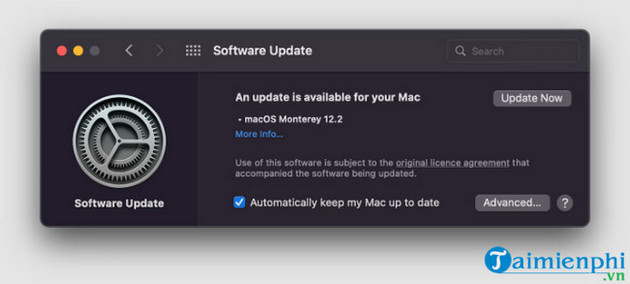
Method 4: Check the Keyboard Layout
If your keyboard has An error with the keyboard jumping letters , the cause may be related to a keyboard layout error. To check if the keyboard layout is corrupted, follow these steps:
Step 1: Select the Apple logo icon located in the left corner of the screen. Step 2: Next, select Keyboard => Input Source. Step 3 : On the menu bar, select Show Input . Step 4: select theInput Menu bar icon and select Show Keyboard Viewer. Step 5: Make sure you are using the correct keyboard layout as shown below.

Method 5: Turn Off Slow Key Setting
When the Slow Key setting is enabled, your keyboard will operate very slowly because you need to hold down the keys longer than usual. This makes you think that your keyboard is defective. Accordingly, to turn off the Slow Key setting, follow the steps below:
Step 1: Select the Apple logo icon located in the left corner of the screen and select System Preferences. Step 2: Select Accessibility => Keyboard. Step 3: In the Hardware Section, uncheck the Enable Slow Keys Option if this option is enabled as shown below.
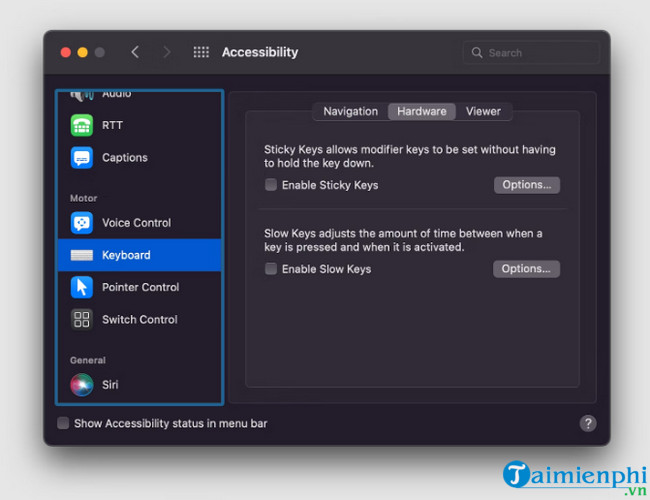
Method 6: Delete Files with the. Plist Extension
Likely, some software settings on your device have changed, causing the keyboard error issue. In this case, try resetting these settings back to their original defaults by deleting files with the . plist Extension. To do this, you can follow the steps below:
Step 1: Use Get Backup Pro Or Time Machine To back up data on your device. Step 2: Open Finder . Step 3: Next, select the key combination Command + Shift + G. Step 4: On the new window that appears, enter the command line below and select Go:
/Library/preferences/
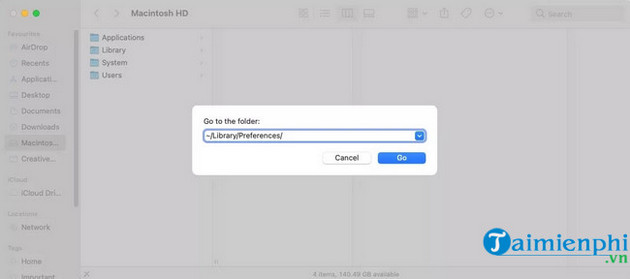
Step 5 : Find and select files with the following extension:
Com. Apple. Driver. Applebluetoothmultitouch. Trackpad. Plist
Com. Apple. Driver. Applebluetoothmultitouch. Mouse. Plist
Com. Apple. Driver. Applehidmouse. Plist
Com. Apple. Applemultitouchtrackpad. Plist
Com. Apple. Preference. Trackpad. Plist
Step 6: Delete all selected files and restart the computer.
Method 7: Reset PRAM
Restoring your RAM parameters back to 0 is also one of the useful ways to help you fix Mac keyboard errors. To do this, follow these steps:
Step 1: Turn off the device. Step 2: Restart the device. However, while the computer is restarting, select Command + Option + P + R Until the gray screen appears.
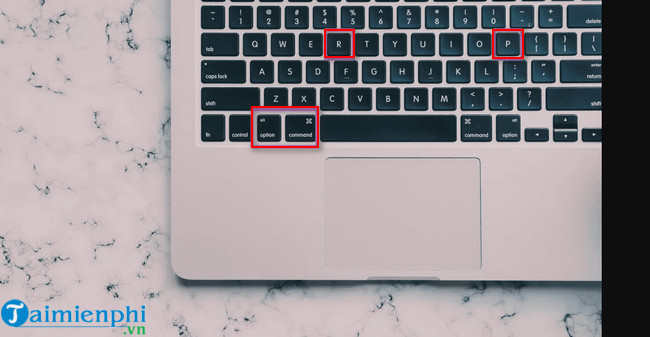
Step 3: Release the keys after you hear the reboot sound.
Method 8: Restore Your Device to the Previous Version
If your Mac mouse or keyboard suddenly crashes, it could also be due to recent software or settings changes. To fix this problem, simply restore your device back to the last few backups saved.
The Steps Are as Follows
Step 1: Restart the device. Step 2: While the system is restarting, open the Recovery Tool By pressing the key combination Command + R. Step 3: Select Restore fromTime Machine Backup. Step 4: Continue to follow the instructions in the window to complete the recovery process.
After restoring the device, if you still encounter the keyboard error, readers can review the instructions here to fix it.
Above, TipsMake has introduced to you some ways to fix MacBook keyboard errors. Wish you success and don't forget to follow TipsMake to update more articles related to other useful PC tips and tricks!
FAQ
What do I need before I fix a Macbook Error Where the Keyboard Cannot Type?
Prepare the required device, software, account access, and any files mentioned in the steps. Back up important data before changing system settings.
Why does the process look different on my device?
Menus and options can vary by operating system, app version, device model, or region. Use the closest matching setting and check the official documentation when needed.
What should I do if a step does not work?
Restart the app or device, confirm permissions and connectivity, update the software, and repeat the step carefully. Avoid unofficial downloads or tools.
Related Articles
 How to Fix Macbook Keyboard Error Can't Type Numbers5 minutes read
 Why Can't I Type on My Computer Keyboard? How to Fix It?10 minutes read
 How to Fix Keyboard Errors That Enter Numbers Instead of6 minutes read
 4 Ways to Fix Laptop Keyboard Errors Should Try Before You Buy a New5 minutes read
 Type on Keyboard: How to Type @ on Computer and Laptop Keyboard6 minutes read
 3 Ways to Test Macbook Keyboard for Free, Simple and Accurate8 minutes read
Reader Comments 0
Sign in with email or Google to join the discussion.