Table of Contents
This practical guide walks through how to display protected operating system files in Windows, explains the main requirements, and highlights common issues that may appear along the way.
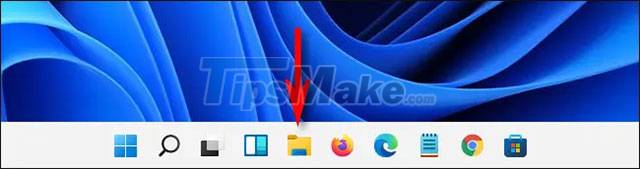
First, launch File Explorer by opening the Start menu and searching for the keyword ' File Explorer '. Or you can also click the Pinned File Explorer icon on the taskbar.
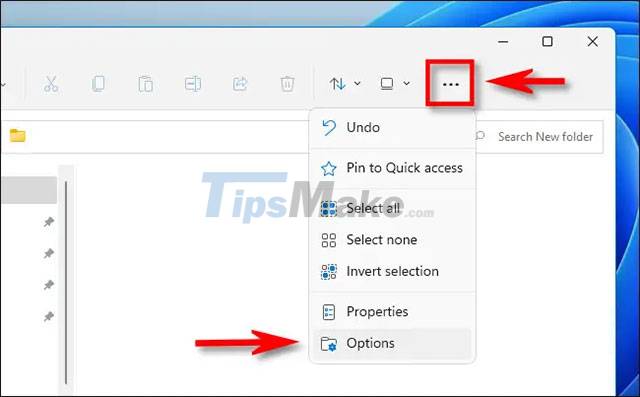
When File Explorer opens, click the three-dot button located on the toolbar near the top of the window. In the menu that appears, select ' Options '.
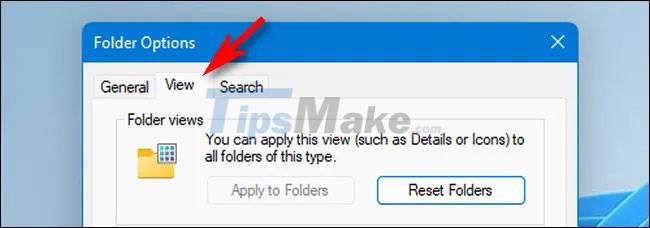
In the ' Folder Options ' window that opens, click the ' View ' tab .
In the ' Advanced Settings ' list, find the ' Hidden Files and Folders ' entry . Click the option ' Show hidden files, folders, and drive '. Then click ' OK ' at the bottom of the window.

Hidden files and folders are immediately visible in File Explorer and on the desktop. You should see their icons slightly blurred, as shown below:

To hide these files again, just go to File Explorer > Options > View again , then select ' Don't show hidden files, folders, or drives ' and click ' OK '.
How to display protected operating system files in Windows 11
You may not have noticed, but in Windows there is another type of hidden file: system files, which are hidden and protected by default to keep your operating system working properly. To see this hidden file type, open File Explorer, click the 'three dots' button on the toolbar, then select ' Options '.
In the Folder Options window, click the ' View ' tab . Then in the ' Advanced Settings ' list, scroll down and uncheck the ' Hide protected operating system files (Recommended) ' option.

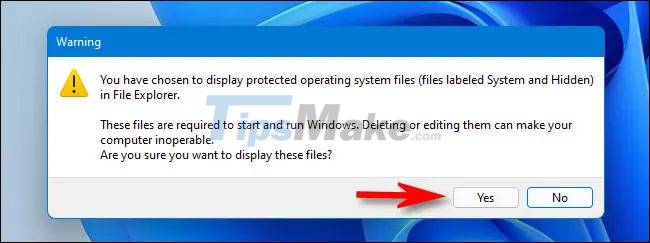
Immediately, a new dialog window will open, warning you of the 'dangers' of displaying protected operating system files.
( Warning : These are sensitive system files. If you move or delete hidden system files, your Windows 11 installation environment may be damaged, or cause data loss. extreme caution ).
If you know what you're doing and are willing to take the risk, click ' Yes '.
Then close the Folder Options window by clicking ' OK '. As with hidden files in the above section, protected operating system files will appear with a slightly dimmed icon on the desktop and in File Explorer.
When the job is done, you should hide your protected operating system files again by going to File Explorer > Options > View again . Then, check the box next to the option ' Hide protected operating system files (Recommended) ' and click ' OK '.
Key Takeaways
Use the information above as a practical reference for how to display protected operating system files in Windows. Review each step carefully, confirm any requirements, and choose the option that best fits your situation.
FAQ
What does this guide explain about Display Protected Operating System Files in Windows?
It explains the main concepts, practical considerations, and useful steps related to display protected operating system files in Windows without requiring advanced knowledge.
Who can benefit from learning about Display Protected Operating System Files in Windows?
This information is useful for readers who want a clear overview, practical guidance, and reliable steps related to display protected operating system files in Windows.
What should I check before applying this information?
Review the requirements, confirm that your device, software, or situation matches the instructions, and back up important data before making major changes.
Related Articles
 Add Take Ownership Option to Right-click Menu on Windows 104 minutes read
 How to Enable Windows Protected Print on Windows 113 minutes read
 How to Run DMG Files on Windows, Open and View DMG Files4 minutes read
 How to Hide Files, Show Hidden Files, View Hidden Folders and5 minutes read
 Restore: How to Refresh Windows 813 minutes read
 Click: How to Create a Password Protected File on Windows 711 minutes read
Reader Comments 0
Sign in with email or Google to join the discussion.