Table of Contents
This guide explains how to check If Your Account Has Leaked Data Online, with clear steps, practical tips, and important checks before you begin.

First, visit https://khonggianmang. vn/ - the website of the National Cyber Security Center (NCSC). NCSC has a central monitoring function, is a technical focal point for supervision and support to ensure information security for people, businesses and information systems of the Party and the State as prescribed by law.
On the NCSC website, you will be able to:
- Check if your IP address is in danger or not;
- Check if email account information is leaked or not;
- Check if a website is phishing or not;
- Check if an email address is fake or not;
In addition, there are two other powerful features that are being added: malicious file checking and ransomware identification.
Below are detailed instructions on how to check each specific content.
1. Check the IP address
This is a tool that helps you check whether your public IP address has been a victim of cyber attacks, botnets, etc. in the last 30 days. Note that in order for the results to be accurate, you need to use a static IP address.
How to check:
Step 1: On the website menu, move your mouse to Tools , select Check IP Address .
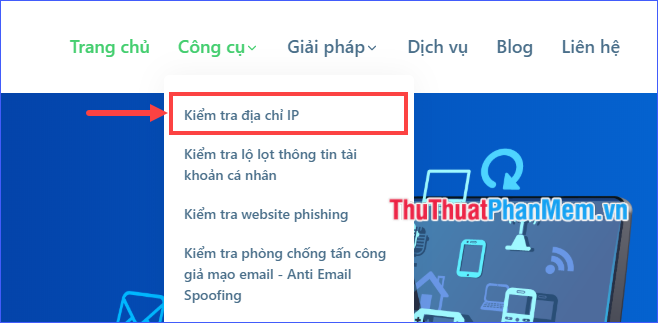
Step 2: Click the Test button. The system will then return the results to you.


2. Checking for leaks of email account information
This tool will check if your email account information has been leaked online. Data is aggregated from many sources on the Internet.
How to check:
Step 1: On the menu of the website, move the mouse to Tools , select Personal account information .
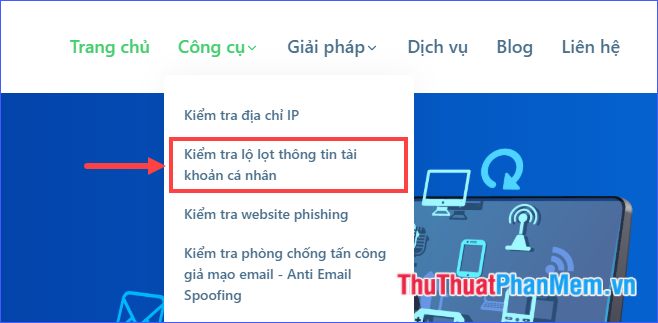
Step 2: Enter your email address and click on Check .

The system will immediately return the results and make some recommendations for you to make.

3. Check phishing website
Website phishing is a website where an attacker creates and spoofs social networking sites, banks, online transactions, e-wallets, etc. to trick users into sharing sensitive personal information. If you suspect a website you've ever visited is phishing, you can check the following:
Step 1: Move the mouse to Tools , select Check phishing website .
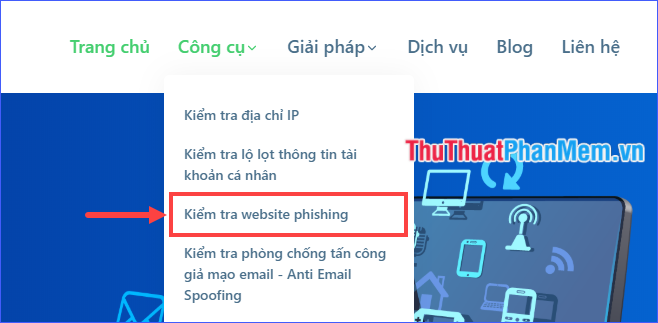
Step 2: Enter the URL of the website to be tested, then click the Test button.
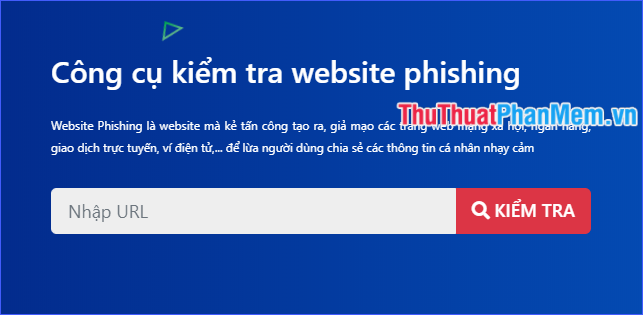
The system will immediately return the result.

4. Check fake emails
Email spoofing is a form of attack by forging a sender's email address. The attacker will email the user in the name of a reputable unit / organization, deceiving the user to click on a link to a fake website or download malicious code to steal personal information or attack. network.
How to check:
Step 1: Move the mouse to Tools , select Check to prevent email phishing attacks .
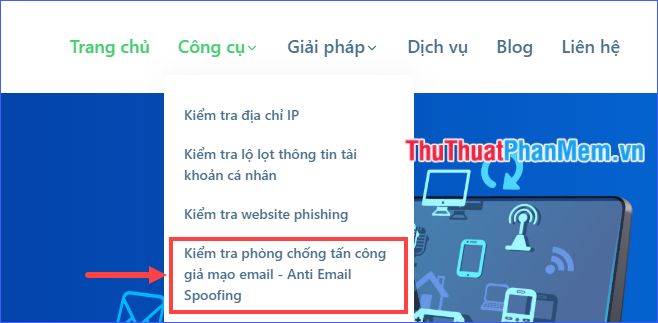
Step 2: Enter the email address you suspect is fake, then click on Check .

The system will immediately return the result.

Through the above article, I have shown you the steps needed to check your information has been leaked online or not. Wish you always have a safe life on cyberspace!
FAQ
What should I know about Check If Your Account Has Leaked Data Online?
Focus on the key features, requirements, limitations, and practical use cases explained in this guide.
How do I get the best results with Check If Your Account Has Leaked Data Online?
Follow the recommended steps, use current software or information, confirm compatibility, and review settings before major changes.
Are there any risks or limitations?
Potential limitations depend on compatibility, data quality, cost, privacy, support, and how the product or method is used.
Related Articles
 How to Check If a Snapchat Account Is Leaked?3 minutes read
 Has Your Password Been Leaked? Please Check Now7 minutes read
 How to Check for Data Leaks via Google Dark Web3 minutes read
 How to Check Your Facebook Information Is Leaked or Not3 minutes read
 Check Email with Password Leaked by the Information Security Website3 minutes read
 How to Check If Your Account Password Has Been Leaked?4 minutes read
Reader Comments 0
Sign in with email or Google to join the discussion.