Table of Contents
This updated guide examines How to Change Keyboard Layouts on Windows 7 and organizes the essential facts, background, and practical takeaways in clear American English.
Method 1of 3:
Removing a Keyboard
 Press⊞Win. This should open your start menu, displaying a list of programs, system tools, user profile modifier button, and a search box .
 Type "language" into the search box. If you start typing the very second you open the start menu, it should automatically type into the search box. Wait for this to load and it should bring up a list of search results .
 Click "Change keyboards or other input methods". Now a window will open, offering you the choice to "Change keyboards...".
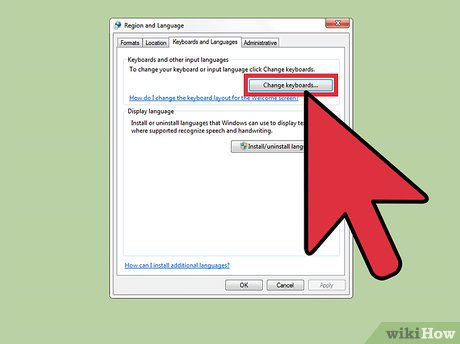 ClickChange keyboards. This should open another window, listing your computer's language and the keyboards currently applied to it.
 Select a keyboard to remove (e.g. "Canadian Multilingual Standard"). Select a keyboard by clicking on its name, it should be highlighted in blue.
 ClickRemove. "Remove" can be found on the rightmost side of the window, the second button from the top of the array of buttons. You have now completed the task, congratulations and happy typing!
Method 2of 3:
Adding a Keyboard
 Press⊞Win. This should open your start menu, displaying a list of programs, system tools, user profile modifier button, and a search box .
 Type "language" into the search box. If you start typing the very second you open the start menu, it should automatically type into the search box. Wait for this to load and it should bring up a list of search results .
 Click "Change keyboards or other input methods". Now a window will open, offering you the choice to "Change keyboards...".
 ClickChange keyboards. This should open another window, listing your computer's language and the keyboards currently applied to it.
 ClickAdd. You can find the button "Add" on the rightmost side of the window at the top of the array of buttons. Now another window should open, giving you selections of languages.
 Select a language (e.g. "English (United Kingdom)" and click the+icon beside it. Now the language you selected should have expanded into multiple keyboard layouts.
 If applicable, click the+icon beside the word "Keyboard". Now you should find a selection of keyboard layouts.
 Check the checkbox next to the keyboard preferred and clickOk. You have now completed the task, congratulations and happy typing!
Method 3of 3:
Changing Keyboards
 Make sure to have more than one keyboard. Follow the above steps, "Adding a Keyboard", to add a keyboard.
 Click the little keyboard icon aside your application tray. Both the application tray and the keyboard icon can be found at the bottom right of your computer screen.
 Select your preferred keyboard (e.g."Canadian French"). Select your preferred keyboard by clicking on it, later if you revisit the menu, you will see a checkmark aside your currently selected keyboard.
FAQ
What is How to Change Keyboard Layouts on Windows 7 about?
It provides a structured overview of keyboard, explains the main context, and highlights practical takeaways for readers.
Why does this topic matter?
Understanding the main concepts helps readers evaluate the issue, avoid common mistakes, and make better-informed decisions.
How should readers use this information?
Use the guidance as a practical starting point, confirm details that may have changed, and follow current product, safety, or security recommendations.
Related Articles
 Enable Different Keyboard Layouts for Each Windows 11 App: How-To Guide3 minutes read
 How to Add and Change Keyboard Layouts in Windows 11: Practical Guide7 minutes read
 How to Create a Custom Keyboard Layout for Windows 105 minutes read
 If You're Not Already Using This Type of Keyboard, It's Time to Switch!: Explained7 minutes read
 How to Change the Theme and Background Color of the Windows4 minutes read
 How to Type Hindi on PC: Step-by-Step Guide9 minutes read
Reader Comments 0
Sign in with email or Google to join the discussion.