Table of Contents
This updated guide examines How to Block Websites on Chrome Automatically and organizes the essential facts, background, and practical takeaways in clear American English.
With AI technology, the Deepmode utility will detect the content you are working on Chrome, thereby enabling the use of related websites and blocking unrelated websites. The utility also provides manual blocking mode, manually adding websites to block users' needs. The following article will guide you how to use the Deepmode website blocking utility on Chrome.
- How to block notifications from websites on Chrome, Firefox, Safari
- Utilities on Chrome help you increase your work focus
- 6 simple ways to enable the right-click feature to block that site
- How to enable redirection blocking to malicious websites on Google Chrome
Instructions to block websites on Chrome
Step 1:
Users install Deepmode utility for Chrome under the link below.
- Download the Deepmode Chrome utility

Step 2:
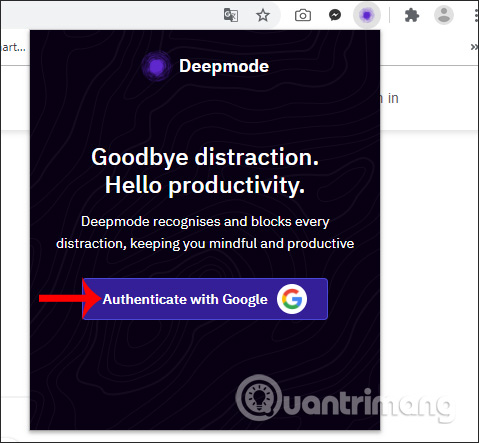
After installing the Chrome utility, click on the Deepmode icon at the bottom of the browser address. To use the user utility, click Authenticate with Google to log in to your Google account.
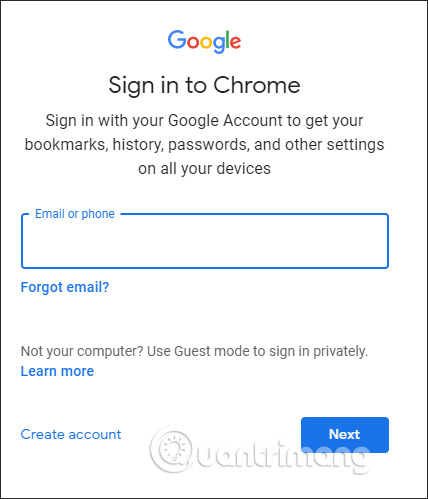
We enter a personal Google account to use the features of the gadget.
Step 3:
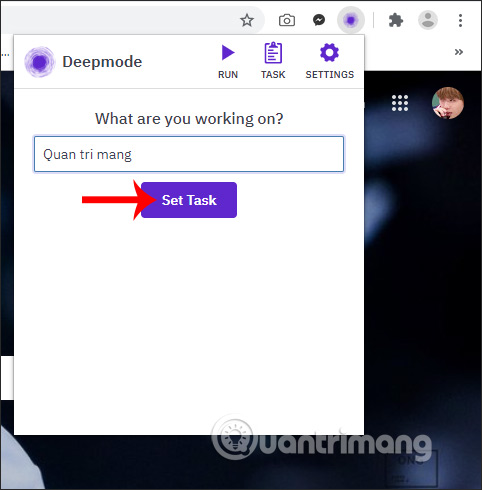
Next, Deepmode will automatically work to block websites on the browser. We need to define the working content so that AI understands and thereby blocks the website automatically. We enter the job name , or enter the site name directly into the frame What are you working on . Next click on Set Task to remember this task.
Step 4:
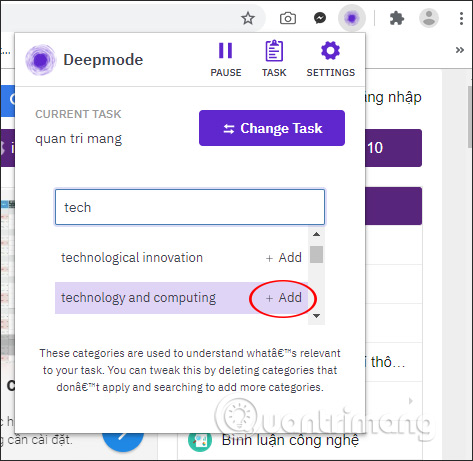
Switch to the new interface, we enter the category for work . There are many different types, such as technology. Click Add to add the job type.
We can add many different genres for the work we are doing.
Step 5:
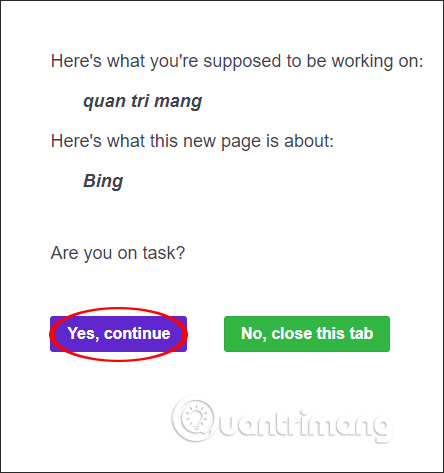
As such, the Deepmode utility will automatically block websites that are not related to the domain you are working on, and will display the following message. If you want to use the site , click Yes, continue .
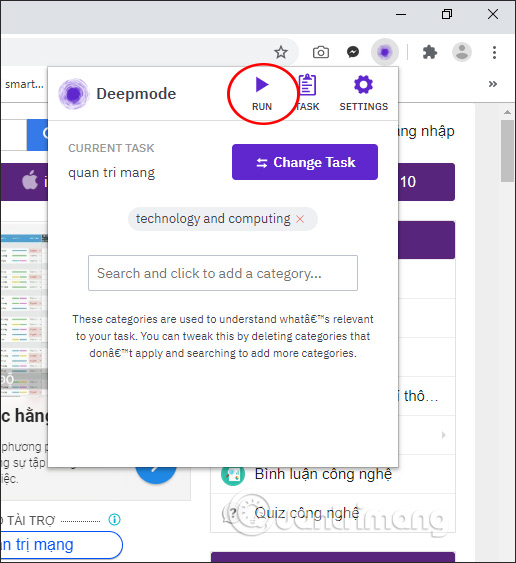
If you want to stop the operation, we click the Pause button to stop, to run again , click on Run .
Step 6:
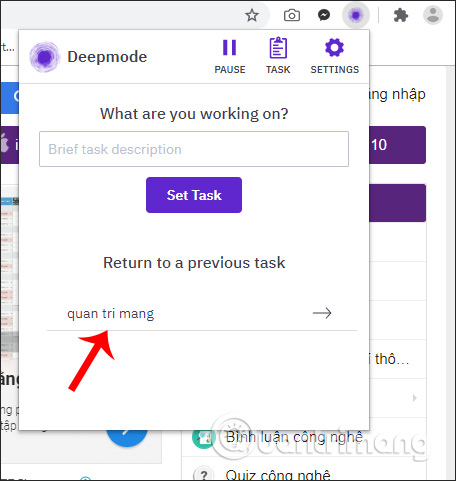
Deepmode's auto mode only blocks one task. To add a new task, click on Task> Change Task and enter the type of task as originally. The created tasks are all displayed in the list below.
Step 7:
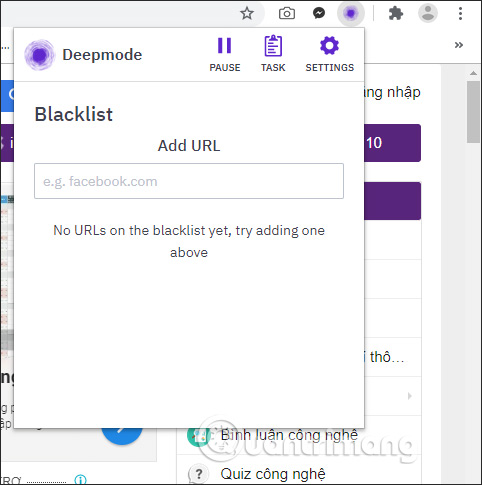
If you want to manually block on Deepmode , we click on Settings> Edit blacklist .
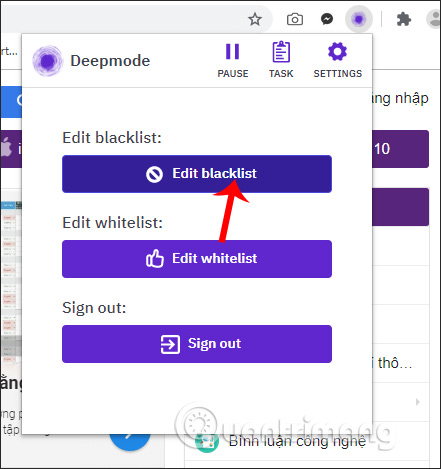
Display the interface for us to enter the website URL to block .
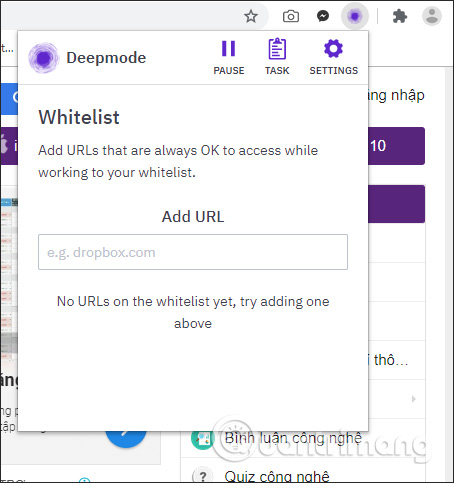
In addition, users can also put a website on theWhitelist whitelist so that it is not blocked while using the Deepmode utility.
The Deepmode utility blocks websites according to the ability of AI to detect and identify, blocking access to websites that are not the same content as the work you are doing. If using manual mode, it will be more active in selecting websites to block on Chrome.
I wish you all success!
FAQ
What is How to Block Websites on Chrome Automatically about?
It provides a structured overview of block websites on the browser, explains the main context, and highlights practical takeaways for readers.
Why does this topic matter?
Understanding the main concepts helps readers evaluate the issue, avoid common mistakes, and make better-informed decisions.
How should readers use this information?
Use the guidance as a practical starting point, confirm details that may have changed, and follow current product, safety, or security recommendations.
Related Articles
 Steps to Block Automatic Opening of Websites on Chrome4 minutes read
 Block Websites from Opening Automatically on Chrome Browser4 minutes read
 8 Ways to Prevent Websites from Automatically Opening in Chrome10 minutes read
 Instructions on 2 Ways to Quickly Block Websites from Opening Automatically5 minutes read
 How to Block Websites on Google Chrome: Clear Instructions11 minutes read
 How to Install a Printer Via IP Address in the Simplest Way7 minutes read
Reader Comments 0
Sign in with email or Google to join the discussion.