Table of Contents
This updated guide examines How to Block Apps on PC or Mac and organizes the essential facts, background, and practical takeaways in clear American English.
Method 1
Using Windows
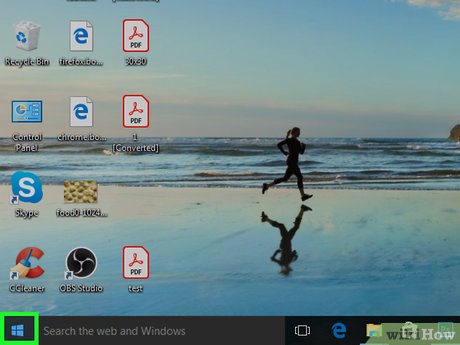 Open your computer's Start menu. Click the Windows icon in the lower-left corner of your screen to open the Start menu.
 Type and searchregediton the Start menu. "Regedit Run command" should show up as the best match.
- Alternatively, you can click the
 icon next to the Start menu icon on the bottom-left, and do your search here.
- Alternatively, you can click the
 Clickregeditin the search results. The regedit icon looks like blue building blocks. It will open your Registry Editor in a new window.
 Navigate to "Policies" on the sidebar. Find the main folder named "Computer" on the left sidebar, and open "Policies" under it.
- to find Policies under Computer, you'll have to click HKEY_CURRENT_USER , Software , Microsoft , Windows , and CurrentVersion , respectively.
- Alternatively, you can click the address bar at the top, and enterComputerHKEY_CURRENT_USERSoftwareMicrosoftWindowsCurrentVersionPolicies.
 Right-clickPolicieson the sidebar. This will show your options on a pop-up menu.
 Hover overNewon the pop-up menu.
 SelectKeyon the New menu. This will create a new key under Policies, and prompt you to name it.
 Name your new keyExplorer. Type this name and hit↵Enteror⏎Returnon your keyboard to save it.
 Right-click theExplorerkey on the sidebar. This will open your right-click options.
 Hover overNewon the right-click menu.
 SelectDWORD (32-bit) Valueon New menu. This will create a new value inside the Explorer key, and prompt you to name it.
 Name your new valueDisallowRun. Type this name and hit↵Enteror⏎Returnon your keyboard to save it.
 Double-click theDisallowRunvalue. This will allow you to edit the value in a new pop-up window.
 Change the Value data from "0" to "1. " Replace the "0" under Value data with "1" and click OK .
 Right-click theExplorerkey on the sidebar. This will open your options on a pop-up menu.
 Hover overNewon the right-click menu.
 SelectKeyon the New menu. This will create a new key under Explorer, and allow you to name your new key.
 Name your new keyDisallowRun. This key will show up below "Explorer" on the left sidebar.
 Right-click theDisallowRunkey. You will have to create new string values inside the DisallowRun key to block apps from running.
 Hover overNewon the right-click menu.
 SelectString Valueon the New menu. This will create a new string value in the DisallowRun key.
 Name your new string value1. Type this name and hit↵Enteror⏎Returnto save it.
- If you want to block another app later, you'll have to add a new string value here. In this case, you can name your other string values2,3,4, and so forth.
 Double-click your new string value. This will allow you to edit the string in a new pop-up window.
 Enter the name of the app you want to block into Value data. Click the text field under the Value data heading, and type the name of the app you want to block from running.
- Make sure to enter the full name of the executable file here, and include the file extension. For example, if you want to block Notepad, enternotepad.exe.
 ClickOK. This will save your new string value, and block the specified app from running on your computer.
 Restart your computer. Some changes will only take effect after restarting.
 Try running the blocked app on your computer. You'll see a Restrictions pop-up letting you know the app is blocked.
Method 2
Using Mac
 Openknewsense.com/macappblocker/downloadin a browser. Type or paste this link into your internet browser's address, and hit↵Enteror⏎Returnon your keyboard.
- If the download doesn't start, click the click here button next to the shield icon near the top of the page.
- Mac App Blocker gives you a 15-day free trial period. After 15 days, you can purchase the full app, or try a different blocker app.
 Run the installer file. Find the Mac App Blocker installer in your Downloads folder, and double-click on its icon to begin the installation.
 Verify the installation. You may need to first allow the installer to begin installation. In this case:
- Click the Apple icon on the top-left.
- Click System Preferences .
- Click Security & Privacy .
- Click the Lock icon on the bottom-left, and enter your password.
- Click Allow next to MacAppBlocker.
 ClickContinuein the installer window. This will take you to the License Agreement page.
 Agree with the License agreement. Click Continue , and then Agree when you're prompted.
- Mac App Blocker is a third-party app. Make sure you've read and understood the license agreement here.
 Select your computer's main drive. Click the drive you want to install the app on, and click Continue .
 Click theInstallbutton. This will install the Mac App Blocker app on your computer.
- If you're prompted, enter your account password to confirm installation.
 ClickClose. This will close the installer window.
- If you're prompted, you can choose to keep the installer file, or move it to your trash bin.
 Open the Mac App Blocker app. Mac App Blocker icon looks like a blue shield. You can find it in your Applications folder.
 Set up your Mac App Blocker password. Enter a secure password into the "Password" field, reenter into the "Repeat" field below, and click Continue .
- Make sure the box next to "I have read and I understand this warning" is checked.
 Click the+icon on the bottom-left. This button is in the bottom-left corner of the Mac App Blocker window. It will open a list of all your apps.
 Select the app you want to block. Find the app you want to block in your Applications folder, and click on its name.
 Click theOpenbutton. This will add the selected app to the list of blocked apps.
- When you try to run one of your blocked apps, you'll be prompted to enter your Mac App Blocker password.
FAQ
What is How to Block Apps on PC or Mac about?
It provides a structured overview of click, explains the main context, and highlights practical takeaways for readers.
Why does this topic matter?
Understanding the main concepts helps readers evaluate the issue, avoid common mistakes, and make better-informed decisions.
How should readers use this information?
Use the guidance as a practical starting point, confirm details that may have changed, and follow current product, safety, or security recommendations.
Related Articles
 How to Block Ads in Apps on Your Phone7 minutes read
 How to Block Ads on Android Without Rooting the Device4 minutes read
 How to Block Apps on Android: Step-by-Step Guide5 minutes read
 How to Block Pop-up Ads on Android Devices6 minutes read
 How to Block YouTube: Complete Guide14 minutes read
 Instructions to Block Messages When Spammed on Viber3 minutes read
Reader Comments 0
Sign in with email or Google to join the discussion.