Table of Contents
This updated guide examines How to Add a PDF to a Powerpoint and organizes the essential facts, background, and practical takeaways in clear American English.
Method 1
Using Your PDF as an Image
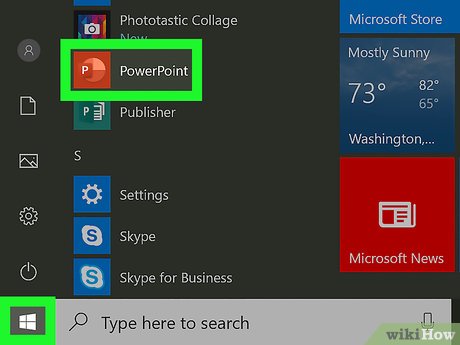 Open PowerPoint. You'll find this either on your Start Menu or in your Applications folder. Using this method, you will insert only a clip of your PDF, not the entire page or pages.
- You can also go to the online version of PowerPoint at https://office.live.com/start/PowerPoint.aspx?omkt=en-GB.
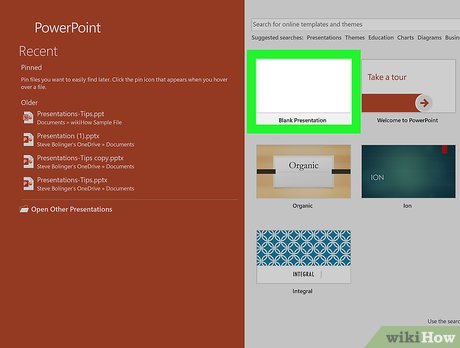 Create a new presentation or open an existing one. This will be where your PDF will go.
- Within the online version, you are immediately, upon login, presented with options to load a previous presentation or create a new one.
- With the software, you'll need to go to 'File' and 'New'.
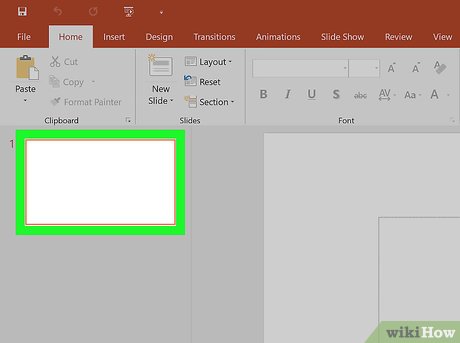 Navigate to the slide where you want to add the PDF. This is where your PDF screenshot will go.
 Open the PDF in a PDF viewer. You need to have this window of your PDF open and available to screenshot.
 Zoom in on the part of the PDF you want in your slide. You'll take a screenshot of this and use it as an image in your PowerPoint.
 Change the active window back to PowerPoint. Make sure you can still switch over to that PDF.
 Click theInserttab. The menu ribbon will change.
 ClickScreenshot. You'll find this in the 'Images' grouping. A menu will drop down labeled 'Available Windows' with previews of all your open windows.
 ClickScreen Clipping. This is under the thumbnail previews of the 'Available Windows'. Your screen will take on a frosted appearance and your cursor will look like crosshairs (+), and your PDF will become the active window.
 Click and drag your mouse to select the content of the PDF you want. You can also pressEscif you want to start over.
- Your selection shows up in the PowerPoint presentation, and you can edit this from the 'Picture Tools Format' tab in the ribbon.
Method 2
Inserting Your PDF as an Object
 Open PowerPoint. You'll find this either on your Start Menu or in your Applications folder. Using this method, you will insert the entire PDF into the presentation as an interactive object that you can double-click to open.
- You will see and be able to interact with the PDF as an object. That means you can scroll through the pages of the PDF while in the PowerPoint presentation.
- Make sure you do not have the PDF open on your computer before continuing.
- You can also go to the online version of PowerPoint at https://office.live.com/start/PowerPoint.aspx?omkt=en-GB.
 Create a new presentation or open an existing one. This will be where your PDF will go.
- With the online version, you are immediately, upon login, presented with options to load a previous presentation or create a new one.
- Within the software, you'll need to go to 'File' and 'New'.
 Navigate to the slide where you want to add the PDF. This is where your PDF will go.
 Click theInserttab. The menu will change.
 ClickObject. A window will pop up.
 Click to selectCreate from file.
- You can either use the browse feature to look for your PDF or you can type in the file name along with its location.
- You can choose to use the file as a thumbnail instead of the actual PDF. In this case, you will not see any of the content from the PDF, but there will be a thumbnail that links to it instead. You'll also need to set an action to this thumbnail since it doesn't do anything when it's added into the slide. You'll find options to create actions by right-clicking the thumbnail, clicking 'Presentation Object' and 'Open'.
 ClickOkto confirm. The box will disappear and the PDF will load as an object in the current slide.
- If the quality of the PDF preview is too low, you can double-click the PDF to open it in full.
FAQ
What is How to Add a PDF to a Powerpoint about?
It provides a structured overview of pdf, explains the main context, and highlights practical takeaways for readers.
Why does this topic matter?
Understanding the main concepts helps readers evaluate the issue, avoid common mistakes, and make better-informed decisions.
How should readers use this information?
Use the guidance as a practical starting point, confirm details that may have changed, and follow current product, safety, or security recommendations.
Related Articles
 PowerPoint 2019 (Part 1): Getting Started with PowerPoint: Explained7 minutes read
 PowerPoint 2019 (Part 11): Presenting Slideshows: Explained9 minutes read
 PowerPoint 2019 (Part 6): Applying Themes: Explained5 minutes read
 PowerPoint 2019 (Part 5): Working with Text: Explained4 minutes read
 10 Awesome PowerPoint Templates Make the Presentation 'Shine'8 minutes read
 Summary of Useful Shortcuts in PowerPoint7 minutes read
Reader Comments 0
Sign in with email or Google to join the discussion.