Table of Contents
This guide provides a clear overview of computer, including Turn on the Computer, Computer Starts Up. Use it to understand the topic, compare the available options, and make a more informed decision.
If you're using a desktop computer, you'll need to make sure that the keyboard, mouse, and monitor are plugged into the computer case before continuing. Review the previous article on setting up a computer to learn how.
Turn on the Computer
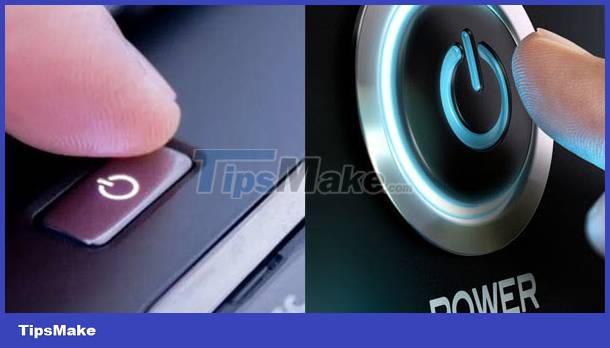 The first step is to turn on the computer
The first step is to turn on the computer. To do this, locate and press the power button. It's in a different location on every computer, but it will have a common power button icon as shown in the illustration.
Always remember that you need to turn on the screen too.
Turning on the computer for the first time may be different from subsequent visits. Your experience may be different from this article, if you are stuck, you can ask someone for help.
Computer Starts Up
 Log in to the computer user's account
Once turned on, your computer will take some time before it is ready for use. You may see several different displays flashing on the screen. This process is called boot - Boot and can take from 15 seconds to several minutes depending on the processing speed of the computer.
Once the computer has finished booting, it may be ready to use or may ask you to log in - Login . This is to identify yourself by entering your username - User or select profile - Your Profile , then enter your password - Password if available. If you don't already have an account logged into your computer, you may need to create a new one.
Using a Computer Keyboard and Mouse
 Interact with the computer primarily with the keyboard and mouse
You interact with your computer primarily with a keyboard and mouse, or a trackpad on a laptop computer. Learning how to use these devices is essential to knowing how to use a computer. Most people are comfortable with the keyboard on the table directly in front of them and the mouse on one side of the keyboard.
Cursor - Cursor on the screen. Whenever you move the mouse on the desktop, the mouse pointer, moves along. A computer mouse usually has two buttons, called the left button and the right button. The left button is usually the button used to manipulate or execute commands while the right button usually helps to display the Menus.
You will often interact with the computer by moving the mouse pointer over something on the computer screen, it can be icons - Icons or buttons - Some Button and you can click them to execute a certain command.
Normally when you click the left mouse button once - Single Click on an icon is to select it. Click twice in a row - Double Click on an application's icon to open or run - Run that application.
Usually when you just hear the word click , it means clicking the left mouse button . When you need to click the right mouse button, you will be told.
The mouse also has a scroll button in the middle. Its function is mainly to help scroll the screen page, you can use your finger to rotate or press this button to do it.
On laptops, you can use the trackpad, located below the keyboard, instead of the mouse. Just drag your finger on the trackpad to move the pointer across the screen. Some trackpads don't have buttons, so you'll press or tap the trackpad.
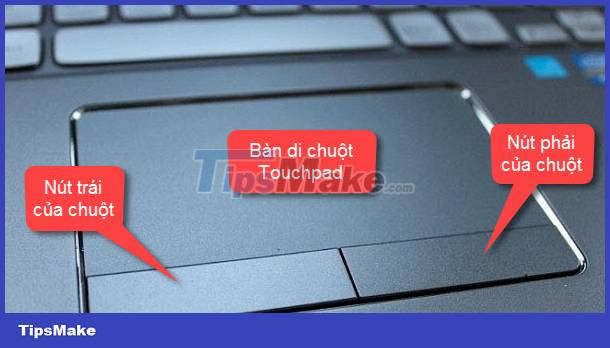 Using the touchpad on a laptop
The keyboard allows you to enter letters, numbers, and characters into the computer. Whenever you see a blinking vertical line - called an apostrophe or insertion point - Insertion Point , you can start typing characters minus the keyboard.
Note that the mouse pointer changes shape as it moves over different object areas. For example, when you move the mouse pointer over the text area - Text Area , it will change to the text cursor - Text Cursor has a shape like the letter to let you know that characters can be entered from the keyboard. come in. Or when you move the mouse pointer over an clickable object, it will turn into a hand.
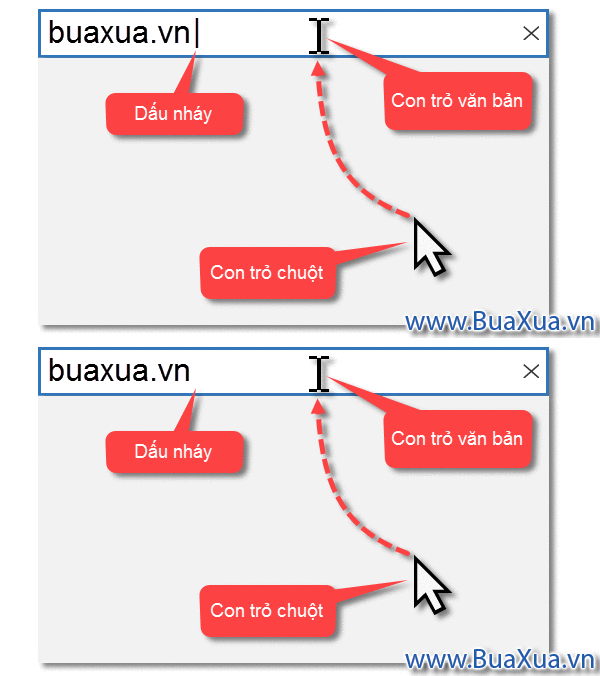 The mouse pointer changes to the text cursor - Text Cursor
- See instructions How to use the computer keyboard
- See instructions How to use a computer mouse
Using a Computer
The main screen from which you will start is called the desktop - Desktop . This is like a Main Menu or a Table of Contents. From here, you can access the applications and features you need to use your computer.
Icons - Icon
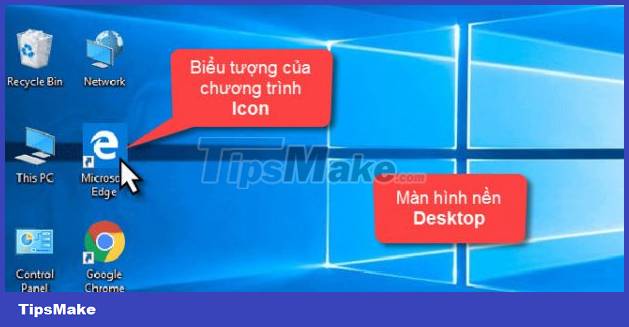 Icons are used to represent files or applications
Icons are used to represent different files or applications and commands on your computer. Icon - An icon is a small image to represent an application or a file. Double-clicking the desktop icon will open the application or file.
Button - Button
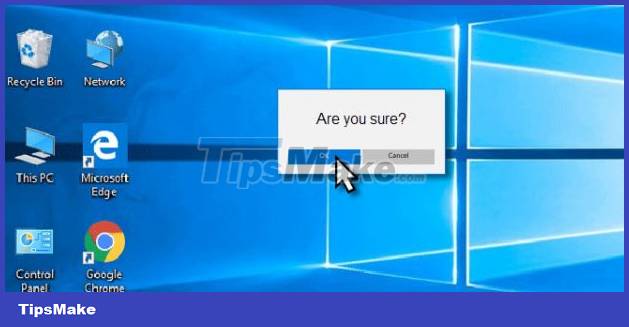 A button is a command that performs a specific function in an application
A button is a command that performs a specific function in an application. The most commonly used commands in a program will be represented by buttons.
Menu - Menu
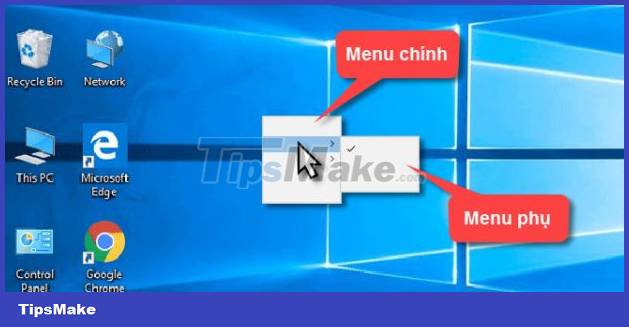 A menu is a pre-arranged set of commands and shortcuts
A menu is a pre-arranged set of commands and shortcuts. Click Menu to open and display the commands and shortcuts inside. Then click an item in the Menu to execute it.
Window - Window
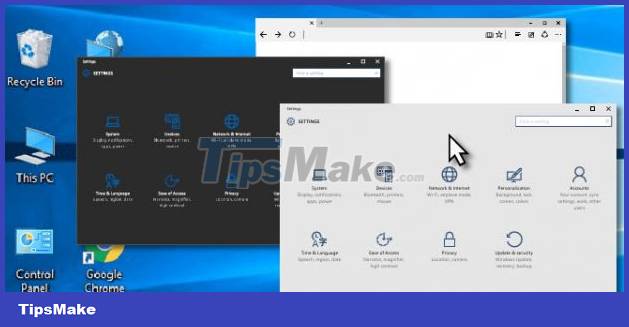 Various application windows
When you open an application or folder, it is displayed in its own window. A window is a container - like a picture within a picture - with its own Menus and buttons specific to that program. Multitasking operating systems allow you to have multiple programs open at once, each in a different window, and you can rearrange multiple windows on the desktop and switch between them.
Conclusion
Understanding Computer makes it easier to compare options, avoid common mistakes, and apply the information in this guide more effectively. Review the relevant requirements before making changes or choosing a solution.
FAQ
What is Computer?
If you're using a desktop computer, you'll need to make sure that the keyboard, mouse, and monitor are plugged into the computer case before continuing.
Why is Computer important?
Understanding Computer helps you evaluate features, compatibility, performance, and potential limitations before you choose a product or follow a procedure.
What should you consider when using or choosing Computer?
Consider your specific goal, compatibility requirements, available features, cost, security, and the practical recommendations described in this guide.
Related Articles
 How to Use a Computer: Step-by-Step Guide19 minutes read
 Foxconn Begins Production of iPhone 15 in India9 minutes read
 10 Ways to Get Started with AI12 minutes read
 View Windows Computer Uptime: Step-by-Step Guide9 minutes read
 How to Make Computer Games: Complete Guide11 minutes read
 How to Use Discord on a PC or Mac6 minutes read
Reader Comments 0
Sign in with email or Google to join the discussion.