Have you ever encountered a situation where all the icons on the desktop are lost when starting Windows? If you encounter this problem, you can follow our instructions below to fix it. You can also use software to change the default Windows icon such as: 343 Windows Icons, 130 Fun Desktop Folder Icons or IcoFX.  Fix the error of not displaying the icon on the Windows desktop. On Windows 7: Right-click on the desktop wallpaper, select View -> Show Desktop icon.
 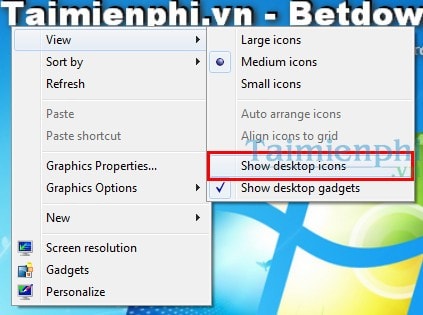 On Windows XP: Right-click on the desktop wallpaper, select Arrange Icon By -> Show Desktop Icons
  On Windows 8.1 and Windows 10, you do the same as on Windows 7. So with the above article, we have introduced to you how to fix the error of not displaying icons on the desktop. Hope it will help you a lot during use. In addition, you can refer to some tips about desktop icons such as changing the My Computer icon or changing the desktop icon icon.
Table of Contents
Problems with Fix Error of Not Displaying Icons on Windows Desktop may be caused by disabled settings, temporary system errors, compatibility conflicts, or corrupted data.
The fixes below begin with simple checks and progress to more advanced troubleshooting so you can restore normal operation without unnecessary changes.
FAQ
What commonly causes problems with Fix Error of Not Displaying Icons on Windows Desktop?
Common causes include disabled settings, outdated software, temporary system errors, compatibility conflicts, corrupted files, or incorrect configuration.
What should I try first?
Start with the simplest checks, confirm the relevant setting, restart the device or application, and install trusted updates before attempting advanced changes.
What if the problem continues?
Back up important data, review error messages, test one change at a time, and use official support resources when the issue affects security or system stability.
Related Articles
 How to Hide and Unhide All Desktop Icons on Windows2 minutes read
 7 Websites to Download Free Desktop Icons for Windows 105 minutes read
 How to Fix the Position of Icons on the Windows 11 Desktop3 minutes read
 Click: How to Lock Desktop Icons in Place4 minutes read
 The Most Effective Way to Fix Windows 10 Desktop Screen Not4 minutes read
 3 Ways to Remove the Green Check Mark on Windows Desktop Icons: Best Options7 minutes read
Reader Comments 0
Sign in with email or Google to join the discussion.