Table of Contents
Anthropic has introduced a research beta called Code Review for Claude Code. The feature analyzes a pull request before it is merged, reports potential defects, and adds comments to the relevant lines.
The system is intended to supplement normal review and testing. It cannot determine every product requirement, security assumption, or operational consequence, and an AI finding should be verified before code is changed.
How the review process works
When a pull request is submitted for review, Claude Code can assign several AI agents to inspect different parts of the change in parallel. The system then checks and consolidates candidate findings to reduce duplicate or weak reports.
Results appear as an overview comment and, where possible, as inline comments next to the affected code. Findings are ranked by severity so developers can examine potentially consequential issues first.
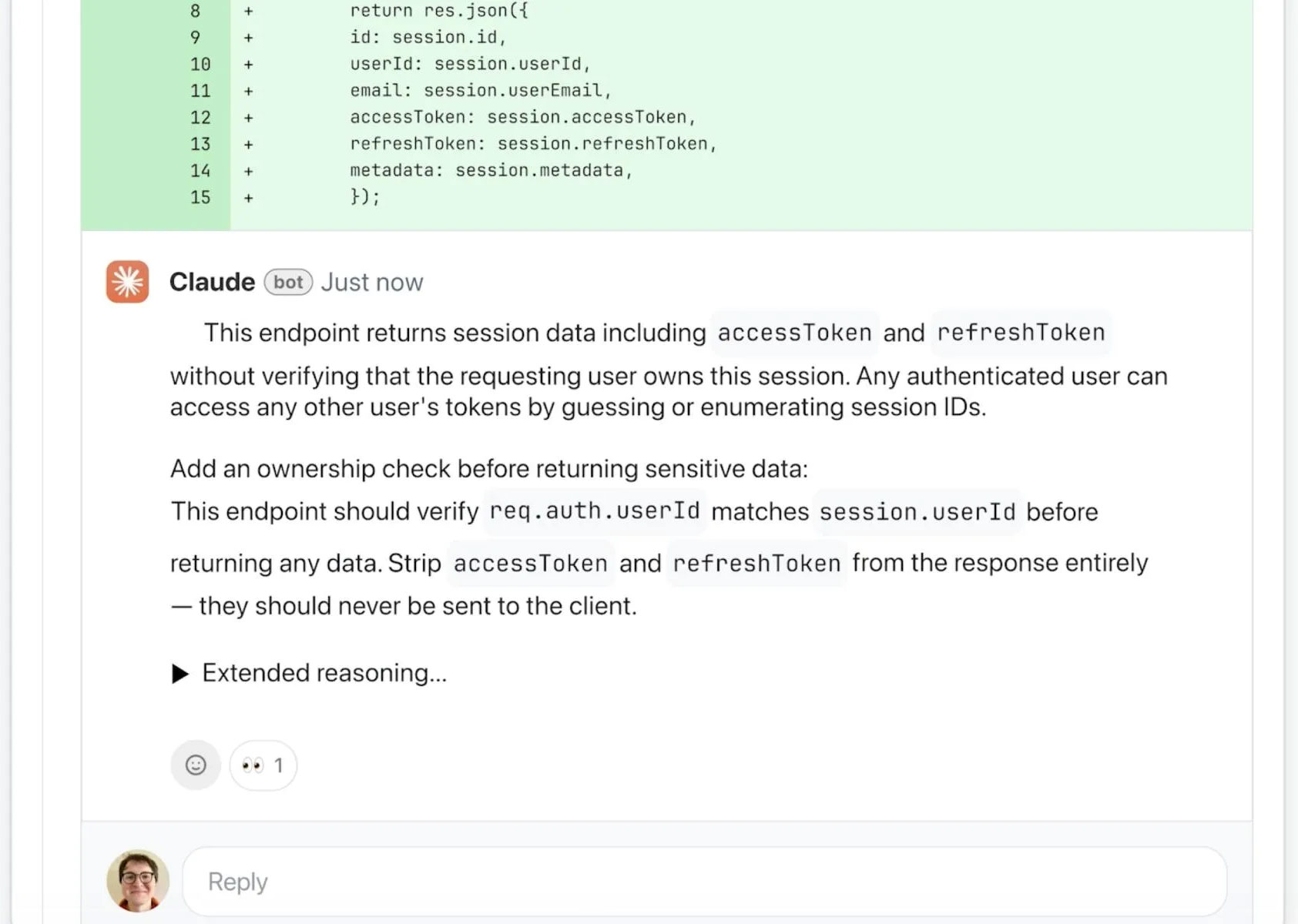
Anthropic says the amount of analysis can scale with the size and complexity of a pull request. A large change may use more agents and take longer than a small patch. Completion time is therefore an estimate rather than a guaranteed service level.
What an AI review may catch
A repository-aware review can look for issues such as incorrect error handling, inconsistent assumptions between files, missing edge cases, unsafe data flow, and tests that no longer match the implementation.
It may still miss:
- a requirement that is not documented in the repository;
- a security boundary or production dependency unavailable to the tool;
- a subtle concurrency, performance, or distributed-systems failure;
- a harmful change that looks intentional in isolation; or
- a problem that requires running the system with real data or hardware.
False positives also matter. A plausible comment can consume review time or encourage a change that introduces a new bug. The author or reviewer should reproduce the problem and check the proposed fix.
Availability and cost controls
The feature is being offered to eligible team and enterprise customers during research testing. Anthropic has indicated that a multi-agent review is more expensive than a lighter GitHub action because it processes more repository context and uses more model calls.
Reported average costs and plan eligibility may change. Organizations should check the current billing terms and configure controls such as a monthly budget, repository-level restrictions, and analytics for review volume, accepted findings, and total spend.
A safe pull request workflow
- Keep each pull request focused enough for a person and a tool to understand.
- Include the reason for the change, expected behavior, and test evidence.
- Run deterministic formatters, linters, type checks, and tests first.
- Use Code Review to look for additional risks.
- Verify each high-severity finding in the code or with a failing test.
- Require appropriate human approval before merging.
- Monitor the deployed change and retain a rollback path.
Automated review is most valuable when it finds a specific issue that can be demonstrated and prevented by a test. The number of comments is not a useful quality metric by itself.
Related Articles
 Anthropic Adds 'Memory' Feature to Claude AI4 minutes read
 What Is the Claude Code: Clear Explanation7 minutes read
 Claude AI Can Use Computers Like Humans5 minutes read
 Using Claude Code on Your Phone14 minutes read
 How to Use Claude to Code and Debug Code6 minutes read
 Claude by Anthropic: Explained5 minutes read
Reader Comments 0
Sign in with email or Google to join the discussion.