Table of Contents
Researchers at TU Wien and storage company Cerabyte produced and read a QR code covering about 1.98 square micrometers. Guinness World Records recognizes it as the smallest QR code. It cannot be read with a phone camera or an ordinary optical microscope; the team used an electron microscope.
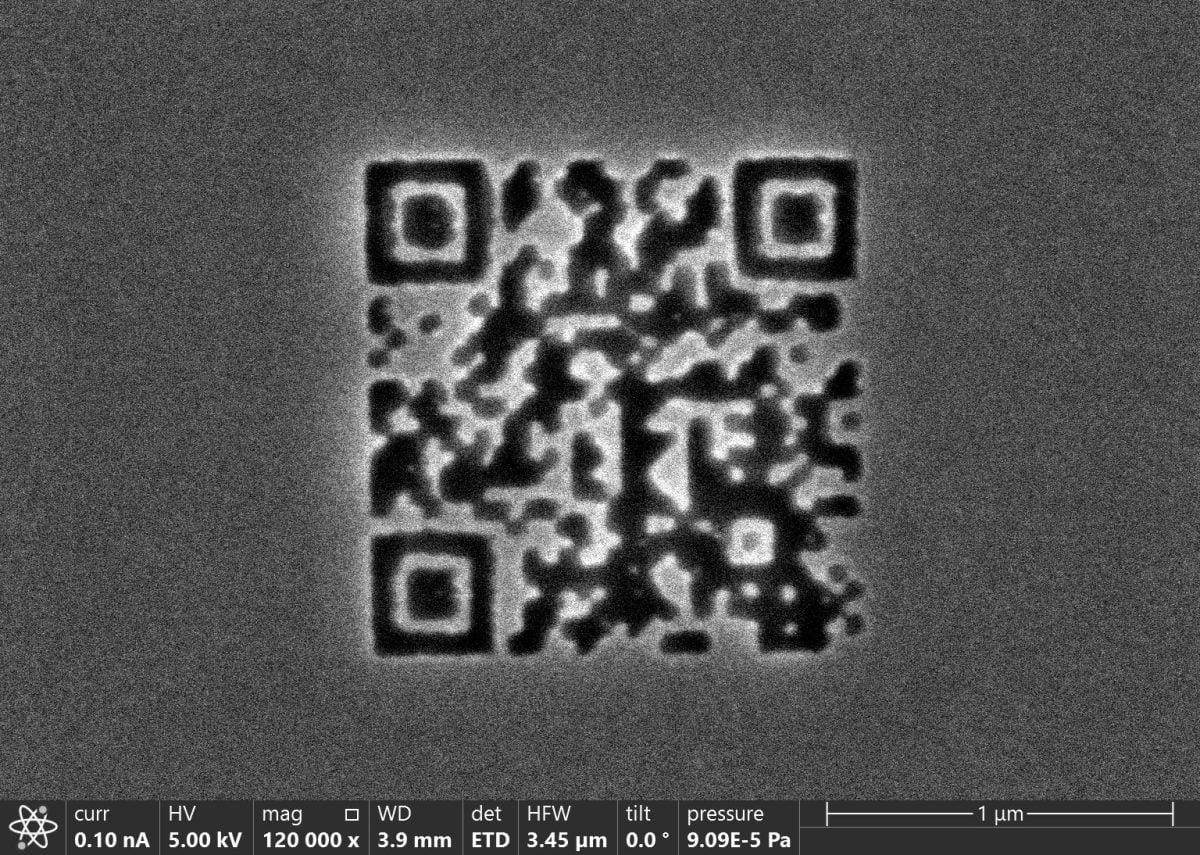
How the tiny code was made
The team used a focused ion beam to mill the pattern into a thin ceramic film. Each pixel measures about 49 nanometers, according to TU Wien's account of the experiment. That scale is below what visible light can resolve in a standard optical microscope, but the team reported repeated electron-microscope readout. The Guinness record entry lists a measured area of 1.977 square micrometers; 1.98 is the rounded figure.
A QR code is a two-dimensional pattern that encodes information. This demonstration used the recognizable structure at an extreme scale; it does not mean a normal smartphone can scan it. For everyday codes, see how QR codes work and are scanned.
Why ceramic storage interests researchers
Thin ceramic films can remain stable without electricity to maintain the stored pattern. TU Wien suggests that, at the demonstrated density, an A4-sized area could theoretically hold more than 2 terabytes. That is a scaling estimate, not a finished A4 storage product. Reading a dense archive would also require suitable equipment and methods.
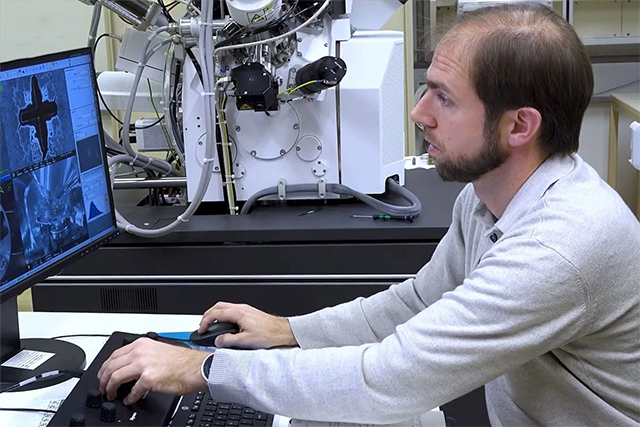
The team says its next steps include other materials, faster writing, and a scalable manufacturing process. Claims of centuries-long storage are a research goal based on material stability, not a measured lifetime for a commercial system. Real archival use would still have to solve retrieval, error handling, cost, and keeping compatible readers available.
For personal files today, use independent copies and test that they can be restored. TipsMake's backup basics explains that practical safeguard while ceramic archives remain experimental.
Related Articles
 What the World Looks Like When Viewed Under a Microscope2 minutes read
 OpenAI Releases Codex for Windows: the Official AI Programming Tool Is Now Available on the Microsoft Store4 minutes read
 Space Scientists Will Use Scanning Electron Microscopes to Find8 minutes read
 Captured Electrons Moving at 7,920,000 Km/h: What You Need to Know5 minutes read
 Anime World Simulator: Full Latest Giftcode and How to Redeem Code11 minutes read
 The Smallest House in the World Is Only 15 Micrometers, to Observe Must Use a Microscope3 minutes read
Reader Comments 0
Sign in with email or Google to join the discussion.