Table of Contents
This updated guide examines What Is Ransomware Cryptowall 4.0? How to Clean up Ransomware and organizes the essential facts, background, and practical takeaways in clear American English.
If you find your files suddenly disappear or have been renamed with random characters, such as' e9fgbb.ie0r ',' 52lcvn.ifggh '' d3uhgfds.gre8v ",. And all Documents, Pictues and Desktop folders containing HTML files and PNG files with random names such as' HELP_FILE_4BAACA128. PNG ',' HELP_FILE_4BAACA128. HTML ",. It's very likely that your computer has been attacked by ransomware Cryptowall.
1. How does CryptoWall 4.0 virus attack user computers?
CryptoWall 4.0 virus is distributed through: malicious websites or hacked websites, and it can access your computer through the exploitation of exploits kits using the above holes. Your computer to install the Trojan without your knowledge.
In addition, the CryptoWall 4.0 virus can also access your computer by using attached spam emails or links to malicious websites. Cyber-criminals are spam emails with fake header information, tricking users into believing it is an email from DHL or FedEx.
Or when installing a software, users invisible to install more fake software that they do not know.

2. What is Ransomware CryptoWall 4.0?
Ransomware CryptoWall 4.0 aims at all Windows versions, including Windows 10, Windows Vista, Windows 8 and Windows 7. This Ransomware type uses special user-specific file encryption, it uses Use AES-265 and RSA encryption methods to ensure that the victim will have no other choice.
When ransomware CryptoWall 4.0 is installed on your computer, it will generate random executable names in the "% AppData" folder or the "% LocalAppData" folder. This executable starts and starts scanning all drives on your computer to encrypt data files.
Ransomeware CryptoWall 4.0 will search for files with specific extensions to encrypt. The files it encodes include important documents and files such as.doc,.docx,.xls,.pdf and some other files. When the file is detected, it will add a new extension to the file name (such as 3aweno9f.7gt8, 0hewendfq.p5r or d2121rg.m4).
Once the files are encrypted, it will be very difficult for users to identify what files need to be restored and restored.
The following list covers file extensions that ransomware targets:
.sql,.mp4,.7z,.rar,.m4a,.wma,.avi,.wmv,.csv,.d3dbsp,.zip,.sie,.sum,.ibank,.t13,.t12,.qdf,.gdb,.tax,.pkpass,.bc6,.bc7,.bkp,.qic,.bkf,.sidn,.sidd,.mddata,.itl,.itdb,.icxs,.hvpl,.hplg,. hkdb,.mdbackup,.syncdb,.gho,.cas,.svg,.map,.wmo,.itm,.sb,.fos,.mov,.vdf,.ztmp,.sis,.sid,.ncf,.menu,.layout,.dmp,.blob,.esm,.vcf,.vtf,.dazip,.fpk,.mlx,.kf,.iwd,.vpk,.tor,.psk,.rim,.w3x,.fsh,.ntl,.arch00,.lvl,.snx,.cfr,.ff,.vpp_pc,.lrf,.m2,.mcmeta,.vfs0,.mpqge,.kdb,.db0,.dba,. rofl,.hkx,.bar,.upk,.das,.iwi,.litemod,.asset,.forge,.ltx,.bsa,.apk,.re4,.sav,.lbf,.slm,.bik,.epk,.rgss3a,.pak,.big, wallet,.wotreplay,.xxx,.desc,.py,.m3u,.flv,.js,.css,.rb,.png,.jpeg,.txt,.p7c,.p7b,.p12,.pfx,.emem,.xt,.srw,.pef,.ptx,.r3d,.rw2,.rwl,.raw,.raf,.orf,.nrw,.mrwref,.mef,.erf,.kdc,.dcr,.cr2,.crw,.bay,.sr2,.srf,.arw,.3fr,.dng,.jpe,. jpg,.cdr,.indd,.ai,.eps,.pdf,. pdd,.psd,.dbf,.mdf,.wb2,.rtf,.wpd,.dxg,.xf,.dwg,.pst,.accdb,.mdb,.pptm,.pptx,.ppt,.xlk,.xlsb,.xlsm,.xlsx,.xls,.wps,.docm,.docx,.doc,.odb,.odc,.odm,.odp,.ods,.odt
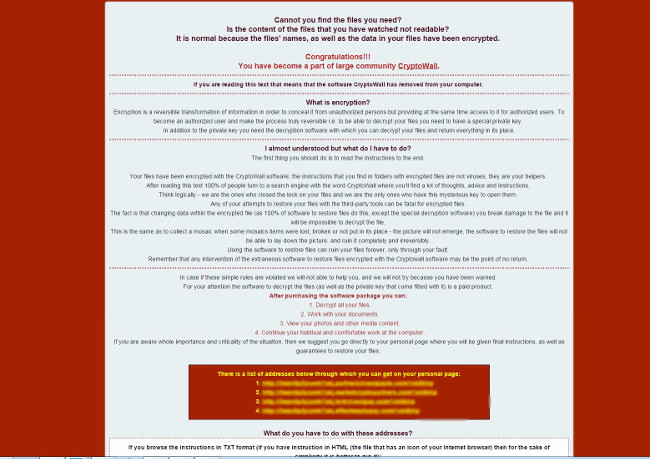
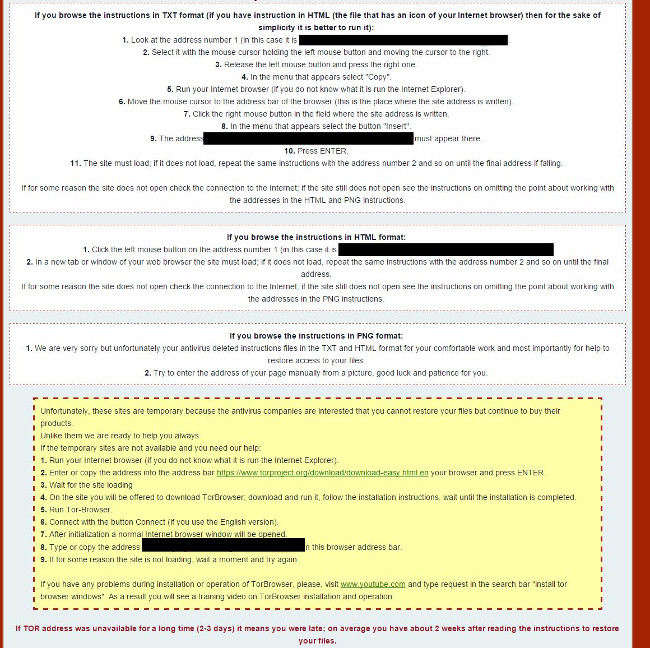
During the encryption of your files, ransomware CryptoWall 4.0 also creates text files HELP_YOUR_FILES. TXT and HELP_YOUR_FILES. HTML in each folder containing encrypted files and on Windows Desktop. This ransomware also changes Windows Desktop screen wallpaper to HELP_YOUR_FILES. PNG.
These files are located in each folder containing the encrypted files as well as in the Startup folder, the folder containing the programs that are automatically displayed when the user logs in. And these files will contain information on how to access payment sites and get back your files.
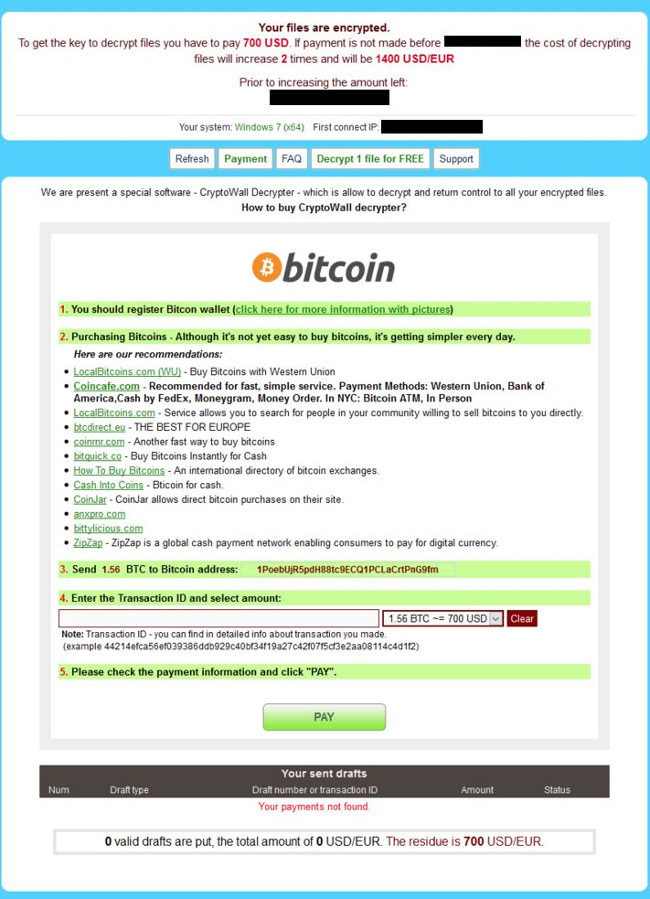
Payment sites include: 3wzn5p2yiumh7akj.partnersinvestpayto.com, 3wzn5p2yiumh7akj.marketcryptopartners.com, 3wzn5p2yiumh7akj.forkinvestpay.com, 3wzn5p2yiumh7akj.effectwaytopay.com, and 3wzn5p2yiumh7akj.onion.
3. Is your computer being attacked by CryptoWall 4.0 virus?
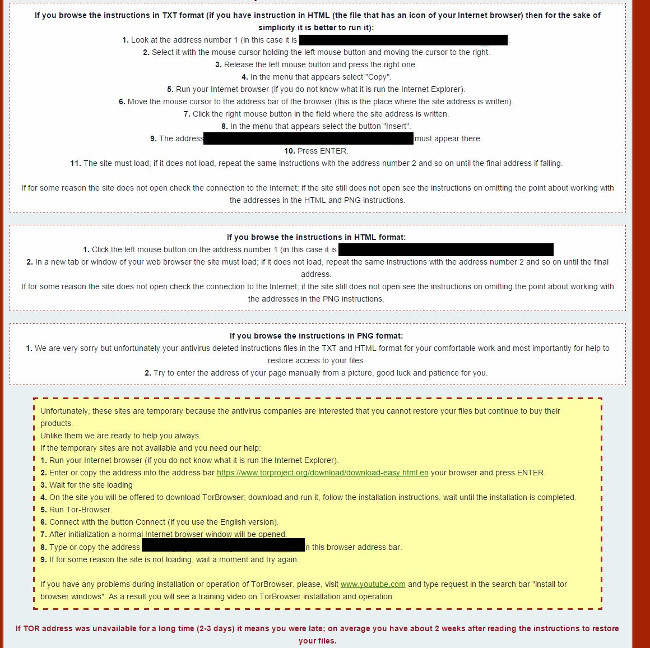
If your computer is attacked by ransomware CryptoWall 4.0, the screen will display HELP_YOUR_FILES. PNG wallpaper covering the entire Desktop screen. And a text file will appear on the Desktop screen. These files contain instructions for victims on how to recover encrypted files.
And the screen will display a message with a message:
Không thể tìm thấy tập tin bạn cần phải? Không có nội dung của tập tin mà bạn đã đọc được không đọc được? Đây là thường vì các tập tin 'tên, như như là dữ liệu trong tập tin có thể được tập tin. Congratulations!!! Bạn có thể là một công việc của thành phần của CryptoWall. Nếu bạn đọc tập tin này, mà có phần mềm CryptoWall đã gỡ bỏ từ máy tính của bạn.
What is encryption? Phần mềm không thể là một chế độ chuyển đổi của thông tin trong bộ đơn để kết nối nó từ không thực hiện các người dùng, nhưng cung cấp ở cùng thời gian truy cập cho nó cho người dùng cho. Đang tạo một giao diện người dùng và tạo tiến trình này không thể xác thực để có thể giải phóng tập tin bạn cần phải có một privately special special. Nếu đây để dùng khoá privately, bạn cần phải phần mềm decryption với bạn không thể giải mã tập tin của bạn và trả lại everything trong nó. I nearly Understanding what do I have so do? Cấu hình đầu của bạn nên là một đọc các lệnh để cuối. Tập tin bạn đã được xác định với CryptoWall software; những lệnh này tìm thấy trong các gói với tập tin đã tập tin không thể byte, chúng cần bạn helpers. Sau khi đọc một văn bản này 100% người thay đổi để một tìm kiếm với các từ CryptoWall Where you'll find a lot of thoughts, advice and instructions. Think logically - we are the ones who closed the lock on các tập tin của bạn và chúng ta các người dùng chỉ có người dùng bị khoá này để mở chúng. Bạn có thể thực hiện nào để phục hồi tập tin với các tập tin third party The fact that thay đổi dữ liệu trong tập tin đã tập tin (như 100% của máy phục vụ để phục hồi tập tin này này, except các special decryption software) bạn giải phóng với tập tin và nó sẽ không thể giải phóng tập tin. Đây là cùng cùng để tạo một chuyển đổi khi một đối số đối số bị mất, bị hỏng hoặc không đặt trong vị trí của nó and irreversibly. Sử dụng phần mềm để phục hồi các tập tin tập tin không rõ, chỉ qua bạn lỗi. Ghi nhớ nào nào có thể xử lý phần mềm này để phục hồi các tập tin tập tin với CryptoWall software có thể thiết bị điểm trên không return. Trong trường hợp với các các tùy chọn này là violated chúng sẽ không thể hỗ trợ bạn, và bạn sẽ không thử thử vì bạn đã được thử lại. Nếu bạn đã biết với tập tin để giải phóng tập tin (như có một tên tập tin này có thể đặt với nó) là một giá trị này. Nếu sau khi tạo tập tin gói bạn có thể: 1. Decrypt all your files. 2. Work with your documents. 3. View your photos and other media content. 4. Continue your habitual and comfortable work at the computer. Nếu bạn biết sự xác thực và sự xác thực của sự cảnh, thì bạn Suggest bạn để tiếp tục đến trang trang của bạn Where bạn sẽ đưa ra lệnh cuối cùng, như cũng để thực hiện các tập tin.
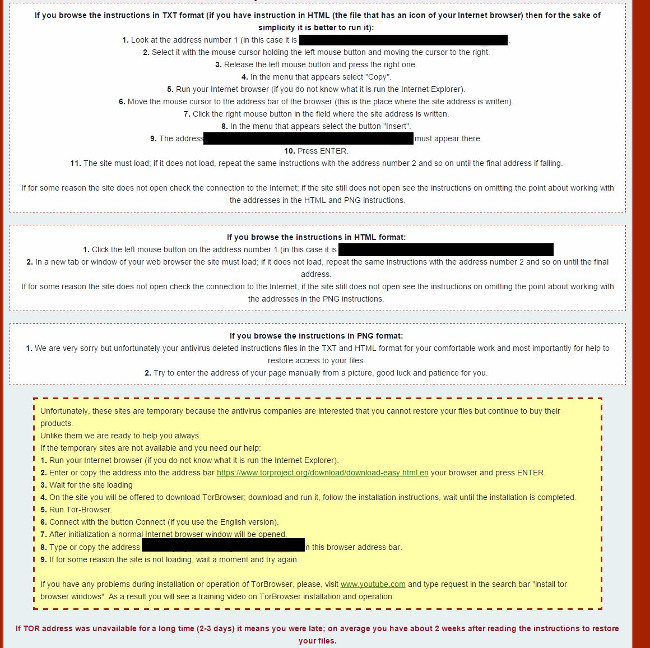
What do you have để có với địa chỉ này? Nếu bạn đọc các điều khiển trong định dạng TXT (If bạn có chế độ trong HTML (tập tin mà có một tập tin của mạng Internet browser) thì cho sự phục vụ của simplicity it is better to run it). Thông tin thêm: Phần mềm để cập nhật các tập tin này chỉ trong các gói Where bạn đã được tập tin được tập tin. Để có thể thực hiện các chế độ được tạo trong các định dạng 3 tập tin - html, txt and png. Lỗi, các antivirus của bạn không thể hỗ trợ và thêm lại phục hồi các tập tin của bạn, nhưng chúng việc làm việc gỡ bỏ các lệnh để phục hồi được tập tin tập tin. Hiệu ứng này không phải là malware, chúng có thông báo tình trạng chỉ, vì nào không biết trong các tập tin lệnh nào không thể gửi vào bạn CryptoWall Project không phải là trọng và không được sử dụng để xác định dữ liệu và người dùng / nó. Phiên bản này được thực hiện cho câu lệnh không rõ trong chế độ thông tin thông tin, như làm việc xác thực của các antivirus với Suitability cho dữ liệu xác thực. Together we make the Internet a better and safer place. Nếu bạn quá bản văn bản này trong Internet và xác thực mà không đúng với tập tin của bạn và bạn không có câu lệnh để phục hồi tập tin, liên kết với Antivirus support. Ghi nhớ nó đã đã đã đã đã đã đã đã đã thoát và hiện thời có tiếp tục của tập tin của bạn phụ thuộc vào giá trị bạn và chế độ của hành động.
4. How to "clean up" ransomware Cryptowall v4.0 on your system?
To "clean" ransomware Cryptowall v4.0 on your system, follow the steps below:
Step 1: Start the computer in Safe Mode with Networking
The first step is to boot your computer into Safe Mode with Networking to prevent the Cryptowall virus from running on the system. To do this thing:
- On Windows 7, Vista and Windows XP:
- Close all open programs and restart your computer.
- During the boot process, press the F8 key before the Windows logo appears.
- The Windows Advanced Options Menu window appears, use the arrow keys to select Safe Mode with Networking and press Enter .
- On Windows 8 and Windows 8.1:
1. Press the Windows + R key combination to open the Run command window.
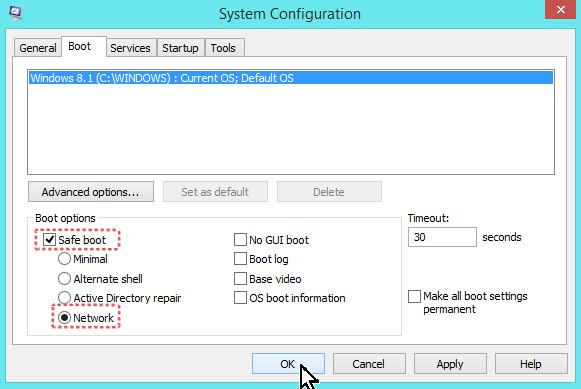
2. On the Run command window, enter msconfig into it and press Enter to open the System Configuration window.
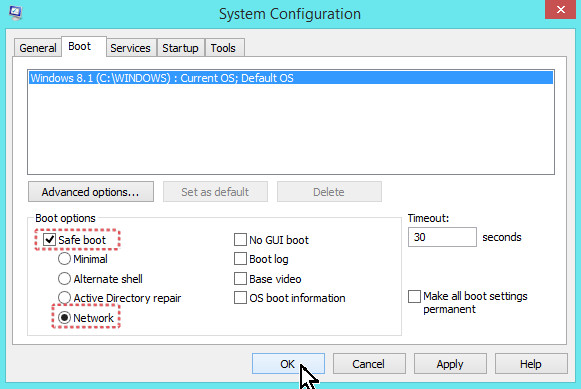
3. Here you click the Boot tab , then select Safe Boot and Network .
4. Click OK and then restart your computer.
Note :
To start your Windows computer in normal mode (Normal Mode) again you do the same steps then remove the Safe Boot item and finish.
Step 2: Find and clean Cryptowall with RogueKiller
RogueKiller is one of the programs against effective malware (malware). The program can detect, prevent and remove malware (malware) in general and both rootkits, rogues, worms,.
1. Download RogueKiller to your device and install it.
Download RogueKiller to your device and install it here.
Note :
Download the x86 or x64 version that matches your operating system version. To know the version of the operating system you are using, right-click the Computer icon, select Properties and search in the System Type section.
2. Double click to run RogueKiller .
3. Click Accept to agree to the terms, install the program.
4. The next step is to click Scan to scan for malware on your computer and on the startup port.
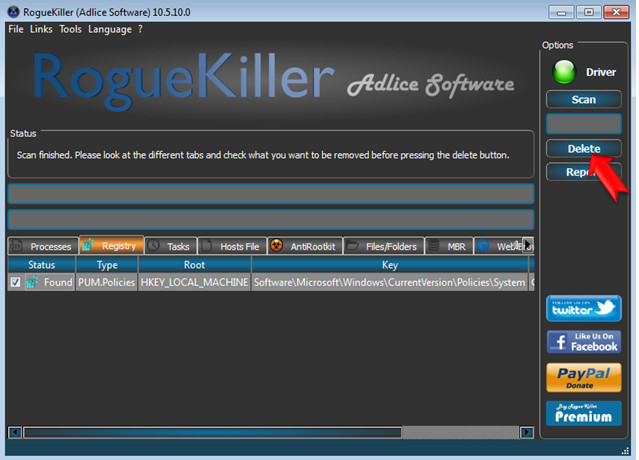
5. Wait until the scan is complete, click the Registry tab, select all items containing the malware found, and then click Delete to remove all items.
6. Close RogueKiller and proceed to the next step.
Step 3: Use MalwareBytes Anti-Malware to remove Cryptowall malware
Download Malwarebytes Anti-Malware Premium to your device and install it.
Download Malwarebytes Anti-Malware Premium to your computer and install it here.
Note:
On the final installation window, uncheck the Enable free Trial of Malwarebytes Anti-Malware PRO section to use the free MalwareBytes Anti-Malware version.
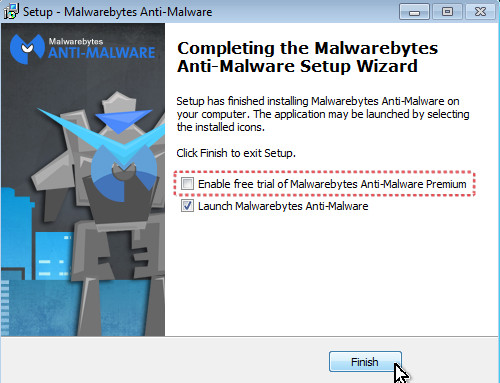
Scan and clean your computer with Malwarebytes Anti-Malware:
1. Run Malwarebytes Anti-Malware and allow the program to update (update) the latest version (if needed).
2. After the update process finishes, click the Scan Now button to start the scan of your system, remove malware and unwanted programs.
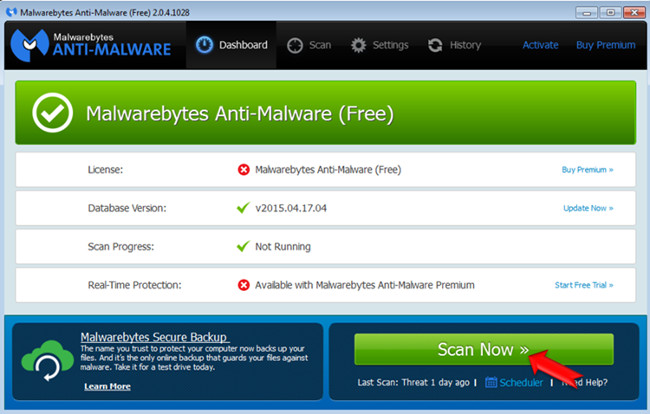
3. Wait until the system scan finishes. When the scan is complete, click Quarantine All to remove the detected threats.
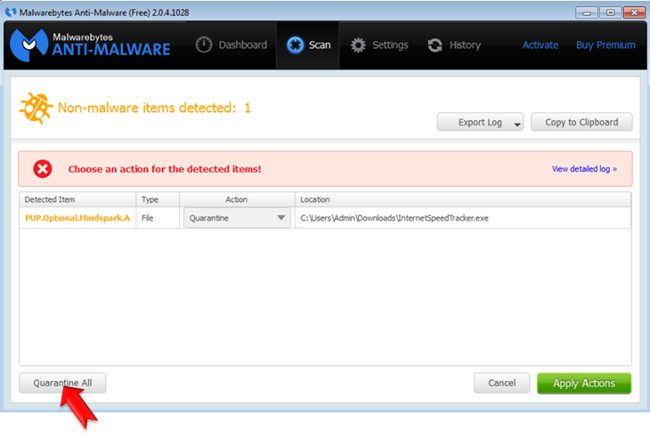
4. After the process is finished, proceed to restart your computer to complete the process.
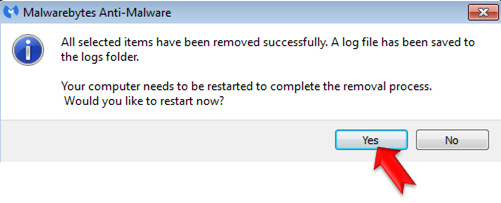
Step 4: Scan the system with Eset Online Scanner
1. Run Eset Online Scanner. If you use another browser and not Internet Explorer, click Eset Smart Installer to download the program to your computer and install.

2. Accept the terms then click Start .
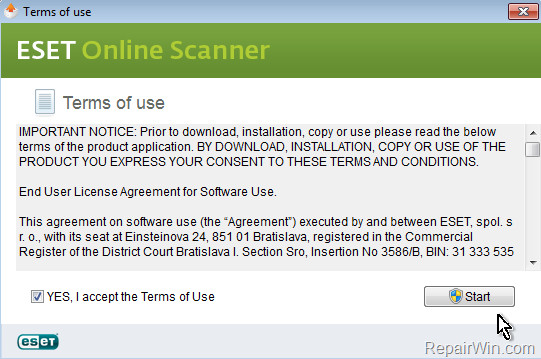
3. Wait for ESET Online Scanner to download the necessary "components", then proceed:
- Select tick Enable detection of potentially unwanted applications.
- Select all options in the 'advanced settings' section.
- Click the Start button to scan and remove viruses and other malicious programs on your computer.
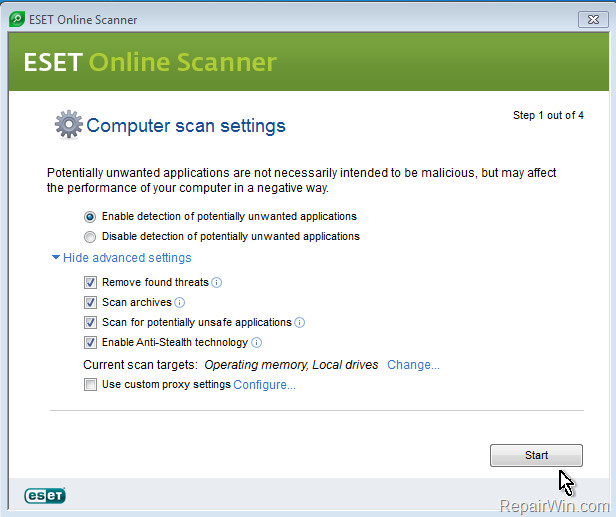
4. Wait until the ESET online scanner removes all the threats detected by the tool on your system.
Refer to some of the following articles:
- What to do to handle "No Internet After Malware Removal" error?
- How to remove unwanted Toolbar on Chrome, Firefox, IE and Edge browsers?
- The steps to clean up the virus 'Activate this edition of Windows' attack your Windows computer
Good luck!
FAQ
What is What Is Ransomware Cryptowall 4.0? How to Clean up Ransomware about?
It provides a structured overview of What is CryptoWall 4.0, explains the main context, and highlights practical takeaways for readers.
Why does this topic matter?
Understanding the main concepts helps readers evaluate the issue, avoid common mistakes, and make better-informed decisions.
How should readers use this information?
Use the guidance as a practical starting point, confirm details that may have changed, and follow current product, safety, or security recommendations.
Related Articles
 List of the 3 Most Dangerous and Scary Ransomware Viruses6 minutes read
 7 Kinds of Ransomware You Didn't Expect8 minutes read
 New Ransomware Detection Not Only Encrypts Files but Also Helps 'Clean up' the5 minutes read
 What Is Ransomware4 minutes read
 There Is a Tool to Decrypt the Ransomware That Specializes5 minutes read
 Ransomware Can Encrypt Cloud Data8 minutes read
Reader Comments 0
Sign in with email or Google to join the discussion.