Table of Contents
A brief history of PPTP
This guide explains PPTP (Point-to-Point Tunneling Protocol), why it matters, how it works, and how to evaluate or use it in practical situations.
Despite being a fast and stable protocol for Windows networks, PPTP is no longer considered security. PPTP has been replaced by more secure and secure VPN tunneling protocols, including OpenVPN, L2TP / IPSec and IKEv2 / IPSec.
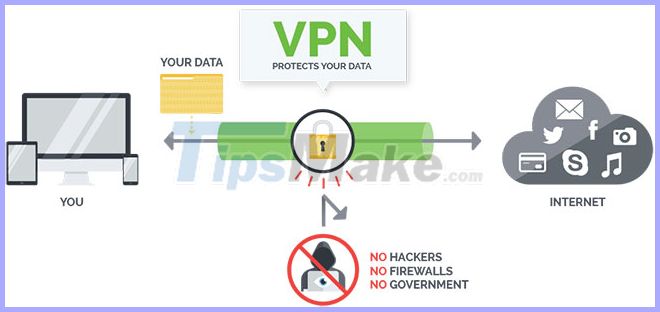 PPTP is an outstanding development of PPP
How does PPTP work?
PPTP is an outstanding development of PPP and therefore, based on its authentication and encryption framework. Like all tunneling technologies, PPTP encapsulates data packets, creating a tunnel for data to be transmitted over an IP network.
PPTP uses a client-server design (specifications included in Internet RFC 2637) that work on Layer 2 of the OSI model. Once the VPN tunnel is established, PPTP supports two types of information flows:
- Control messages go directly between the VPN client and the server.
- Data packets go through the tunnel, ie to or from the VPN client.
People often get the information of PPTP VPN server address from admin. The connection string can be server name or IP address.
The PPTP protocol
PPTP uses the General Routing Encapsulation tunneling technique to encapsulate data packets. It uses TCP port 1723 and port IP 47 via the Transport Control Protocol. PPTP supports encryption keys of up to 128 bits and Microsoft's Point-to-Point Encryption standards.
Tunneling modes: Voluntary and Compulsory
The protocol supports two types of tunneling:
- Voluntary Tunneling : A type of tunneling initiated by the client on an existing connection to the server.
- Compulsory Tunneling : A type of tunneling initiated by the PPTP server at the ISP, requiring the remote access server to create the tunnel.
Is PPTP still in use?
 PPTP is still used in some network deployment cases
Although it has been around for a long time and has security flaws, PPTP is still used in some network deployment cases, mostly internal business VPNs in old offices. The advantage of PPTP is that it is easy to install, fast and because it is integrated on most platforms, you do not need any special software to use. All you need to establish a connection is the login information and the server address.
However, being easy to use PPTP does not mean you should use it, especially if having a high level of security is important to you. In that case, you should use a better security protocol for your VPN network, such as OpenVPN, L2TP / IPSec or IKEv2 / IPSec.
FAQ
What should I know about PPTP (Point-to-Point Tunneling Protocol)?
Focus on the key features, requirements, limitations, and practical use cases explained in this guide.
How do I get the best results with PPTP (Point-to-Point Tunneling Protocol)?
Follow the recommended steps, use current software or information, confirm compatibility, and review settings before major changes.
Are there any risks or limitations?
Potential limitations depend on compatibility, data quality, cost, privacy, support, and how the product or method is used.
Related Articles
 Learn About Virtual Private Network -- VPN and Tunneling12 minutes read
 Configure the VPN Network Connection in Windows XP8 minutes read
 What Is SSTP (Secure Socket Tunneling Protocol)?4 minutes read
 L2TP (Layer 2 Tunneling Protocol) Price?4 minutes read
 What Is Split Tunneling? How to Enable It?8 minutes read
 What Is Split Tunneling?4 minutes read
Reader Comments 0
Sign in with email or Google to join the discussion.