Table of Contents
Headphone impedance is the opposition a headphone presents to an alternating audio signal, measured in ohms (Ω). It helps determine the voltage and current an amplifier must supply, but it does not directly determine volume or sound quality. Sensitivity, impedance across frequency, and the source's output capability all have to be considered together.
Impedance is more than resistance
A driver contains a coil or another electrical load with resistance plus reactive behavior. Its impedance can change with frequency, sometimes substantially. The value printed on the box is usually a nominal impedance, not a constant at every musical frequency.
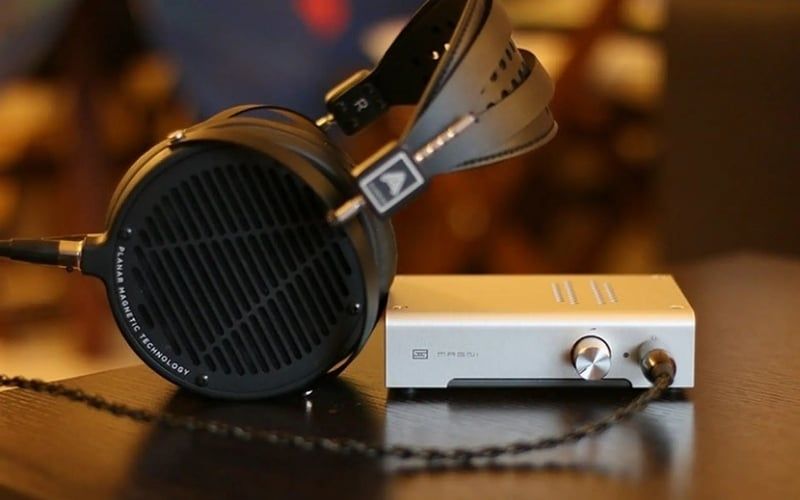
Planar-magnetic headphones often have a relatively flat impedance curve, while many dynamic headphones show peaks caused by driver and enclosure resonance. That behavior matters when paired with a source whose own output impedance is high.
Voltage, current, and power
For a simplified resistive load, power follows P = V²/R. At the same voltage, a lower-impedance headphone draws more current and power; a higher-impedance headphone draws less current but may need more voltage to reach the same acoustic level.

This corrects a common misconception: a high-impedance headphone does not force a phone to deliver more current. It may remain too quiet because the phone cannot produce enough voltage. A low-impedance, low-sensitivity headphone can instead stress a weak output's current limit.
Low and high impedance are not quality categories
| Characteristic | Lower nominal impedance | Higher nominal impedance |
|---|---|---|
| Typical source demand | More current at a given voltage | More voltage for the same power |
| Portable-device suitability | Often suitable, but sensitivity still matters | May work well if voltage sensitivity is high and the source has enough output |
| Potential source mismatch | Weak outputs may current-limit; high output impedance can alter response | Low-voltage outputs may not provide enough level or headroom |
| Sound quality | Can be excellent or poor | Can be excellent or poor |
| Need for an external amp | Depends on sensitivity and current demand | Depends on sensitivity and voltage demand |
The 50-ohm dividing line sometimes used in shopping guides is arbitrary. There are easy-to-drive headphones above it and difficult headphones below it. High impedance does not create wider soundstage, better detail, noise filtering, or professional suitability.
Sensitivity predicts loudness from the available input
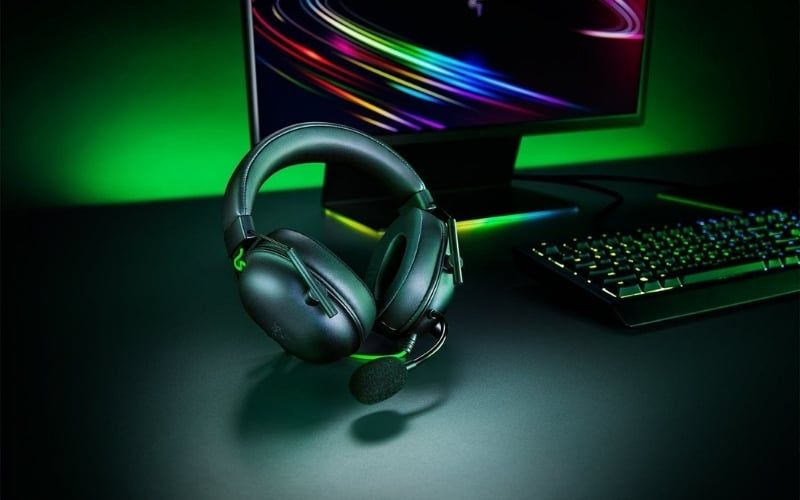
Sensitivity may be specified as dB SPL per milliwatt or dB SPL per volt. A 300-ohm headphone with high voltage sensitivity can be easier for one source than a low-impedance planar model with low sensitivity. The units must match before ratings are compared.
Use the headphone sensitivity guide for the dB/mW and dB/V conversion and a fuller amplifier calculation.
What the amplifier must do
A suitable source should provide:
- enough voltage for the target peak level;
- enough current without clipping or protection shutdown;
- a low noise floor for sensitive headphones and in-ear monitors;
- fine volume control at normal listening levels;
- a sufficiently low output impedance for predictable frequency response.
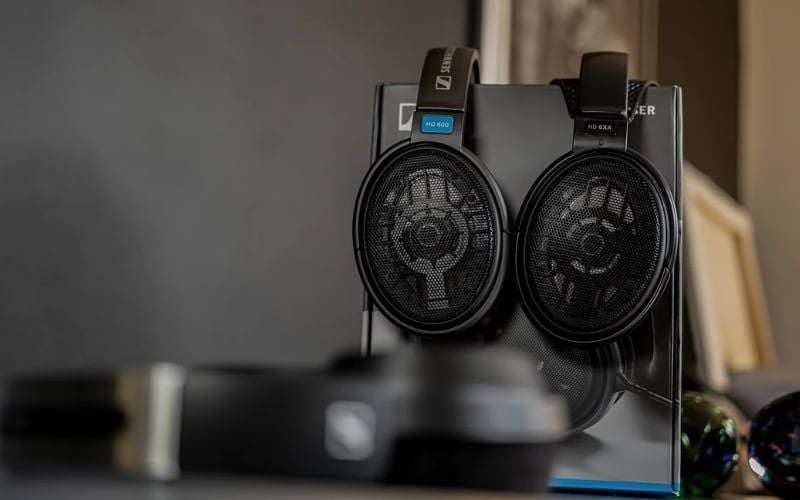
If the source reaches a comfortable level with headroom, no obvious distortion, no hiss, and balanced channels, an external amplifier is unlikely to improve fidelity merely because it is more powerful.
Why source output impedance matters
The amplifier also has output impedance. When it is not small relative to the headphone load, the two form a voltage divider. With headphones whose impedance changes over frequency, this can alter tonal balance. A common conservative target is source output impedance below one-eighth of the headphone's nominal impedance, but actual frequency-response tolerance and impedance curves provide a better answer.
High output impedance can also reduce electrical damping of a dynamic driver. This is a source-matching issue, not proof that one impedance class sounds better.
Typical devices and what to check
Phones and USB-C dongles
Many dongles handle sensitive portable headphones well but have limited maximum voltage. Some increase output when they detect a higher load, and some devices apply regional volume limits. Check measured power into a load near the headphone's impedance.
Laptops and desktop PCs
Outputs vary widely. A modern motherboard may drive a demanding headphone adequately, while another produces hiss, interference, or low level. Marketing terms such as “high-end audio” do not replace output measurements.
Audio interfaces
An interface designed for microphones and monitors may still have a weak or high-impedance headphone output. Review the headphone-output specification independently of the interface's converter specifications.
Dedicated amplifiers
An external amp is appropriate when the existing source lacks clean voltage/current, has audible noise, or cannot control volume usefully. Choose low gain for sensitive headphones and verify the rated load range.
Do not choose impedance by occupation or genre
There is no correct ohm range for students, gamers, audiophiles, or engineers. For gaming, frequency response, channel matching, comfort, microphone needs, platform compatibility, and measured latency matter more. For production, translation, repeatability, isolation, and known calibration behavior matter more.
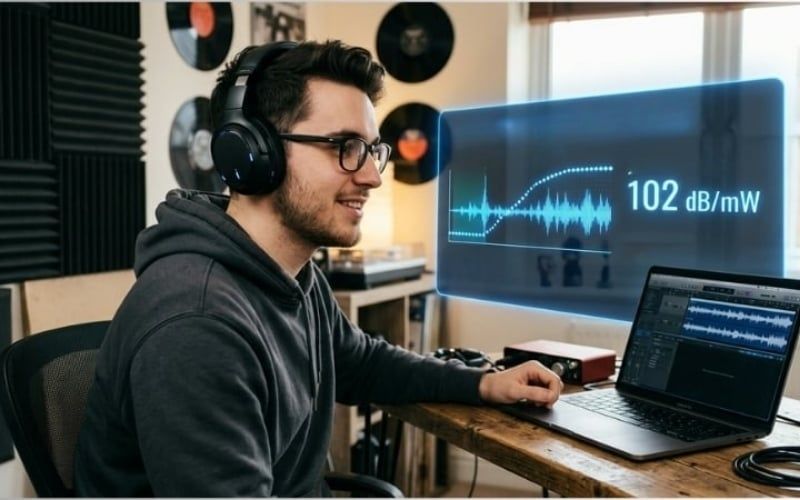
Similarly, low impedance does not “optimize virtual surround,” and high impedance does not inherently reveal footsteps or produce a deeper soundstage. Those are acoustic and software characteristics.
Can a powerful source damage headphones?
Any amplifier can damage a headphone—or hearing—if it delivers excessive level for long enough. The mere presence of a powerful amp is not a problem when gain and volume are controlled. Start with volume at minimum before connecting or switching outputs, especially with sensitive in-ear monitors.
A low-impedance headphone does not automatically distort on a high-power source. Distortion occurs if the amp or driver exceeds its clean operating range, if the source is unstable into the load, or if the signal itself clips.
Balanced outputs require extra care
Some amplifiers provide 2.5mm, 4.4mm, or XLR balanced headphone outputs that can deliver more voltage. Never use a simple adapter that ties a balanced amplifier's negative output terminals together to feed a single-ended headphone connection; that can damage the amplifier. Use only a cable and wiring arrangement approved for both devices.
The contact-count guide for TS, TRS, TRRS, and headset jacks explains why plugs that look similar can carry different signals.
Practical matching steps
- Find nominal impedance and sensitivity, including the sensitivity unit.
- Find the source's maximum voltage or power at a similar load and its output impedance.
- Use a headphone-power calculator to estimate peak SPL, leaving headroom for quiet masters and equalization.
- Check whether independent tests report hiss, clipping, or frequency-response changes with that load.
- Try the existing output first at a safe level. Add an amp only if it solves an identified limitation.
Answers to common impedance questions
Are 32-ohm headphones better than 16-ohm headphones?
No. The ohm value alone says nothing about frequency response, distortion, construction, or fit. Either can be louder on a given source depending on sensitivity.
Can a phone drive high-impedance headphones?
Sometimes. If the headphone's voltage sensitivity is high and the phone or dongle supplies enough voltage, it may work well. Test or calculate rather than assuming failure.
Does high impedance drain a phone battery faster?
Not inherently. At the same output voltage it draws less current than a lower impedance. Actual battery use depends on target level, headphone sensitivity, amplifier efficiency, and the rest of the phone.

Impedance is one electrical specification in the playback chain. For the larger picture—recording, headphone response, DAC, and amplifier—see the high-fidelity headphone guide.
Related Articles
 5 Tips to Choose the Right Cheap Headphones6 minutes read
 8 Brands You Can Trust When Buying Headphones8 minutes read
 6 Things to Check Before Buying New Headphones7 minutes read
 How to Choose Good Quality Wired Headphones: Step-by-Step Guide10 minutes read
 What Is Headphone Burn-In?9 minutes read
 Top 10 Best Wired Headphone Headsets10 minutes read
Reader Comments 0
Sign in with email or Google to join the discussion.