Table of Contents
Bluetooth headphones receive digital audio wirelessly from a phone, computer, tablet, TV, or other compatible source. They provide cable-free convenience, but the experience depends on fit, microphones, battery condition, radio performance, codec support on both devices, and the intended use. A newer Bluetooth version number alone does not guarantee better sound, range, or latency.
How Bluetooth headphone audio works
The source converts audio to a codec both devices support, transmits it over Bluetooth in the 2.4 GHz band, and the headphones decode and amplify it. The radio shares a crowded band with Wi-Fi and many accessories, so walls, a body between the devices, busy wireless environments, antenna placement, and firmware can affect stability.
The source and headphones negotiate a common codec. If a premium codec is supported on only one side, they fall back to another option. The headphones' drivers, tuning, seal, digital processing, and amplifier usually matter more to the final sound than the codec name by itself.
Common designs
True wireless and in-ear earbuds
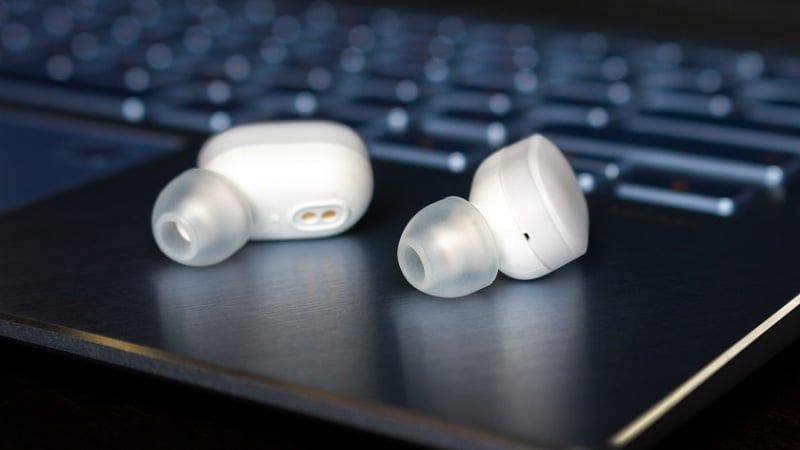
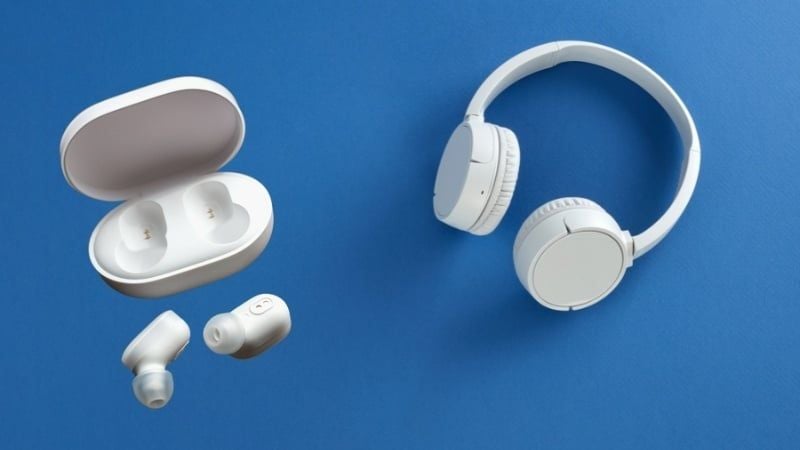
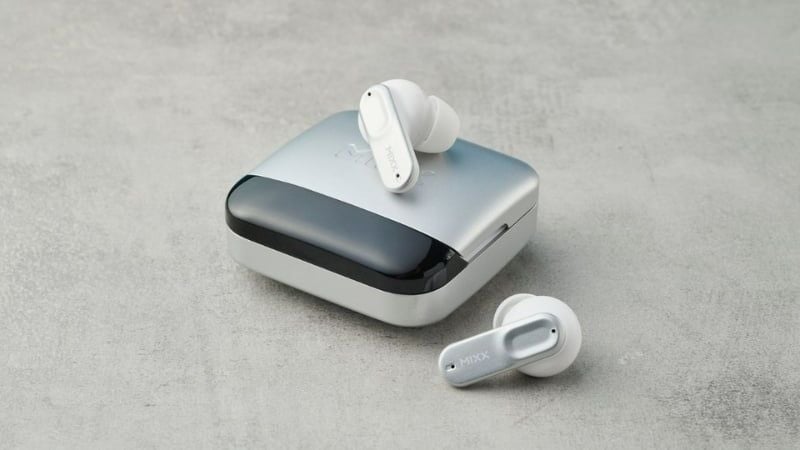
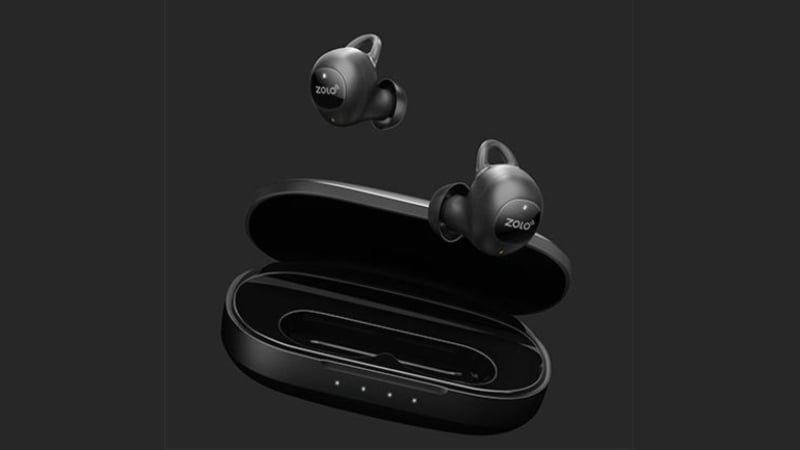
True wireless stereo (TWS) earbuds have no cable between the earpieces and recharge in a case. Sealing in-ear tips can provide good passive isolation and bass, while open-fit earbuds trade isolation for a less occluded feel.
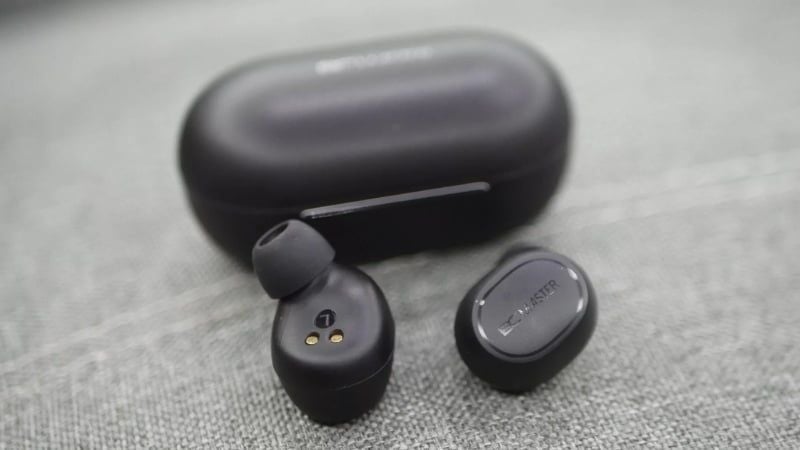
They are compact and convenient, but the small batteries age, individual buds are easy to lose, microphone quality varies, and fit can be highly personal. Check whether either bud works alone and whether replacement tips or individual earpieces are available.
Over-ear headphones
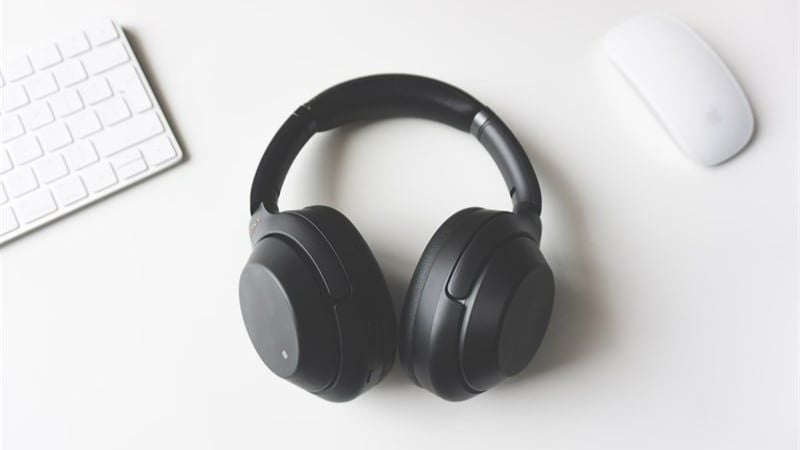
Over-ear cups surround the ears and allow larger batteries, controls, and acoustic chambers. They can be comfortable for long desk or travel use, but size, weight, heat, and clamping force vary.
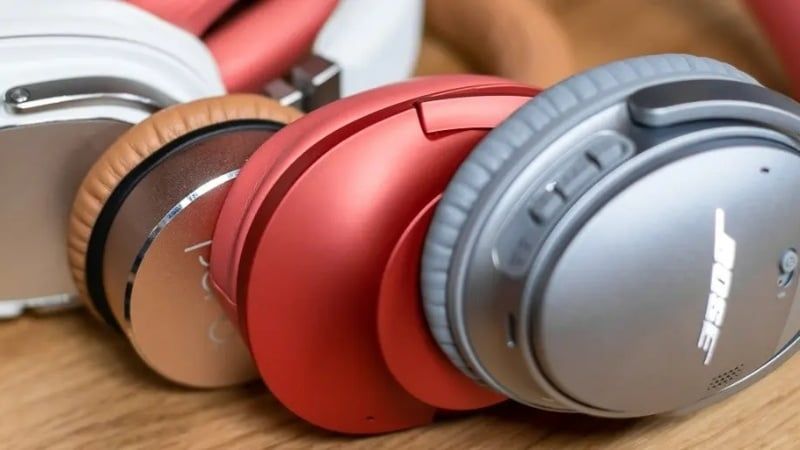
A larger driver does not automatically produce better or stronger sound. Tuning, seal, distortion, electronics, and fit are more important than diameter alone.
On-ear and neckband models
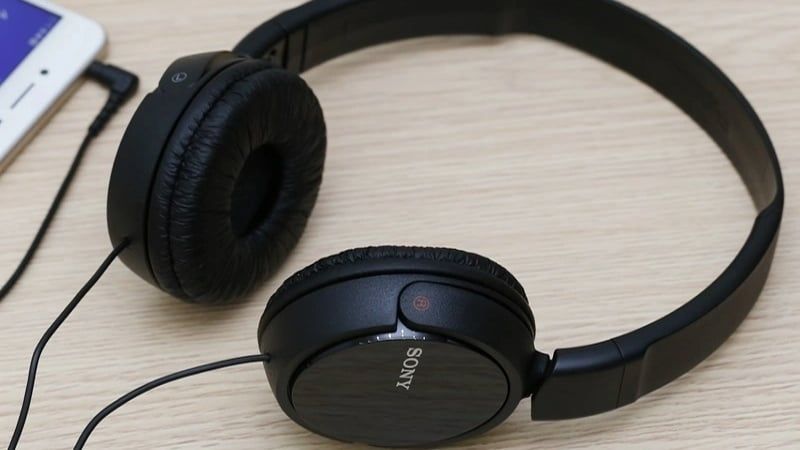
On-ear pads rest on the ears, making the headset smaller but potentially creating pressure. Neckband earphones connect the two earpieces with a band or cable around the neck; they are harder to lose and can offer larger controls or batteries than TWS buds.
For stage monitoring rather than general wireless listening, see how in-ear monitors differ from earbuds.
Features that matter in daily use
- Active noise cancellation (ANC): uses microphones and processing to reduce steady low-frequency noise. It does not eliminate every voice, alarm, or sudden sound.
- Transparency or ambient mode: feeds outside sound through microphones. It is helpful for brief awareness but can distort distance and direction; pause and remove an earbud in safety-critical situations.
- Multipoint: maintains connections to two or more devices, although automatic switching behavior differs by model and app.
- Wear detection: pauses playback when the headset is removed. Check whether it is reliable and optional.
- Controls: buttons are easier to use with gloves; touch panels offer more gestures but can trigger accidentally.
- Companion app: may provide EQ, firmware updates, control mapping, fit tests, and device finding. Check account and permission requirements.
- Wired fallback: some over-ear models include analog or USB audio, but not every USB-C port carries sound and a dead battery may still disable processing.
Choose by use case
Calls and office work
Prioritize microphone performance in noise, sidetone, mute controls, multipoint, comfort, and reliable behavior with the actual meeting platform. A headset can sound excellent for music but make the voice thin or unstable on calls. Test with the intended Windows, macOS, Android, or iOS device.
Travel and commuting
Look for effective ANC, comfortable long-session fit, a compact case, usable controls, and enough battery for the longest trip plus delay. Strong ANC reduces noise but does not replace situational awareness on streets or platforms.
Exercise
Fit is more important than aggressive bass or a high Bluetooth number. Ear fins, a neckband, or a secure over-ear hook may help. Read the complete IP rating: IPX4 describes water resistance without a dust rating, while IP54 includes both. Sweat resistance does not mean the headphones are safe for swimming, showering, salt water, or charging while wet.
Gaming
Bluetooth introduces encoding, buffering, transmission, and decoding delay. Video apps can compensate by delaying the picture, but interactive games cannot always do so. A low-latency mode may reduce buffering at the cost of range or quality.
For competitive games, a wired connection or a headset with its own 2.4 GHz USB dongle is usually more predictable. That proprietary 2.4 GHz link is not the same as standard Bluetooth. Check console compatibility, chat mixing, microphone support, and whether the dongle works with the target USB port.
Battery claims need context
Compare playback time with ANC on and off, codec used, volume, calls versus music, and case capacity. Manufacturer figures are normally measured under specific conditions and decline as the battery ages. Fast-charge claims also depend on the charger and starting battery level.
- Buy enough margin for the longest normal session.
- Check whether the case uses USB-C or wireless charging.
- Find out whether the battery or earpads can be serviced.
- For used headphones, battery age matters as much as cosmetic condition.
- Do not charge wet earbuds or a damaged/swollen case.
Understand codec compatibility
- SBC: the widely available baseline codec for classic Bluetooth audio.
- AAC: common on Apple devices and supported by many other platforms; implementation quality varies.
- aptX family: several Qualcomm codecs with different quality and latency goals; support must exist on both ends.
- LDAC: a higher-bitrate Sony codec available on many Android devices and compatible headphones; connection conditions can change its operating bitrate.
- LC3: the codec associated with Bluetooth LE Audio. Both devices and their software need compatible LE Audio support.
Codec labels do not make lossless output, low latency, or high-resolution playback automatic. Operating-system resampling, app source quality, radio conditions, and headphone DSP remain part of the chain.
Sound, microphone, and fit tests
Audition familiar tracks at a safe volume. Listen for vocal clarity, bass that remains controlled, harshness, channel balance, and whether EQ can correct the tuning. For calls, record speech indoors, beside a fan, and outdoors with wind. Check how the microphone sounds to another person, not only through sidetone.
Wear the product for at least 20 minutes. Glasses, hair, ear shape, pad depth, tip size, and clamp can change seal and comfort. A poor seal reduces bass and ANC, so fit can outweigh a specification advantage.
Bluetooth or wired?
Choose Bluetooth for mobility, calls, ANC, and device switching. Choose wired when predictable low latency, operation without a battery, long service life, or a simple studio signal path matters most. Many people use both: wireless for daily travel and wired headphones for editing, instruments, or competitive gaming.
For recording and accuracy-focused work, read the comparison of studio monitor headphone designs. Before buying any wireless model, verify return policy, warranty, replacement parts, app compatibility, and microphone performance with the exact devices you use.
Related Articles
 The Simplest and Fastest Way to Connect Bluetooth Headphones Explained11 minutes read
 How to Use Bluetooth Headphones: a Step-by-Step Guide to Connecting7 minutes read
 The Best Bluetooth Headphones of 20235 minutes read
 5 Best Bluetooth Headphones Of 20265 minutes read
 Choose to Buy a Bluetooth Headset11 minutes read
 Top 10 Cheap Bluetooth Headsets 2023: What to Know19 minutes read
Reader Comments 0
Sign in with email or Google to join the discussion.