Table of Contents
Artificial intelligence (AI) is a broad term for machine-based systems that infer from input data how to produce outputs such as predictions, content, recommendations, or decisions. AI does not literally think like a person: it applies models, rules, and learned statistical patterns to a defined task.

What counts as artificial intelligence?
An AI system takes an input, processes it with one or more models, and returns an output that can affect a digital or physical environment. Inputs might be words, images, sensor readings, transaction records, or a combination of them. Outputs might be a translation, fraud score, route suggestion, generated image, or control signal for a machine.
This practical definition aligns with the OECD AI Principles and the NIST AI Risk Management Framework. It avoids the misleading idea that every AI product has human-like understanding or consciousness.
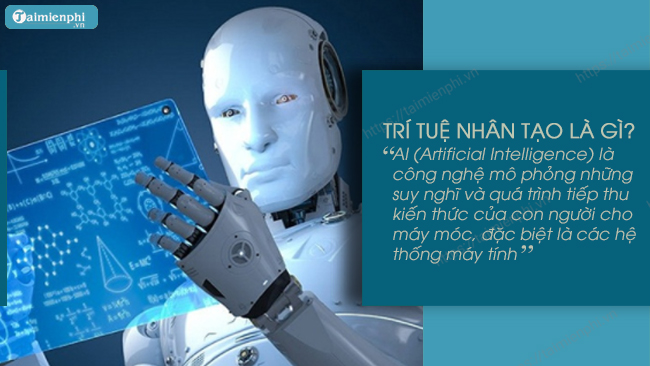
AI, machine learning, and deep learning
- Artificial intelligence is the umbrella field covering systems designed to perform tasks associated with perception, language, reasoning, planning, prediction, or generation.
- Machine learning is an approach in which a model learns patterns from examples or feedback instead of relying only on hand-written rules.
- Deep learning is a machine-learning approach based on neural networks with multiple processing layers. It is widely used for language, speech, image, and video tasks.
- Generative AI produces new synthetic content, including text, images, audio, video, or code, by modeling patterns in training data.
Not all automation is AI. A fixed script that copies files at a scheduled time is automation; a system that classifies documents based on learned examples uses machine learning. Many real products combine conventional software, rules, statistics, and AI components.
How AI systems are commonly described
Two classification schemes often appear in introductory material, but they answer different questions.
By scope of ability
- Narrow AI: built for a bounded task or set of tasks, such as speech recognition, product recommendations, image classification, or text generation. Deployed AI systems fall into this broad category even when a model can handle several kinds of input.
- Artificial general intelligence (AGI): a proposed system with flexible, human-level ability across many unfamiliar intellectual tasks. There is no agreed test proving that today's systems have achieved AGI.
By behavior
Some educational frameworks use labels such as reactive machines, limited-memory systems, theory-of-mind AI, and self-aware AI. The first two are useful descriptions of certain implemented systems. Theory-of-mind and self-aware AI remain hypothetical categories, not established consumer technologies.
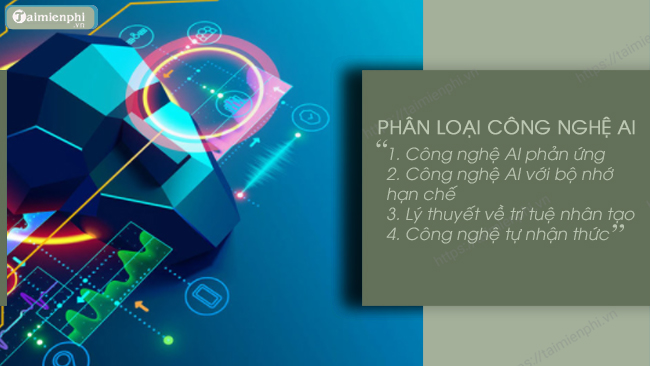
Core techniques behind AI applications
- Natural language processing: analyzes or generates human language for search, translation, transcription, summarization, chat, and document extraction.
- Computer vision: detects or classifies visual information in photographs, video, scans, and industrial camera feeds.
- Speech processing: converts speech to text, synthesizes voices, or identifies acoustic patterns.
- Predictive modeling: estimates likely outcomes from historical and current data, such as demand or equipment failure.
- Planning and control: chooses actions for robots, logistics, games, or other environments under defined constraints.
- Generative modeling: creates or transforms text, images, audio, video, and software code.
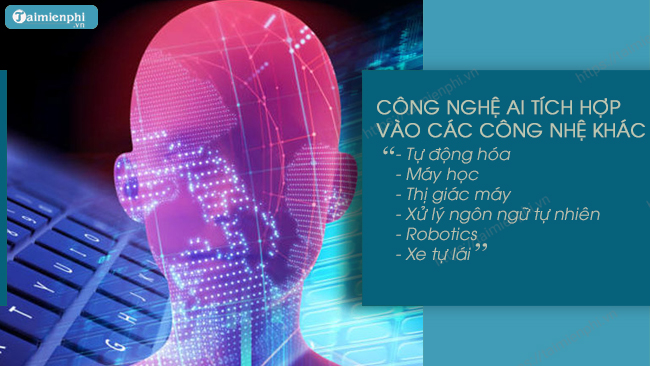
How AI is used in everyday life
- Phones and computers: camera enhancement, dictation, predictive typing, accessibility features, spam filtering, and device security.
- Search and recommendations: ranking results and suggesting music, films, products, or articles based on context and prior activity.
- Customer service: routing requests, retrieving account information, drafting replies, and assisting human agents.
- Finance: detecting unusual transactions, extracting data from documents, and supporting risk analysis. Important decisions still need appropriate review and controls.
- Healthcare: supporting image analysis, administration, scheduling, documentation, and research. An AI output is not a substitute for diagnosis or treatment by a qualified professional.
- Education: practice exercises, translation, feedback, and administrative assistance. Teachers should verify generated material and protect student data.
- Manufacturing and logistics: visual quality inspection, predictive maintenance, warehouse planning, and demand forecasting.
- Creative work: generating drafts, images, music, and video, or assisting with editing and ideation.
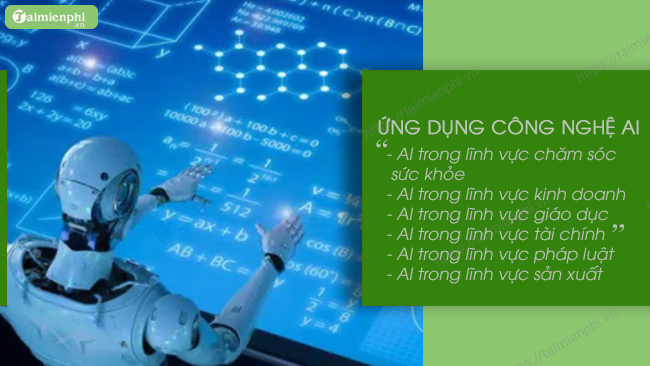
What AI cannot safely do on its own
AI output can be wrong even when it sounds confident. A model may reflect gaps or bias in data, fail when conditions differ from training, reveal sensitive information, or generate plausible but unsupported content. Performance on a benchmark does not guarantee reliability in every real-world situation.
Use extra caution when an AI result affects health, employment, credit, education, safety, legal rights, or access to essential services. In those settings, users need documented limitations, data protection, testing for the intended population, human oversight, and a way to challenge important decisions.
A practical way to use AI responsibly
- Define the task and decide what a correct result looks like.
- Do not enter confidential or personal data unless the tool and policy permit it.
- Check important claims against reliable sources.
- Review for bias, missing context, unsafe advice, and intellectual-property concerns.
- Keep a human responsible for high-impact decisions.
- Monitor the system after deployment because data and operating conditions change.
To explore image generation in practice, see how to create images with Midjourney. For a broader comparison, browse TipsMake's guide to generative AI tools by field.
Related Articles
 How Did AI Affect Daily Life?6 minutes read
 What Happens If Aliens Are Artificial Intelligence?9 minutes read
 Top 5 AI Apps to Make Your Life Simpler7 minutes read
 Learn About Artificial Intelligence (AI): What to Know10 minutes read
 OPPO AI - Artificial Intelligence at Your Fingertips10 minutes read
 Watching Pictures Painted by Artificial Intelligence3 minutes read
Reader Comments 0
Sign in with email or Google to join the discussion.