Table of Contents
A job is easy to misunderstand when you mostly see the part that happens in front of passengers, students, or customers. If you are comparing careers, ask about the full shift, including preparation, paperwork, and the work that needs to happen when something goes wrong.

Flight attendants train for safety
Cabin service is visible, but crew members also conduct safety checks, explain emergency procedures, and respond to onboard incidents. The U.S. Bureau of Labor Statistics profile describes both parts of the job. If you need help with a carry-on, ask what assistance is available and follow the crew’s instructions.
Teachers work before and after class
Planning lessons, reviewing student work, contacting families, and meeting with colleagues are part of the workload. If you are evaluating a role, ask how much planning time the school sets aside within the day and who prepares the curriculum.
Hairstylists need an accurate treatment history
If you visit another salon, tell your usual stylist what was done, especially if you had color, bleach, or a chemical treatment. Knowing which products were used and when helps the stylist plan the next service.
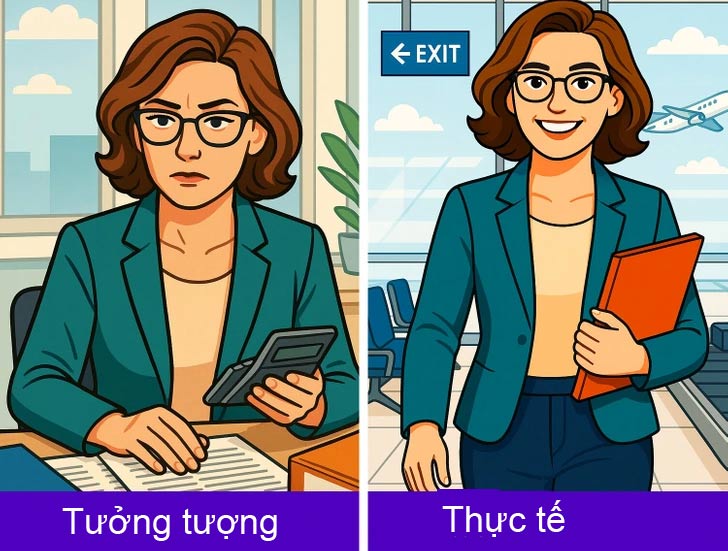
Accountants explain what the numbers mean
Many roles involve checking records, investigating discrepancies, and explaining findings to managers or clients. The balance changes across payroll, tax, audit, and internal reporting. Ask what a typical week looks like during deadlines and during quieter periods.
Preschool teachers plan and observe learning
Play can be a way to teach turn-taking, language, and problem-solving. Teachers also prepare safe activities, observe children’s progress, and communicate with families. Ask how a program allocates time for planning and documentation.
IT work depends on communication
An IT support worker might reproduce a problem, explain a fix in plain language, and document the steps so the next person can follow them. Ask how time is divided between independent troubleshooting, user support, and coordination with other teams.

Librarians run services as well as collections
Depending on the library, the work can include finding reliable sources, managing materials, teaching database skills, helping with technology, or planning programs. Compare public, school, and academic library roles if you want different amounts of public-facing work.
Serving can be a long-term restaurant career
Experienced servers coordinate orders with the kitchen, handle allergy questions according to restaurant procedures, and manage several tables at once. Some choose to stay in service, while others move into training, supervision, or restaurant management.
Chefs develop specialties
A chef’s experience depends on the kitchen, cuisine, and station. Alongside cooking, the role can involve timing service, checking stock, and training staff. When exploring a kitchen role, ask which station you would start on and how training works.
For interview preparation, use what you learn about the day-to-day work to build a concrete answer about your career goals.
Related Articles
 Instructions for using Imagine with Meta AI to create images from text
 Graphic design using Gamma Imagine AI is incredibly beautiful
 AI Trainer - the profession of the future in the era of technology
 How to Create and Edit AI Images with Gamma Imagine
 How to Create Videos with Grok Imagine
 What is Streamer? How does the streamer profession make money?
Reader Comments 0
Sign in with email or Google to join the discussion.