Table of Contents
This guide provides a practical overview of Insert Text into Pictures Online, including its main features, benefits, limitations, and important considerations.
The following article will guide you how to insert text into images online with pixlr. com photo editing website.
Step 1: You access the website https://pixlr. com/editor/.
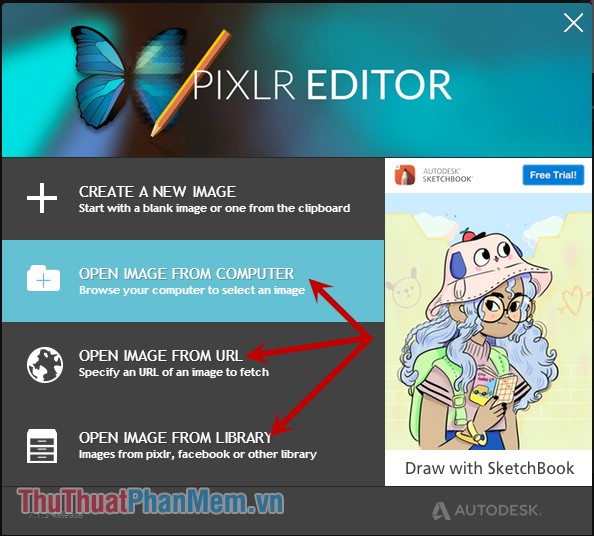
Step 2: The first interface appears, select the images to insert text by clicking one of the three options on the interface:
Open image from computer: open the image from your computer.
Open image from URL: Open image from URL.
Open image from library: Open images from Pixlr library, Facebook or other libraries.
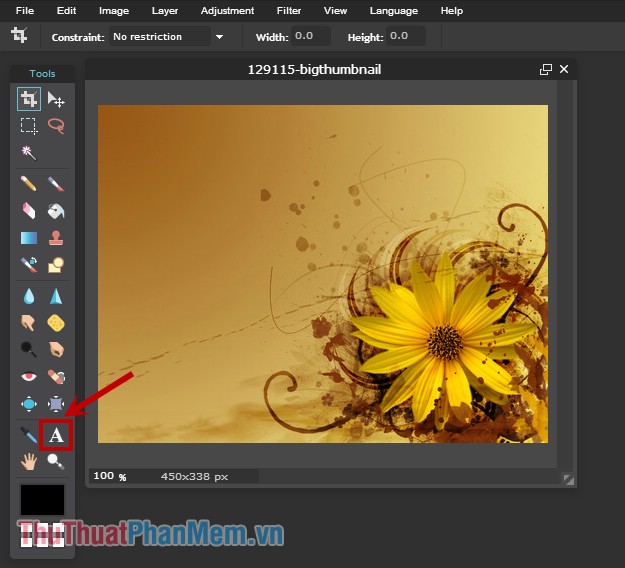
Step 3: After selecting the image, the image will be displayed on the interface, select the A icon in the left toolbar.
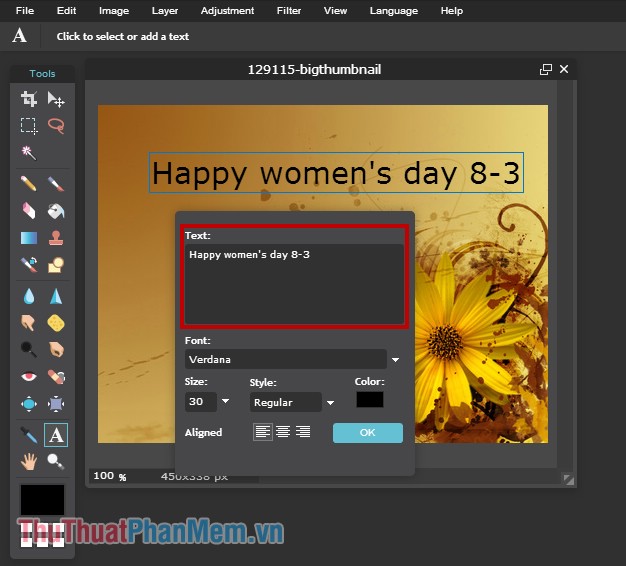
Step 4: Next, click the left mouse button on the position you want to insert text on the image. On the image that appears, enter the text you want to insert into the Text box.
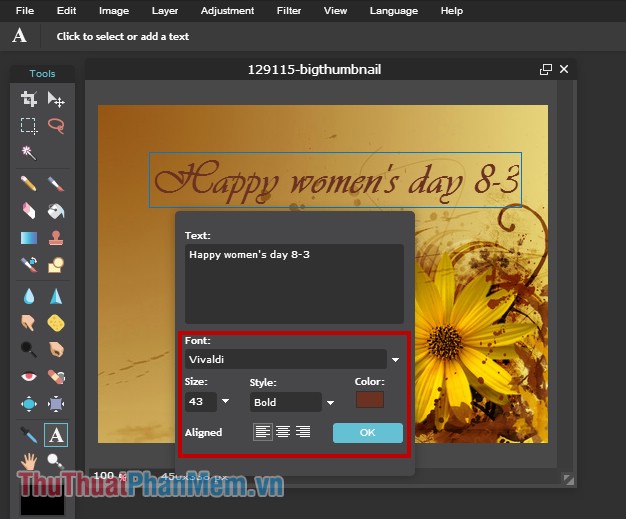
You can edit the font in the Font box, the font size in the Size box, the type in Style and the font color in Color . You can also align the text position on the image in Aligned . Then you click OK to finish.
Step 5: Save the image.
On the menu bar, select File -> Save (or Ctrl + S ).
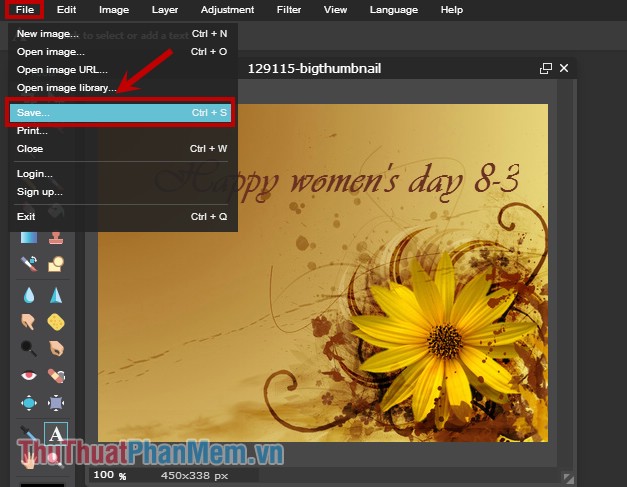
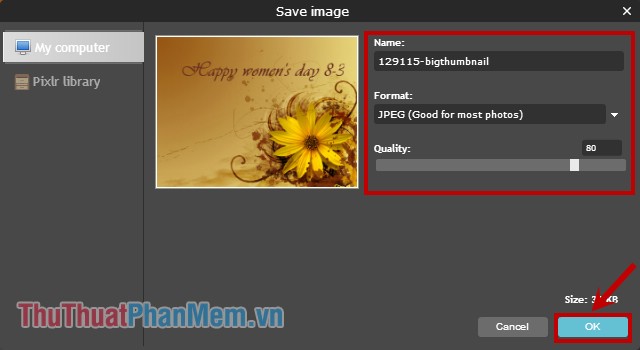
The Save image dialog box appears, enter the image name in the Name section, format the image in the Format section, and quality in the Quality section. Then click OK .
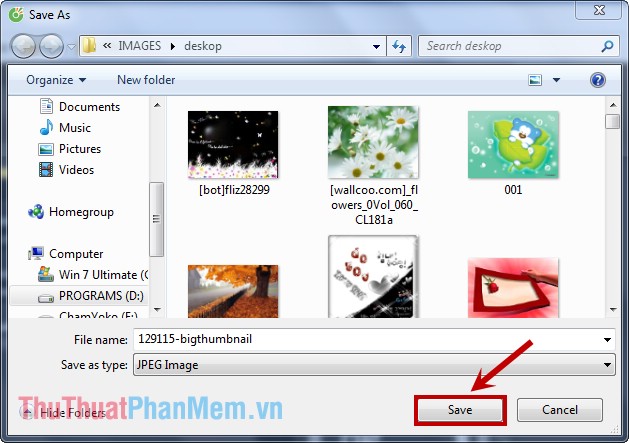
Continue to appear Save As dialog box you choose where to save the path on the computer and click Save to save the image.
So you have inserted the text into the image online quickly. Good luck!
FAQ
What should I know about Insert Text into Pictures Online?
Focus on the key features, requirements, limitations, and practical use cases explained in this guide.
How do I get the best results with Insert Text into Pictures Online?
Follow the recommended steps, use current software or information, confirm compatibility, and review settings before major changes.
Are there any risks or limitations?
Potential limitations depend on compatibility, data quality, cost, privacy, support, and how the product or method is used.
Related Articles
 Insert Text Into Pictures with Word3 minutes read
 The Fastest Way to Insert Text into Pictures in Word, Anyone Can Do It!4 minutes read
 How to Insert Text into Pictures on Your Phone4 minutes read
 How to Integrate Pictures Into Text in PowerPoint3 minutes read
 How to Insert Text into Pictures in PowerPoint2 minutes read
 How to Insert Logo into Images Online2 minutes read
Reader Comments 0
Sign in with email or Google to join the discussion.