Table of Contents
This updated guide examines How to Split Screen PC: How to Split a Computer Screen and organizes the essential facts, background, and practical takeaways in clear American English.
Split-screen saves switching between screens, one for each window to keep track of. Even in Windows, there's also a split-screen feature that you don't need to manually resize each window. The following article will guide you to read the ways to split the computer screen.
Method 1: Split the screen with the mouse
First, if you want the screen to display on the right , use your mouse to click and hold the window close to the right edge of the screen. Immediately that window will display half of the screen interface.
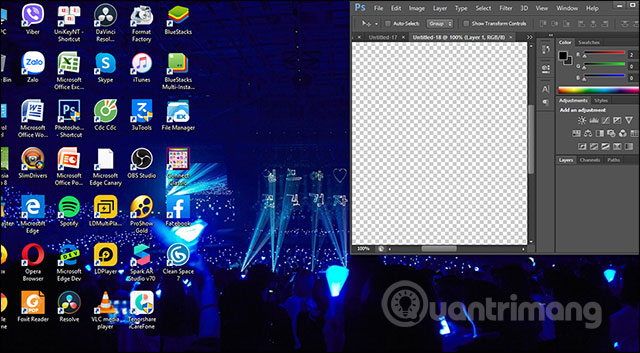
Next to the window want to display another window on the left of the screen , we will drag to the left edge . And so the screen has been split into two as shown below.

Method 2: Split the screen by shortcut keys
With a window showing a left half , the user clicks on that window and then press Windows + ← (left arrow key) . Next to the window shown on the right , we click on the icon Windows + → (right arrow key) . Now 2 windows will be moved to 2 sides of the same size.

If you use Windows 10, when you have put a window on the left side of the screen, it will display the interface of working windows on the computer. Now users only need to click on 1 window to display is.

In addition to splitting the screen, we can divide 3 or 4 screens using the Windows key + arrows.

With the split screen feature available on computers, we can divide the screen as many as 4 different parts to observe the content and documents to be compared. You can use keyboard shortcuts or mouse.
I wish you successful implementation!
FAQ
What is How to Split Screen PC: How to Split a Computer Screen about?
It provides a structured overview of how to split screen pc, explains the main context, and highlights practical takeaways for readers.
Why does this topic matter?
Understanding the main concepts helps readers evaluate the issue, avoid common mistakes, and make better-informed decisions.
How should readers use this information?
Use the guidance as a practical starting point, confirm details that may have changed, and follow current product, safety, or security recommendations.
Related Articles
 How to Split the Screen on Google Chrome: Split Tabs Chrome5 minutes read
 How to Split Your Computer Screen in Just a Few Steps7 minutes read
 How to Split the Screen on iPhone7 minutes read
 How to Easily Split the Screen on a Windows or MacBook Computer6 minutes read
 How to Split the Screen on a Windows 11 Laptop7 minutes read
 How to Split Screen on iPad: Parallel Use of Two Applications9 minutes read
Reader Comments 0
Sign in with email or Google to join the discussion.