Table of Contents
Use the Ping Command

Key Takeaways About Ping on Linux
- Use the ping command Open Terminal on your computer.
- Click or double-click the Terminal app icon with a black frame with a white ">_" symbol inside, or you can press Ctrl + Alt + T.
- Enter ping along with the website or IP address where you want to test the connection.
Key Details About Ping on Linux
Open Terminal on your computer. Click or double-click the Terminal app icon with a black frame with a white ">_" symbol inside, or you can press Ctrl+ Alt+ T.
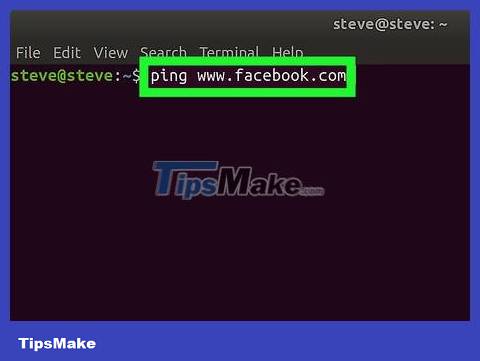
Enter the "ping" command. Enter pingalong with the website or IP address where you want to test the connection.
For example, to test the connection between Facebook and your computer, you need to enter ping www.facebook.com.
Press ↵ Enter. The "ping" command will be executed and begin sending requests to the specific address.

See ping speed. To the right of each line appear numbers with "ms" units; this is the number of milliseconds it takes the target computer to respond to your data request.
The smaller the number of seconds, the faster the connection speed between the current computer and another computer/website.
When you ping a web address in Terminal, the second line will display the IP address of the website you are testing. You can take advantage of this to ping websites instead of IP addresses.

Stop the ping process. The "ping" command will execute indefinitely; To stop, press Ctrl+ C. This will stop the command and display the ping results below the "^C" line.
To see the average time it takes another computer to respond, look at the number after the first slash (/) in the line below "# packets transmitted, # received".
Use the Traceroute Command

Open Terminal on your computer. Click or double-click the Terminal app icon with a black frame with a white ">_" symbol inside, or press Ctrl+ Alt+ T.
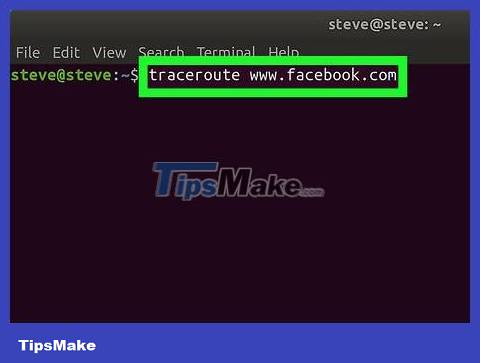
Enter the command "traceroute". Enter traceroutealong with the IP address or website you want to track.
For example, to trace the route from your router to the Facebook server, we need to enter traceroute www.facebook.com.
Press ↵ Enter. The "traceroute" command will be executed.
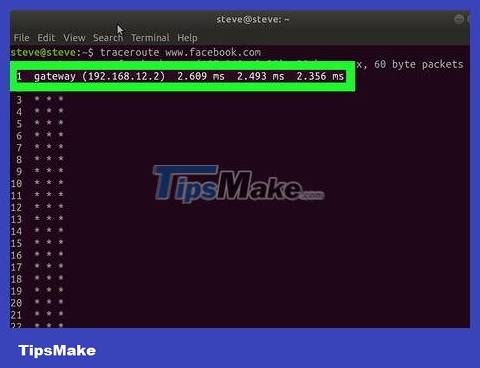
View the route you requested. To the left of each line that appears is the IP address of the router through which your tracing request is processed. You'll also see the number of milliseconds the process took to happen to the right of the line.
If an asterisk appears in one of the routes, it means that the server to which the computer intended to connect has timed out, in which case another address will be tried.
The traceroute command will time out after reaching the destination.
FAQ
How do you Ping on Linux?
Use the ping command Open Terminal on your computer.
What should you check before working with Ping on Linux?
Click or double-click the Terminal app icon with a black frame with a white ">_" symbol inside, or you can press Ctrl + Alt + T .
What can you do if the first method does not work?
Enter ping along with the website or IP address where you want to test the connection.
Related Articles
 How to Ping in Linux4 minutes read
 How to Use the Ping Command in Linux: Step-by-Step Guide9 minutes read
 What Is the Ping: What Is PING? How Is PING Test?7 minutes read
 How to Show Fortnite Ping, Reduce Fortnite Ping6 minutes read
 Fix High Ping Errors When Playing Games5 minutes read
 Why Is the Ping Time So High in Windows 11/107 minutes read
Reader Comments 0
Sign in with email or Google to join the discussion.