Table of Contents
This updated guide examines How to Ping on Mac Os and organizes the essential facts, background, and practical takeaways in clear American English.
Method 1of 2:
Using Network Utility
 Open Spotlight
 . Click the Spotlight icon, which resembles a magnifying glass, in the top-right corner of the screen.
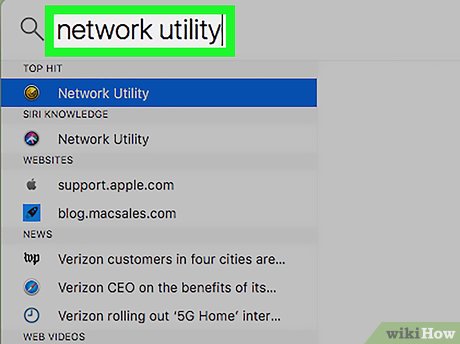 Search for Network Utility. Typenetwork utilityinto the Spotlight search box in the middle of the screen.
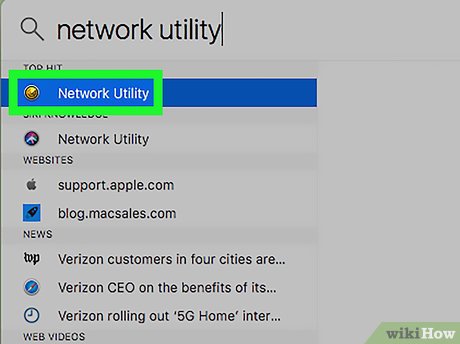 Double-clickNetwork Utility. It's below the Spotlight search box. Doing so will open the Network Utility app.
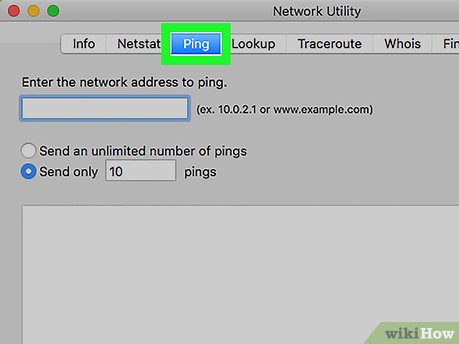 ClickPing. This tab is at the top of the window.
 Enter an address. In the white text box at the top of the page, type in the address that you want to ping.
- For example, if you want to ping a specific computer, you would type in its IP address.
- To ping a website (e.g., Facebook), type in its address as follows: website.com (e.g.,facebook.com).
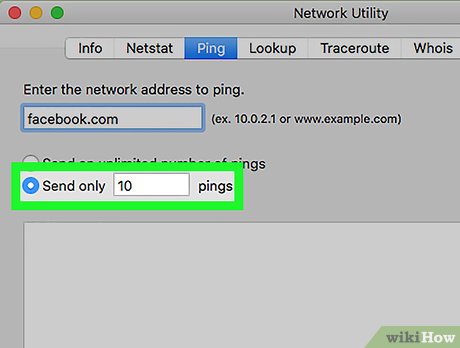 Select a specific number of pings if necessary. By default, your Mac will send pings until you close the Network Utility window. You can set it to ping your selected address a specific number of times by doing the following:
- Check the "Send only ___ pings" box.
- Type the number of pings you want to use into the blank box.
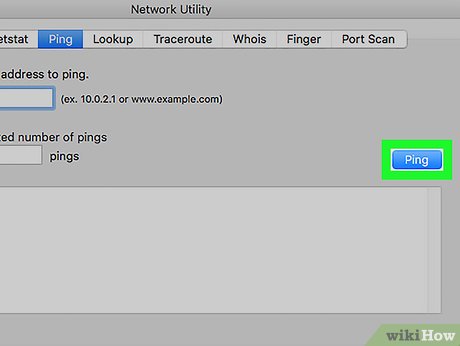 ClickPing. It's a blue button on the right side of the page. Your Mac will begin pinging the address.
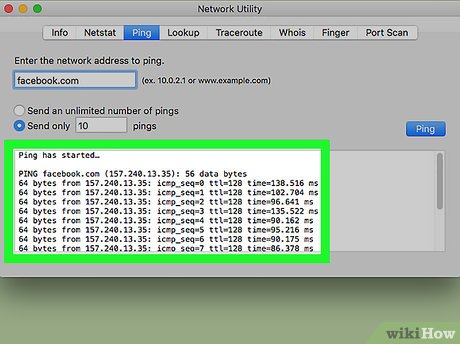 Review the results. In the white pane at the bottom of the Network Utility window, you should see a list of ping results appearing. You can read these results to get an idea of the connection strength between your computer and the address you pinged:
- The "time=#ms" (where "#" is a number) tag refers to the number of milliseconds it took for the address to respond to your ping.
- The lower the number of milliseconds per ping, the stronger your connection to the computer or address you're pinging.
Method 2of 2:
Using Terminal
 Open Spotlight
 . Click the Spotlight icon, which resembles a magnifying glass, in the top-right corner of the screen.
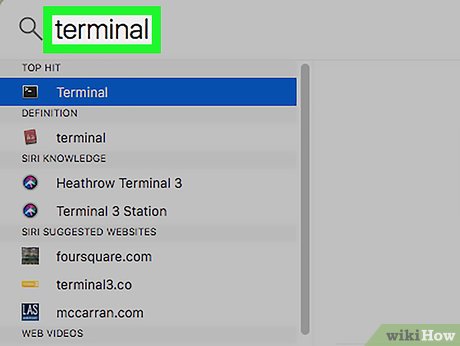 Search for Terminal. Typeterminalinto the Spotlight search box in the middle of the screen.
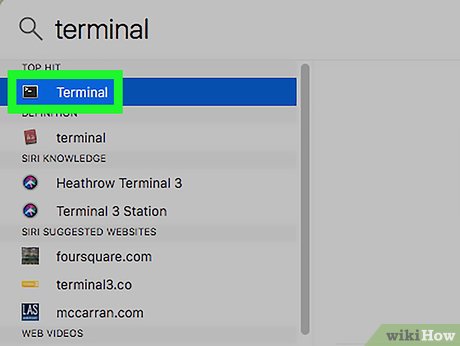 Double-click
 Terminal. It's below the Spotlight search box. Doing so will open the Terminal app.
 Enter the "ping" command. Type inping addresswhere "address" is the address of the computer or website you want to ping.
- For example, to ping Facebook, you would type inping facebook.comhere.
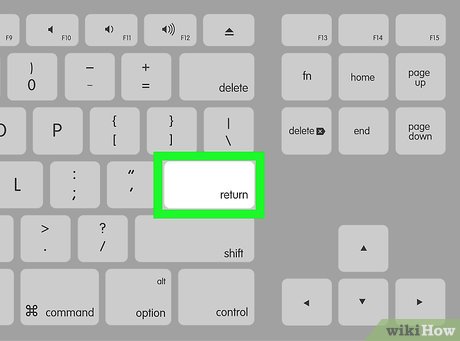 Press⏎Return. Doing so will prompt your Mac to begin pinging the address.
 Review the results. Below your "ping" command, you'll see several lines of ping results begin to appear. You can read these results to get an idea of the connection strength between your computer and the address you pinged:
- The "time=#ms" (where "#" is a number) tag refers to the number of milliseconds it took for the address to respond to your ping.
- The lower the number of milliseconds per ping, the stronger your connection to the computer or address you're pinging.
FAQ
What is How to Ping on Mac Os about?
It provides a structured overview of ping, explains the main context, and highlights practical takeaways for readers.
Why does this topic matter?
Understanding the main concepts helps readers evaluate the issue, avoid common mistakes, and make better-informed decisions.
How should readers use this information?
Use the guidance as a practical starting point, confirm details that may have changed, and follow current product, safety, or security recommendations.
Related Articles
 What Is the Ping: What Is PING? How Is PING Test?7 minutes read
 How to Show Fortnite Ping, Reduce Fortnite Ping6 minutes read
 Fix High Ping Errors When Playing Games5 minutes read
 Why Is the Ping Time So High in Windows 11/107 minutes read
 10 Best Ping Monitoring Software and Tools18 minutes read
 3 Best Best Ping Reducing Software4 minutes read
Reader Comments 0
Sign in with email or Google to join the discussion.