Table of Contents
This guide explains how to link, Link Data Between Excel Files, with clear steps, practical tips, and important checks before you begin.

Consider for example: There are two inventories in 2018 and 2019, the inventory at the end of 2018 is the inventory at the beginning of 2019. So how does the inventory data at the end of 2018 turn to inventory in 2019?
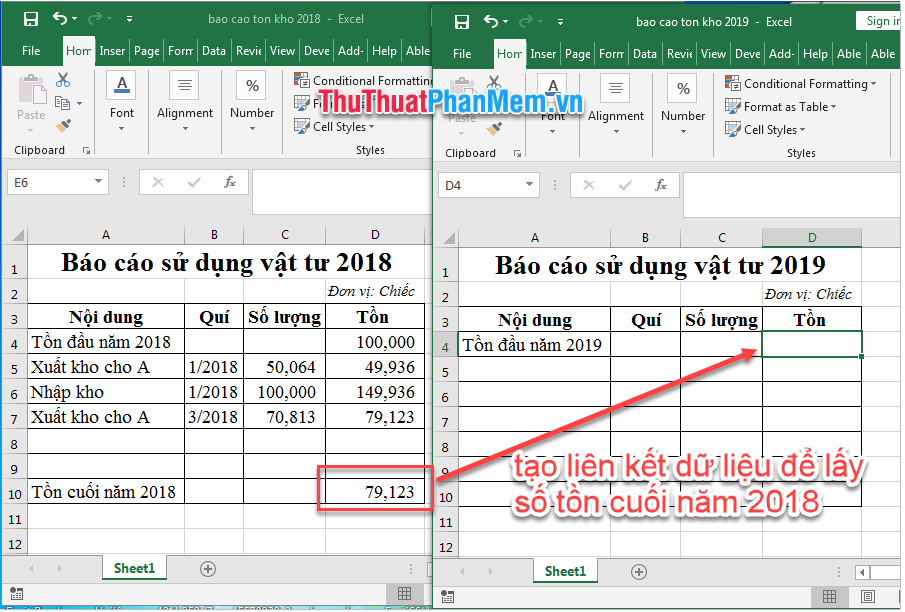
Step 1: First you have to get the path address, here is to get the address of the warehouse file in 2018 by right-clicking on the file list of warehouses in 2018 (1) , selecting Properties (2) .

Properties window appears, highlight (select) the location of the file in the Location section. Select Copy and then click the OK button to close the window.

Step 2: Open the destination file to retrieve data from the inventory in 2019 , click on the cell to retrieve data, type an equal sign + a comma (= '), and then paste the address.

Step 3: Add detailed address information including file name + Sheet name + Cell location containing the original data by the syntax: [ file. xlsx name ] sheet name ! cell address . Of which: the red characters are fixed, the content in bold you change in accordance with your report.

Step 4: Press Enter to see results.

Note:
- The data link does not automatically update if you do not open the original and target data files simultaneously. So when opening the destination file, Excel will notify you of the update, press the Update button so that Excel automatically updates the data without opening the original file.

Above Software Tips guide you how to link data between files in Excel. Good luck!
FAQ
What should I know about Link, Link Data Between Excel Files?
Focus on the key features, requirements, limitations, and practical use cases explained in this guide.
How do I get the best results with Link, Link Data Between Excel Files?
Follow the recommended steps, use current software or information, confirm compatibility, and review settings before major changes.
Are there any risks or limitations?
Potential limitations depend on compatibility, data quality, cost, privacy, support, and how the product or method is used.
Related Articles
 How to Link Data Between Excel Files Together2 minutes read
 How to Link Data, Connect Data Between 2 Sheets in Excel4 minutes read
 How to Turn Off Update Link Notification in Excel5 minutes read
 How to Insert a Word Document into an Excel File4 minutes read
 How to Create Hyperlink to Link Spreadsheets in Excel5 minutes read
 How to Link Excel to Powerpoint4 minutes read
Reader Comments 0
Sign in with email or Google to join the discussion.