Table of Contents
This updated guide examines How to Delete Preloaded Applications on Android and organizes the essential facts, background, and practical takeaways in clear American English.
Method 1of 2:
Deleting Apps Using the Uninstall Button
 Look for the app you would like to uninstall. Look for it on your Android device's main menu, which you can access by tapping on the square icon found in the center of the bottom part of the home screen.
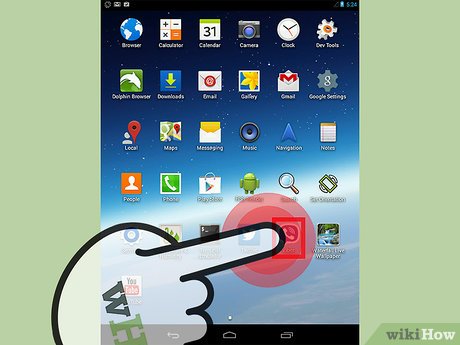 Long-press on the app. Long-pressing on any app will display the uninstall/delete option at the top of the screen, but only if that app can be deleted.
- Depending on the type of Android device that you have, long-pressing on an app may cause all the apps to start vibrating or dancing, and the cross sign to appear on top of each app.
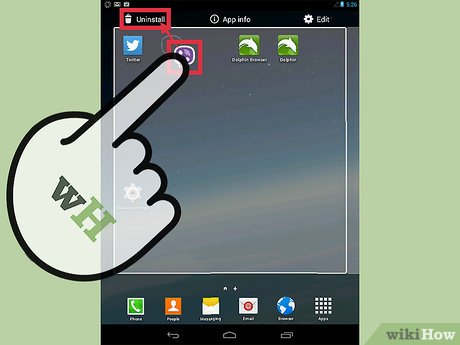 Hold and drag the app all the way to the Uninstall option. The Uninstall option is found at the top of the screen. It has the trash bin icon and the word 'Uninstall.'
- Alternatively, you can also just tap on the cross sign right above the app you wish to delete.
 Confirm deletion. When a confirmation message pops up, click on 'OK.'
- With this method, you may not able to delete some apps. If that occurs, use Method 2.
Method 2of 2:
Force-stopping and Disabling Apps
 Tap on the Settings menu. You can access it from your Android device's main menu. Depending on which Android device you have, the Settings menu can also be accessed by pulling down the Notification bar, and tapping on the Settings icon from there.
 Look for the Apps/Application Manager option. Click on it once you find it.
 Display the list of apps installed in your device. To do that, just swipe to the right (or up), and you will find the list of all the apps running on your Android device.
 Click on the app you wish to uninstall and delete. A menu will then appear with three options and their corresponding buttons: 'Force Stop,' 'Uninstall updates/Uninstall,' and 'Disable.'
 Tap on the 'Uninstall updates' button. This will effectively stop installing all the future updates for the unwanted app.
- If the rightmost button shows only 'Uninstall,' it means it's not a preloaded app and can just be deleted completely by clicking on the Uninstall button.
- For preloaded apps, you can tap on 'Force Stop,' and 'Disable' to completely stop the app.
- Once you will click on the 'Disable' button, that particular app will no longer be displayed in your Apps menu.
- This method may not completely remove some of the pre-loaded apps, but it can at least stop and disable them, which will ultimately lead to the optimal performance of your Android device.
FAQ
What is How to Delete Preloaded Applications on Android about?
It provides a structured overview of app, explains the main context, and highlights practical takeaways for readers.
Why does this topic matter?
Understanding the main concepts helps readers evaluate the issue, avoid common mistakes, and make better-informed decisions.
How should readers use this information?
Use the guidance as a practical starting point, confirm details that may have changed, and follow current product, safety, or security recommendations.
Related Articles
 Instructions on 5 Ways to Delete Applications on Your Computer8 minutes read
 How to Turn Off Applications Running in the Background on Android Saves6 minutes read
 How to Fix Errors Cannot Delete Apps on iPhone and iPad5 minutes read
 Android Users Need to Urgently Delete These 28 Harmful Applications Explained5 minutes read
 4 Ways to Uninstall Apps for Android Devices5 minutes read
 17 Harmful Applications Android Users Need to Delete Urgently: Expert Selection9 minutes read
Reader Comments 0
Sign in with email or Google to join the discussion.