Table of Contents
This updated guide examines How to Add Libraries in Arduino and organizes the essential facts, background, and practical takeaways in clear American English.
The following steps describe the process of adding an Arduino library to the IDE.
What is the Arduino library?
Ardunio libraries are frequently used programs available to help you learn about the limited number of IDE sketches. These add-on codes can be installed in the IDE or downloaded as zip folders on Arduino.cc or other websites.
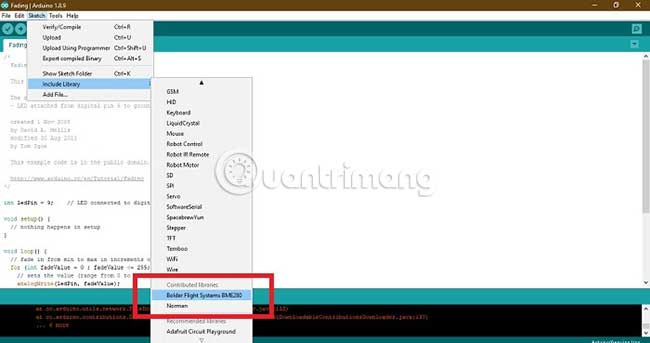
To locate the add-on library, go to Sketch> Include Library> Contributed Libraries . 'Recommended Libraries' must be installed first.
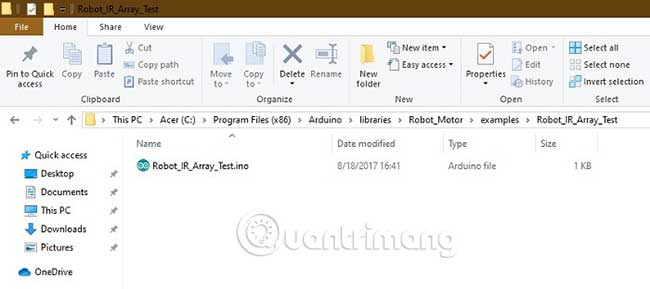
Libraries are physically stored in program files in .ino format , which is a sketch file of Arduino.
Install the Arduino library using the Arduino Library Manager
To add Arduino libraries from the IDE's own library manager, go to Sketch> Include Library> Manage Libraries .

You can see a variety of drop-down libraries in the Library Manager. To install one of them, install it for the latest version available.

Installation only takes a few seconds. Wait for the Library Manager to update the list of libraries.

You can verify the presence of the added library by going back to Sketch> Include Library> Contributed Libraries .
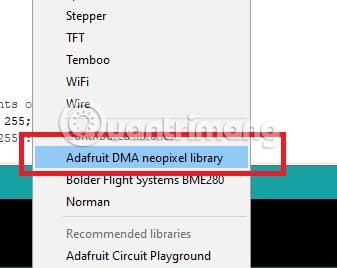
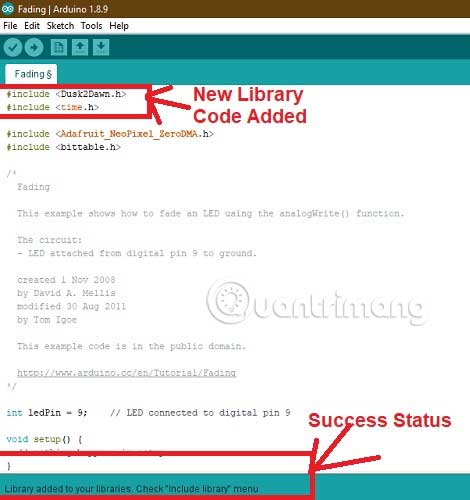
When you click on the newly added library, a little code will show up on the interface. This is the best part about libraries. A lot of additional code can be summarized in a simple command, as shown below.
#Include
Install the Arduino library from other websites
The Arduino official website maintains a reference list of libraries available for download and installation. These are the options shown in the procedure described above.

If you want to set up a third-party library in the Arduino IDE, you must search it online. GitHub is a good place to find them. This site has more than 80 examples.
You will be given an option to download the zip file. Save the file on your computer but don't extract it.

In the next step, you can add the zip file from Sketch> Include Library> Add. ZIP Library .

You do not have to extract the download directory. If there is no programming error, it will automatically sync with the Arduino IDE.

After you click 'Open' , the IDE will display the status of success as well as add new library code.
Of course, you can always verify the presence of the newly added library from Sketch> Include Library> Contributed Libraries .
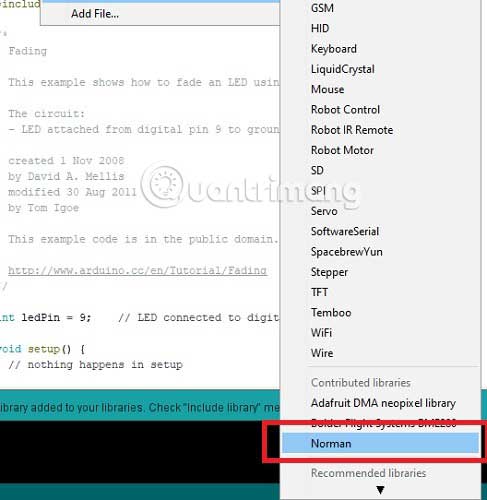
The Arduino library helps expand storage and operation. This gives you more space to maneuver your projects. Whether you work with a flight controller, a drone or a robot, you can search its corresponding library file.
Please let everyone know what you think about the libraries in Arduino through the comments section below.
Hope you are succesful.
FAQ
What is How to Add Libraries in Arduino about?
It provides a structured overview of Arduino, explains the main context, and highlights practical takeaways for readers.
Why does this topic matter?
Understanding the main concepts helps readers evaluate the issue, avoid common mistakes, and make better-informed decisions.
How should readers use this information?
Use the guidance as a practical starting point, confirm details that may have changed, and follow current product, safety, or security recommendations.
Related Articles
 What Is Arduino and Its Applications in Life4 minutes read
 Synthesis of Useful Commands to Code the Arduino9 minutes read
 How to Install Arduino Ide on Mac5 minutes read
 Download and Install Arduino on the Computer11 minutes read
 Why Is the New Arduino Uno R4 a Game Changer for Manufacturers?7 minutes read
 How to Install Arduino Ide on Debian 104 minutes read
Reader Comments 0
Sign in with email or Google to join the discussion.