Table of Contents
Explore 'hidden' volcanoes pose the greatest threat to humanity.
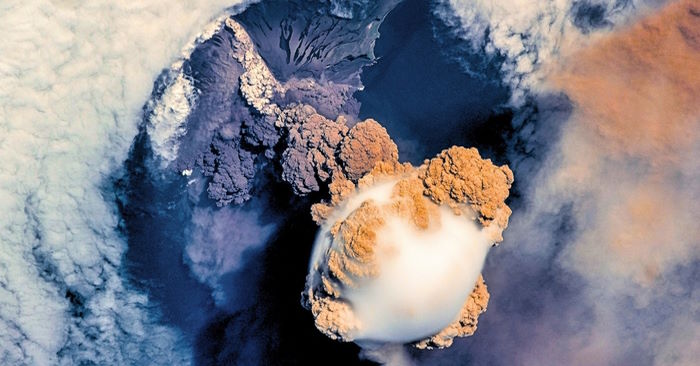
In fact, these 'hidden' volcanoes erupt more frequently than most people realize. In areas like the Pacific, South America, and Indonesia, an eruption from a volcano that has not yet been recorded in history occurs every seven to ten years. And the consequences can be sudden and widespread.
A volcano just did exactly that. In November 2025, the Hayli Gubbi volcano in Ethiopia erupted for the first time in recorded history (at least 12,000 years as far as we know).
It spewed ash columns 8.5 miles into the sky, with volcanic material falling on Yemen and drifting into northern Indian airspace.
You don't have to look far back to find another example. In 1982, the little-known and unmonitored El Chichón volcano in Mexico erupted violently after centuries of dormancy.
The series of eruptions caught authorities by surprise: avalanches of rock, ash, and hot gases flattened large areas of jungle. Rivers were blocked, buildings were destroyed, and ash fell as far as Guatemala.
More than 2,000 people have died and 20,000 have been displaced in Mexico's worst volcanic disaster in modern times. But the disaster is far from over in Mexico.
Sulfur from the eruption formed reflective particles in the upper atmosphere, cooling the northern hemisphere and shifting the African monsoon southward, causing extreme drought.
This alone would test the resilience and response strategies of any region. But when it coincides with a vulnerable population already suffering from poverty and civil war, disaster is inevitable.
The Ethiopian (and East African) famine of 1983-1985 killed an estimated 1 million people. This brought global attention to poverty through campaigns such as Live Aid.
Few scientists, even in the field of Earth sciences, realized that a remote, little-known volcano played a role in this tragedy.
Despite these lessons, global investment in volcanology has not kept pace with the risks: less than half of active volcanoes are monitored, and scientific research remains overwhelmingly focused on a small number of well-known volcanoes.
There are more published studies on one volcano (Mount Etna) than on the 160 volcanoes of Indonesia, the Philippines, and Vanuatu combined. These are some of the most densely populated volcanic regions on Earth – and also some of the least popular.
The largest eruptions don't just affect surrounding communities. They can temporarily cool the planet, disrupt monsoons, and reduce harvests across entire regions.
In the past, such changes have contributed to famines, disease outbreaks, and severe social upheaval, but scientists still lack a global system to predict or manage these future risks.
To help address this problem, my colleagues and I recently founded the Global Volcano Risk Alliance, a charity focused on preparing for high-impact eruptions.
They work with scientists, policymakers and humanitarian organizations to highlight overlooked risks, strengthen monitoring capacity where it is needed most, and support communities before eruptions occur.
Acting early, rather than just responding after a disaster strikes, is the best chance of preventing the next potential volcano from becoming a global crisis.
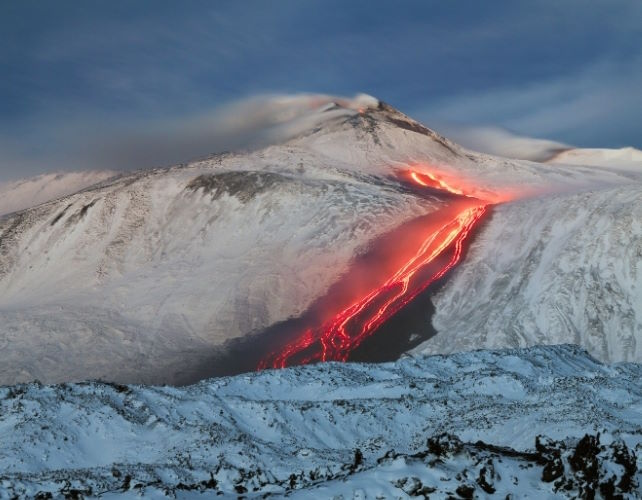
Why are 'quiet' volcanoes unsafe?
So why do volcanoes get so little attention relative to their risks? Part of it is due to predictable human biases. Many people tend to assume that what is 'dormant' will stay 'dormant.' If a volcano hasn't erupted in generations, it's often instinctively considered safe.
The likelihood of an event occurring is often judged based on how easily examples come to mind (this mental shortcut is called availability-based reasoning).
Famous volcanoes or eruptions, such as the 2010 Icelandic ash cloud, are familiar and can feel threatening, while distant volcanoes with no recent eruptions are rarely recorded.
These biases create a dangerous pattern: we invest most heavily only after disasters have occurred (reaction bias). For example, El Chichón was only monitored after the 1982 disaster.
However, three-quarters of large eruptions (like El Chichón and above) come from volcanoes that have been quiet for at least 100 years and therefore receive the least attention.
Volcano preparedness needs to be proactive rather than reactive. When volcanoes are monitored, when communities know how to respond, and when communication and coordination between scientists and governments are effective, thousands of lives can be saved.
Disasters were averted in these ways in 1991 (at Mount Pinatubo in the Philippines), 2019 (at Mount Merapi in Indonesia) and 2021 (at La Soufrière on the Caribbean island of Saint Vincent).
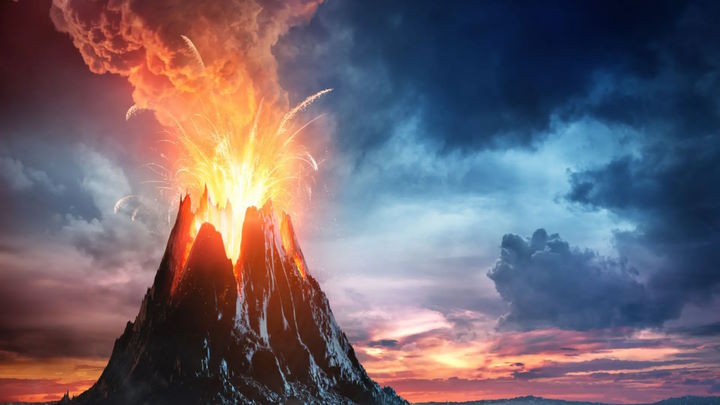
To close the gap, the world needs to turn its attention to under-monitored volcanoes in regions such as Latin America, Southeast Asia, Africa and the Pacific – where millions of people live near volcanoes with little or no recorded history.
This is where the greatest risks lie, and where even modest investments in surveillance, early warning and community preparedness can save the most lives.
This article is adapted from The Conversation under a Creative Commons license.
Final Thoughts
Understanding 'hidden' volcanoes pose the greatest threat to humanity makes it easier to evaluate the information and apply the most relevant recommendations. Focus on the key points above and verify details that may change over time.
FAQ
What is 'hidden' volcanoes pose the greatest threat to humanity?
Explore 'hidden' volcanoes pose the greatest threat to humanity.
What key points does this article cover?
The article focuses on Why are 'quiet' volcanoes unsafe?, with practical explanations and examples.
How can you use this information in practice?
Use the explanations to compare options, verify important details, and make a more informed decision. Apply the recommendations that best match your goals and situation.
Related Articles
 Why Do We Throw Waste into Volcanoes to Handle2 minutes read
 Discovering More Than 91 New Volcanoes in Antarctica, Hiding Catastrophes for Mankind Can Break Out4 minutes read
 Technologies That Can Save or Destroy Humanity: Complete Guide6 minutes read
 10 Great Astronomers Have Made the Most Important Contribution6 minutes read
 20+ How to Pose for the Best Photo You Need to Know4 minutes read
 What Is NordVPN Threat Protection and Why Should You Use It?7 minutes read
Reader Comments 0
Sign in with email or Google to join the discussion.