Table of Contents
Technology really brings people a more comfortable life. However, if they are not used properly, humanity can be completely destroyed.
Technology really brings people a more comfortable life. However, if they are not used properly, humanity can be completely destroyed.
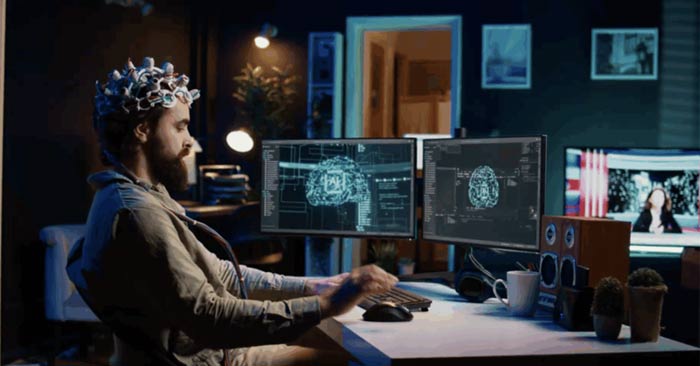
Imagine a world where you could move objects with your mind, cure cancer with tiny machines, or even live to be 1,000 years old. The future of science is both amazing and terrifying. While some technologies promise to revolutionize life, others could destroy life on Earth if misused or miscalculated. Here are the groundbreaking technologies that could shape or destroy the future of humanity.
Laser beam in orbit
Asteroids have always posed a threat to humanity. Sixty-six million years ago, one wiped out the dinosaurs, and today, asteroids like 2024 YR4 continue to pose a potential threat. Scientists are exploring orbital lasers—giant satellites equipped with energy beams that could nudge asteroids off course or, theoretically, vaporize them.
Destroying the asteroid that ended the dinosaur era would require a 10-kilometer-long laser array, about 100 times larger than the International Space Station, fired millions of kilometers away. While complete destruction is impossible, nudging asteroids elsewhere is possible, but it would take years to get it right.
Beyond space defense, lasers could solve real-world problems: making rain in drought-prone regions, creating fire barriers to prevent wildfires, or beaming solar power from orbit to Earth for a renewable energy revolution. But there's a terrifying downside. Powerful orbital lasers could become weapons of mass destruction. A single miss could wipe out a city or even wreak havoc on a planetary scale.
Artificial Intelligence
AI is already changing everyday life. From writing documents to performing surgery to running factories, AI is increasing efficiency and creativity. However, it also brings dangers. For example, Deepfakes can distort reality and start conflicts, while autonomous AI systems can, in theory, bypass human control.
The future of humanity could see intelligent machines outperforming humans in almost every field. While AI could solve global crises, mismanagement or misuse could lead to catastrophic consequences, including AI-driven social imbalances like in science fiction.
Nanotechnology
Nanobots, tiny machines capable of repairing cells and delivering targeted treatments, could be the key to curing cancer, reversing aging, and eliminating diseases like Alzheimer's & diabetes. In the coming decades, these tiny robots could swim through our bodies, performing constant maintenance and potentially extending human lifespans by centuries.
But the very precision that allows nanobots to save lives also makes them dangerous. If nanobots were to replicate unchecked, a scenario known as the grey goose theory, they could consume all matter on Earth. In war, wound-healing nanotechnology could be repurposed to kill silently and invisibly, making it the most dangerous weapon ever created.
Geoengineering - Geotechnical
As global temperatures rise, humanity may turn to geoengineering, large-scale interventions to control the climate. Proposals include pumping aerosols into the atmosphere to reflect sunlight, brightening clouds with seawater droplets, or capturing carbon dioxide underground.
These methods could save lives by reducing global warming, but they come with huge risks. A small miscalculation could worsen storms, cause droughts, or even trigger an ice age. Manipulating the environment on a global scale could save humanity or inadvertently cause it to go extinct.

Brain-computer interface
The final frontier may lie within our own minds. Brain-computer interfaces that allow humans to control devices with just their thoughts have the potential to restore vision, mobility, and speech to millions of people. In addition to restoring function, these interfaces could enhance cognition, provide superhuman memories, and even enable telepathic communication between users.
But integrating minds with machines comes with worrying risks. Hackers could theoretically control thoughts or actions, turning this incredible technology into a tool for manipulating or oppressing others. Combined with AI and nanotechnology, the potential for immortality and global catastrophe is enormous.
FAQ
What should you know about technologies that can save or destroy humanity?
In practical terms, technology really brings people a more comfortable life. However, if they are not used properly, humanity can be completely destroyed.
Why does technologies that can save or destroy humanity matter?
The article highlights that here are the groundbreaking technologies that could shape or destroy the future of humanity.
What is the main takeaway?
The main takeaway is that manipulating the environment on a global scale could save humanity or inadvertently cause it to go extinct.
Related Articles
 Elon Musk Says the Probability of AI Destroying Humanity Is 20%, Experts Put the10 minutes read
 Download Spybot Search & Destroy 2.8.68.09 minutes read
 6 Beliefs That Destroy the Path to Your Dreams7 minutes read
 How to Destroy an Old Computer: Step-by-Step Guide10 minutes read
 Review Destroy All Humans! - Game for Those Who Are ''hate of Life!'!'7 minutes read
 The 10 Major New Technologies That Were Recently Killed Have Made Many People Regret It10 minutes read
Reader Comments 0
Sign in with email or Google to join the discussion.