Table of Contents
Learning how to installing and using VMware virtual machines doesn't have to be complicated. This updated guide presents a clear workflow, practical checks, and troubleshooting advice you can use while completing the process.
Key Takeaways
- Review instructions for installing virtual machines using VMware.
- Explore software installation instructions.
- Understand instructions for creating VMware virtual machines.
Instructions for Installing Virtual Machines Using VMware
Start the VMware program by double-clicking on the icon on the Desktop screen, and follow these steps: after downloading and installing on your computer.
Software Installation Instructions
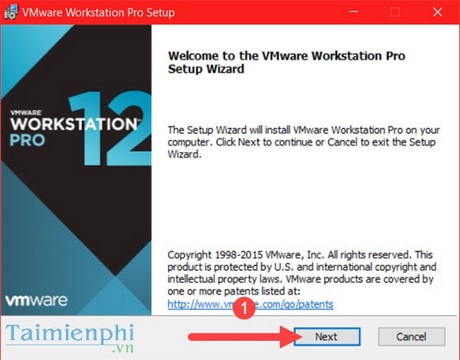
Step 1: After downloading VMware to your computer, select the software to run the installation and select Next.
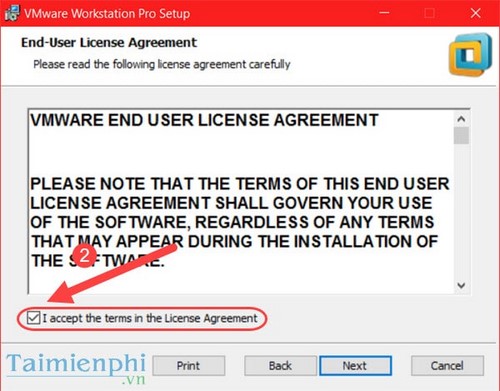
Step 2: Then click agree to the terms and continue Next.
Step 3: Click Next until the word Install appears and let the software start running.

Step 4: After the software finishes the installation process, click Finish.

Instructions for Creating VMware Virtual Machines
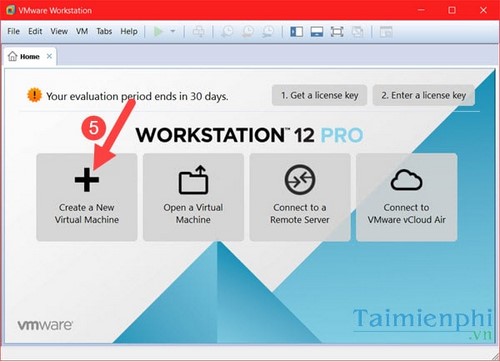
Step 1: After successfully installing the software, open the software and select Create a New Virtual Machine to create a virtual machine.
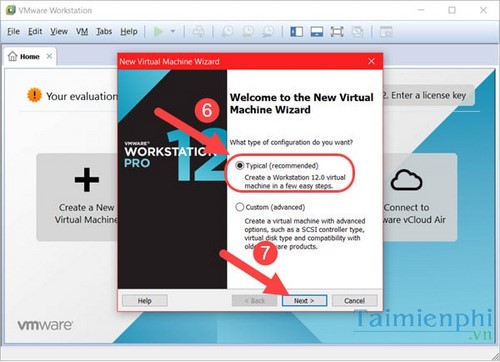
Step 2: Select the default Typical and click Next.
Step 3: Select the Browse folder pointing to the location of the operating system file you want to install (Windows 7, 8, 10.) in this article we use Windows 7 32 bit.
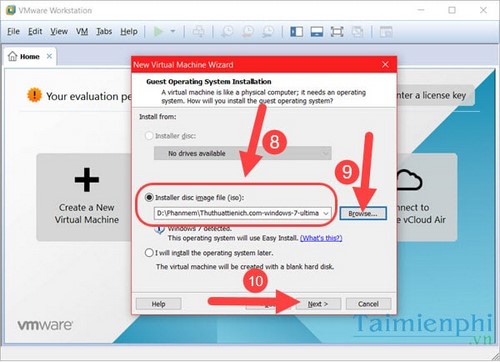
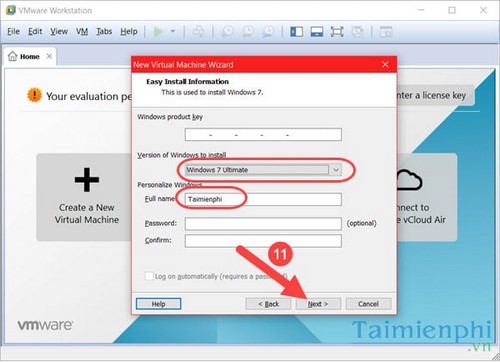
Step 4: Select Windows 7 Ultimate version and name your virtual machine then Next.
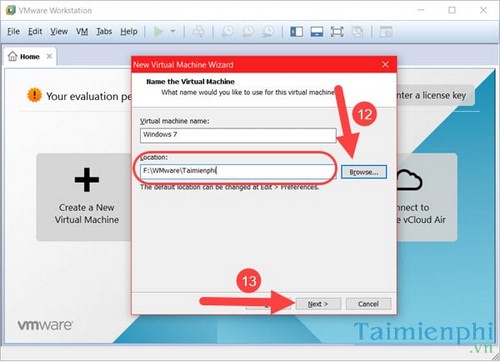
Step 5: Choose where you put the data for the virtual server being created, note that it must not be in the same folder as the VMware software.
Step 6: At this step, you can increase or decrease the hardware configuration for the virtual machine in Customize Hardware. Click Finish if you want to leave it as default.
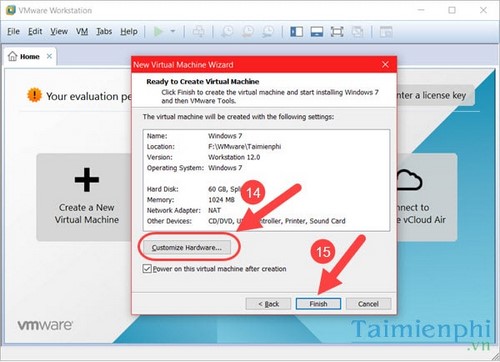
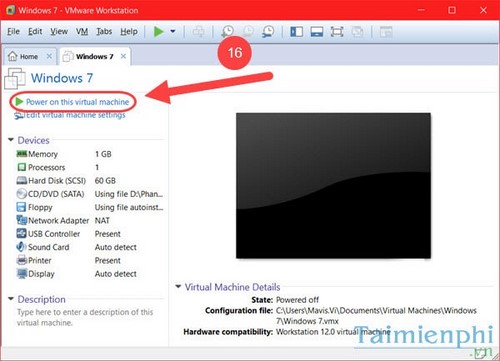
Step 7: After this step, click Power on this Virtual Machine to let the virtual machine proceed to install Windows, which can be Windows 7 in this article.
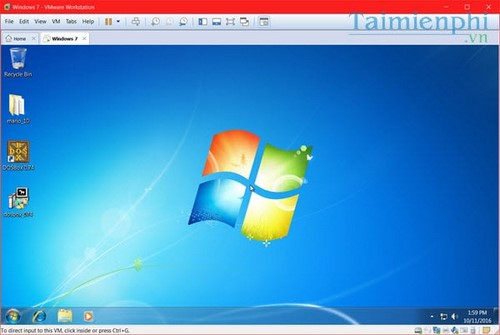
You will end up with a virtual machine running Windows 7 perfectly, no different from normal use.
VMware is a virtual machine software that helps users run multiple operating systems on the same device. You can use VMware Workstation to install Windows 7, Windows 10, and even Linux without affecting the original operating system. This software is especially useful when you want to test software, check system compatibility, or create a virtual environment for learning and research. You can refer to this guide's method of installing virtual machines using Virtualbox if you are interested in virtual machines on Windows.
Final Thoughts
The most reliable way to handle installing and using VMware virtual machines is to follow the process in order, verify each important setting, and test the result before moving on. Use the guidance above as a practical reference, then adjust the details for your device, software version, or specific goal.
FAQ
What should I check before I installing and using VMware virtual machines?
Use the latest available software, confirm that your device meets the requirements, and make sure you have the necessary permissions, account access, or backup before changing anything.
Why might I be unable to installing and using VMware virtual machines?
Common causes include outdated software, missing permissions, incompatible settings, incomplete setup steps, or a temporary network problem. Recheck the process from the beginning and restart the app or device if needed.
Is it safe to installing and using VMware virtual machines?
It is generally safe when you use official tools, review every permission, and back up important data before making system-level or account-level changes.
Related Articles
 Instructions on How to Install Virtual Machines with VMware3 minutes read
 Instructions on How to Fix 'the Vmware Authorization Service Is3 minutes read
 How to Speeding up Virtual Machines in Full Set10 minutes read
 Instructions for Installing Windows 10 in Vmware Workstation3 minutes read
 How to Install Windows 7 on a Vmware Virtual Machine10 minutes read
 How to Fix Not Enough Physical Memory on Vmware4 minutes read
Reader Comments 0
Sign in with email or Google to join the discussion.