Table of Contents
This guide provides a clear, practical overview of what is lockapp.exe? how to stop lockapp.exe, with useful context, important details, and straightforward takeaways for everyday readers.
1. What is LockApp.exe?
If you are a person who rarely changes the interface of a Windows 10 computer, you will be very familiar with the screen as below.
This is the screen the user encounters when starting or locking the PC. This screen provides the date and time along with other information about the computer such as wifi connection and battery health. But most importantly, it regularly changes the wallpaper with beautiful, rich landscapes.
This screen uses an application called LockApp.exe. Its only function is to provide the user with a lock screen when starting or locking the computer. If you click or press a key on this screen, you will be taken to the password input screen (as shown below). Next, LockApp.exe has stopped.
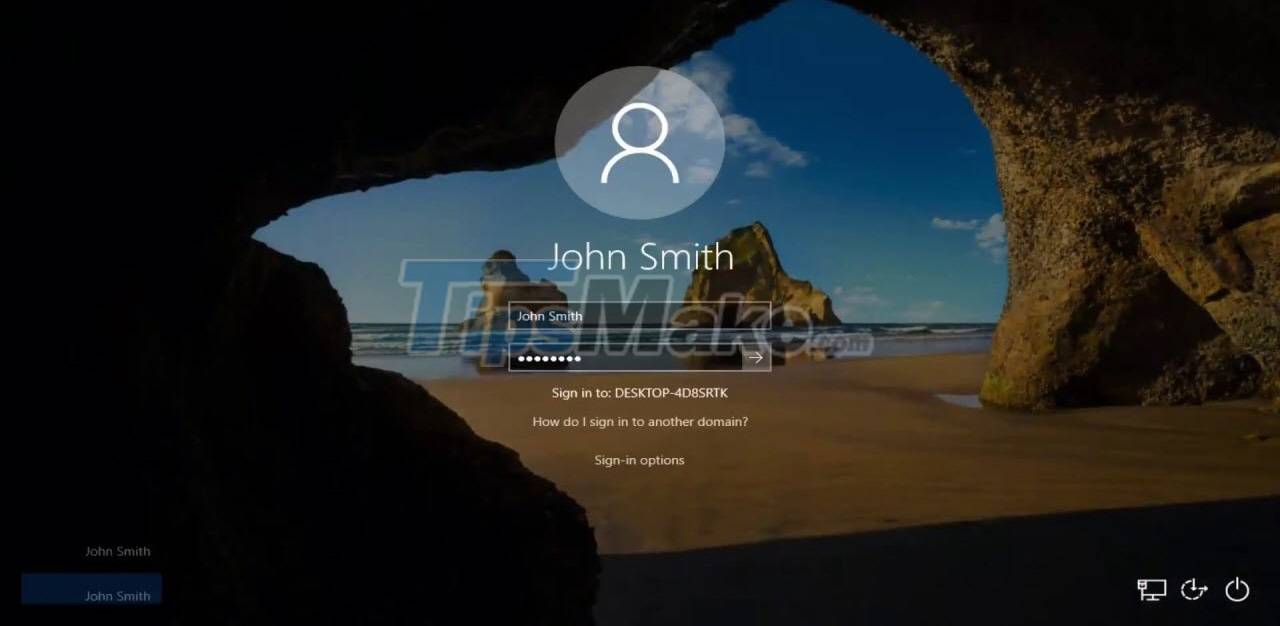
So you can see that LockApp.exe is completely a normal application of the Windows system. It does not use too much system resources. This is verified by looking for it in Task Manager >> Details.

You will find that LockApp.exe uses only 10-12MB of memory and takes very little CPU resources. While inactive, the process shows up as 0, at most 50KB of memory.
2. Is LockApp.exe a virus or not?
As explained, LockApp.exe is definitely not a virus on your computer, it is just a process of the Windows system.
However, there are still cases where hackers use LockApp.exe as a way to disguise their malicious program. So, if you are not sure, try the following trick to check if LockApp.exe, or other processes are viruses or not.
Step 1: Press Windows + X and open Task Manager.
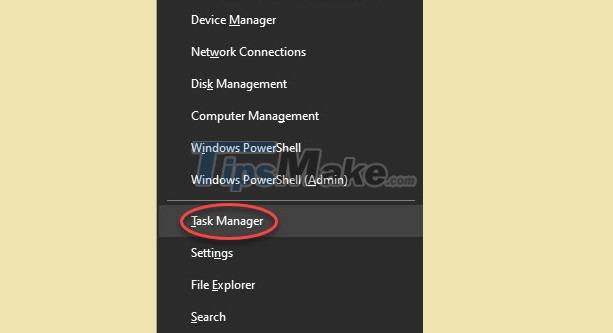
Step 2: Switch to the Details tab and navigate to LockApp.exe.

Step 3: Right-click LockApp.exe and select Open file location.
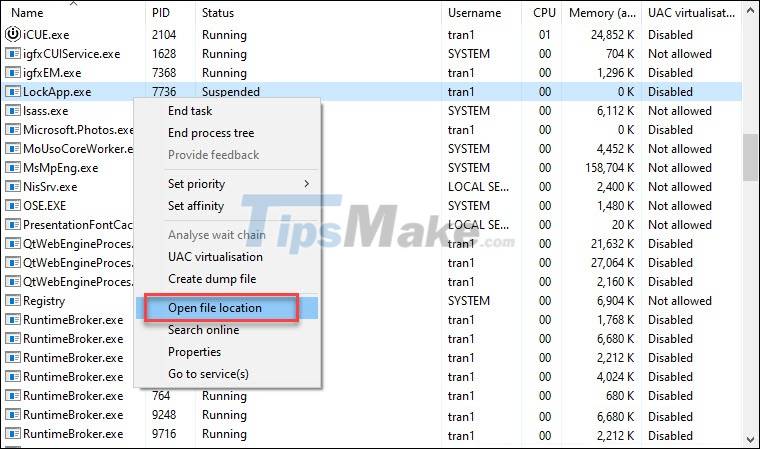
Step 4: Right-click on the file LockApp.exe >> Properties.

Step 5: When the Properties window appears, switch to the Digital Signatures tab and check if the Name of signer is Microsoft Windows or not. If there's no registered name or anything else, the process could be fake. In that case, run anti-virus software to remove it.
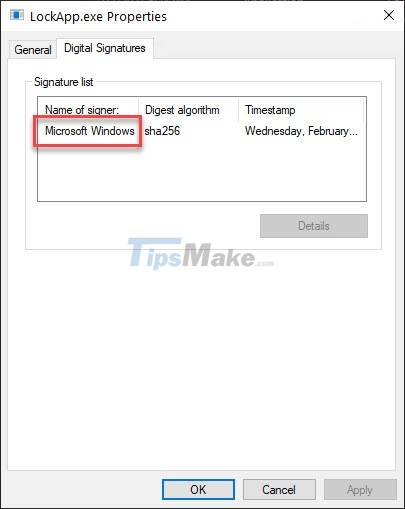
3. Is it possible to disable LockApp.exe?
To disable LockApp.exe because of system resource problems or other reasons, you can do so. It is completely safe to end the LockApp.exe process in Task Manager and it will not affect your computer's performance. However, the process will restart itself when you start your computer or lock it.
Just right-click LockApp.exe in Task Manager and select End process free.
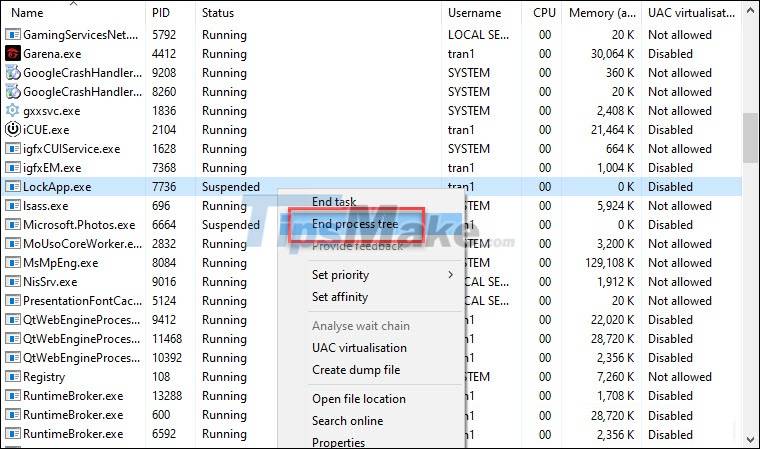
In addition, if you completely disable LockApp.exe, every time you start the machine, you will be taken directly to the login screen without going through the landscape screen anymore.
This process requires you to make changes in the Registry Editor, so do it carefully.
Step 1: Press Windows + R to open the Run dialog box. Here you type regedit and press Enter.
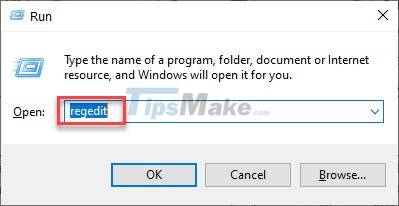
Step 2: In the address bar of regedit, access the path ComputerHKEY_LOCAL_MACHINESOFTWAREPoliciesMicrosoftWindows
Step 3: Right-click the Windows folder >> New >> Key.
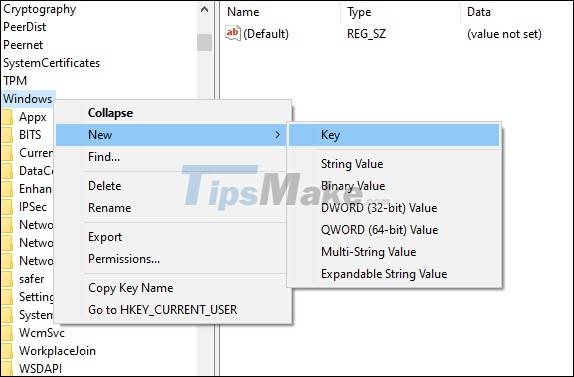
Step 4: Name the new key Personalization.
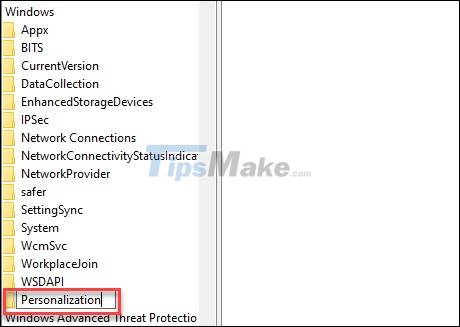
Step 5: Create a DWORD (32bit) Value key in the Personalization folder. Name it NoLockScreen.
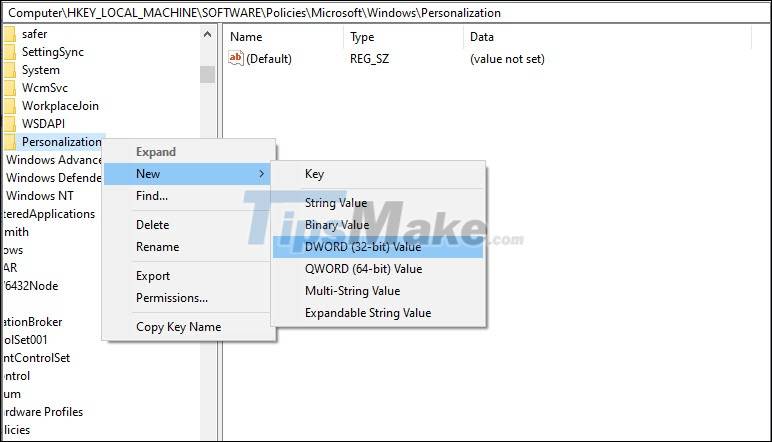
Step 6: Double-click the NoLockScreen key and set the value data to 1. Click OK to finish.
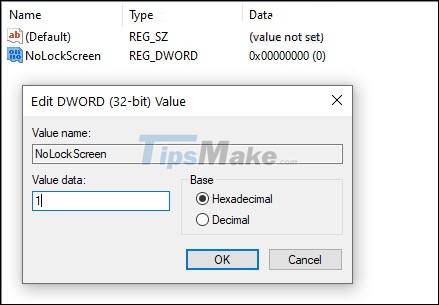
You will need to restart your computer for the settings to take effect. In the future, To re-enable Registry Editor and completely remove NolockScreen, that's fine.
Conclude
LockApp.exe is a legitimate Windows process and should be used. If you don't need it, you should keep the process running, because making changes to the Registry if it's wrong can pose serious risks.
Key Takeaways
Use the information above as a practical reference for what is lockapp.exe? how to stop lockapp.exe. Review each step carefully, confirm any requirements, and choose the option that best fits your situation.
FAQ
What does this guide explain about What Is Lockapp.exe? How to Stop Lockapp.exe?
It explains the main concepts, practical considerations, and useful steps related to what is lockapp.exe? how to stop lockapp.exe without requiring advanced knowledge.
Who can benefit from learning about What Is Lockapp.exe? How to Stop Lockapp.exe?
This information is useful for readers who want a clear overview, practical guidance, and reliable steps related to what is lockapp.exe? how to stop lockapp.exe.
What should I check before applying this information?
Review the requirements, confirm that your device, software, or situation matches the instructions, and back up important data before making major changes.
Related Articles
 How to Fix STOP Error 0x0000008E4 minutes read
 How to Fix STOP 0x00000004 in Windows4 minutes read
 How to Fix STOP 0x0000003D Error4 minutes read
 How to Make Stop Motion Videos on Android Phones8 minutes read
 Stop -- Ransomware Is the Most Active in the Internet but Rarely8 minutes read
 5 Tweaks to Stop Your Smart TV from Tracking You7 minutes read
Reader Comments 0
Sign in with email or Google to join the discussion.