Table of Contents
Get a clear answer to what is claw? a new AI trend that could change the way you use computers, including the key facts, causes, options, and practical…
"First it was chatting, then it was coding, and now it's claw." That's the assessment of AI researcher Andrej Karpathy on X last February. This statement quickly spread and reflects a new trend emerging in the field of AI.
While AI was previously primarily used for chatting or writing code, 'claw' is now seen as the next step — where AI can actually perform actions on your computer .
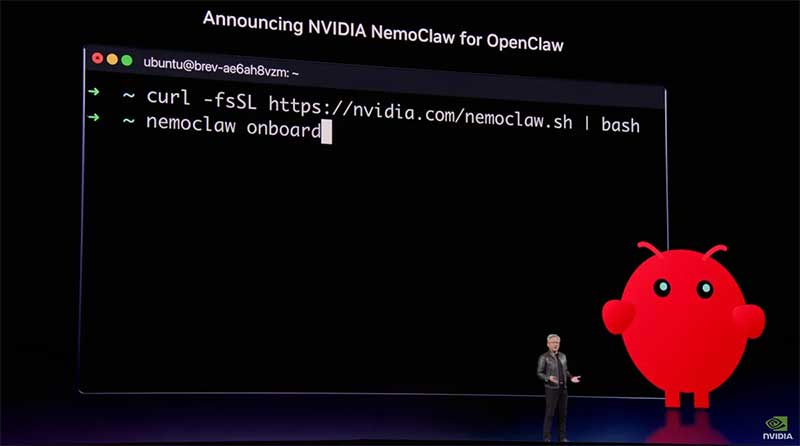
This trend started with OpenClaw, an open-source AI agent that can automate tasks across familiar applications and services. At the NVIDIA GTC 2026 conference, NVIDIA CEO Jensen Huang even called Claw the 'new type of computer' and suggested that every company should develop its own OpenClaw strategy.
From an initial project, 'claw' has now become an entirely new technology category, with many large companies and the developer community participating.
Claw Is Not a Chatbot, but an 'AI Employee'
The biggest difference with Claw is its ability to take action directly. While chatbots only answer questions or create content, Claw can work directly on your computer.
You simply set the goal, and the claw will automatically break down the task, plan it, and use tools like a browser, terminal, or application to complete the work. The name "claw" comes from the image of the AI being able to 'reach out' into the system, access files, run commands, or control applications.
Not all AI agents are claws. A typical agent will wait for user input, while a claw can operate autonomously. For example, it can automatically detect urgent emails at night, find relevant data, and prepare a response.
The key point is that Claw doesn't need you to write a script for it. It can plan independently, adapt to changes, and remember the context of the job. According to Gavriel Cohen, these are "versatile AI agents" that can do almost everything humans do on a computer.
How Does Claw Work?
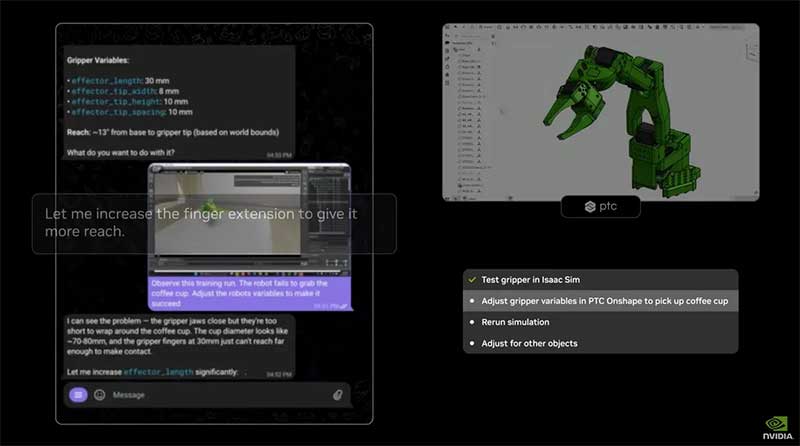
Claw typically connects directly to a computer via the terminal to access files, applications, and the system. However, you don't need to control Claw via the terminal. Instead, you can send commands through familiar chat applications like WhatsApp, Telegram, Discord, Slack, or iMessage. This turns chat applications into a remote control for your computer.
Claw can also run in two different models. Some run directly on the personal computer, offering better control but requiring the computer to always be on. Others run in the cloud, can operate 24/7 and continue working even when the computer is off, but in return, users must accept reduced control.
Currently, claw is still primarily for technically proficient users. If you're not familiar with working with the terminal, using claw can still be quite complicated.
An important part of Claw is its 'skills' system, similar to plugins or extensions. These skills help Claw connect with more services and perform more tasks.
OpenClaw popularized this model through ClawHub—a community library where users share skills. Over time, these marketplaces could evolve into something like the App Store, where users can download additional AI capabilities as needed.
The Claw Race Is Heating Up
After OpenClaw started the trend, a host of companies quickly developed their own versions.
OpenClaw remains a community project with deep system access, offering great power but also carrying risks. At GTC 2026, NVIDIA introduced NemoClaw, a security-focused version suitable for enterprises.
Meta also joined the race by launching My Computer through Manus, allowing agents to directly manipulate the computer. Meanwhile, Anthropic introduced Claude Cowork, which runs in a virtual machine environment to reduce security risks.
Perplexity developed Computer, a solution that runs in a cloud sandbox, avoiding direct access to personal computers. NanoClaw, on the other hand, took the opposite approach, focusing on a compact and easily controllable system.
Additionally, micro-claw projects like PicoClaw, ZeroClaw, and MimiClaw are focusing on small devices and inexpensive hardware, expanding the applicability of this technology.
Many Chinese tech companies have quickly launched their own versions. Tencent integrated ClawBot into WeChat, ByteDance developed ByteClaw for internal employees, Alibaba launched JVS Claw, and Xiaomi is testing a miclaw system for its devices. This shows that claw is becoming a global trend, not limited to American companies.
Security Risks Remain a Major Concern
Granting system privileges to AI always carries risks. If Claw can access emails or files, hackers could also exploit that to access data through AI.
Beyond security risks, AI can also make mistakes. There have been cases where OpenClaw automatically deleted emails in bulk despite user requests to prevent it. This has led many experts to recommend limiting AI access and using sandboxes or approval mechanisms before performing important actions. The balance between power and security is currently the biggest debate in this field.
Despite the risks, the benefits of claw are clear. AI can automate repetitive tasks such as data aggregation, spreadsheet updates, or email management.
Some experts suggest that instead of using one 'super AI,' users should employ multiple specialized claws for each task. For example, one claw for research, one for email processing, and another for financial data.
In the future, operating systems could become a collection of AI agents running in the background. Users would no longer 'use AI,' but computers would operate automatically using AI.
Some experts even predict that within the next few months, everyone will have a truly personal AI assistant to help manage their tasks and time. This may seem a bit premature, but given the current pace of AI development, that prospect is not too far off.
FAQ
What Is Claw? a New AI Trend That Could Change the Way You Use Computers?
Get a clear answer to what is claw? a new AI trend that could change the way you use computers, including the key facts, causes, options, and practical...
Why does this topic matter?
Key takeaway: Get a clear answer to what is claw? a new AI trend that could change the way you use computers, including the key facts, causes, options, and practical...
What are the most important takeaways?
"First it was chatting, then it was coding, and now it's claw." That's the assessment of AI researcher Andrej Karpathy on X last February.
Related Articles
 How to Get Thompson Cyber Claw Skin in Free Fire4 minutes read
 Intel Launched a Super-saving Computer Model Priced from 3 Million6 minutes read
 How to Change DNS on Windows and Mac Computers4 minutes read
![[Infographic] the Trend of Mobile Application Development Will Dominate 2019](/data/thumbs_200x120/[infographic]-the-trend-of-mobile-application-development-will-dominate-2019_thumbs_200x120_wnBzvxO1y.jpg) [Infographic] the Trend of Mobile Application Development Will Dominate 20195 minutes read
[Infographic] the Trend of Mobile Application Development Will Dominate 20195 minutes read Buy Copyright of Trend Micro Antivirus Software via SMS Vietnam Network Operator with Only3 minutes read
 3 Basic Mouse Grip Styles: Palm, Claw and Fingertip6 minutes read
Reader Comments 0
Sign in with email or Google to join the discussion.