Table of Contents
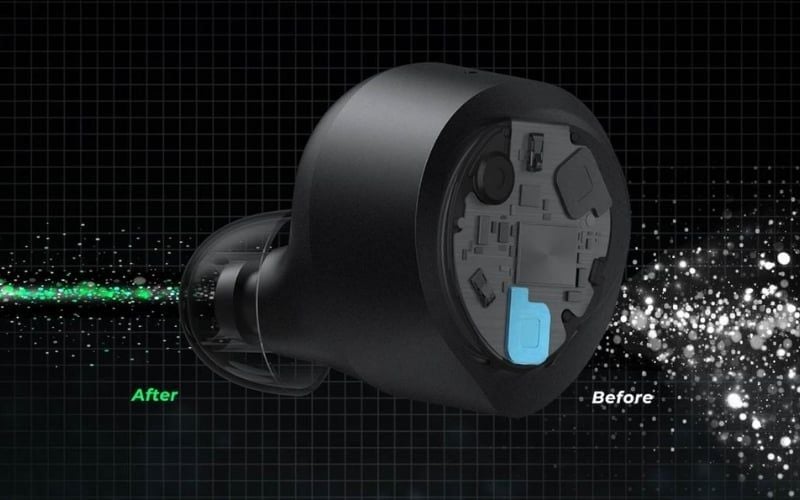
Active noise cancellation (ANC) uses microphones, digital or analog processing, and the headphone drivers to reduce some sound reaching the listener. It works best on steady low-frequency noise such as aircraft cabin rumble, engines, and ventilation. It cannot create silence, and sudden voices, clattering dishes, wind, and higher frequencies are harder to cancel.
How ANC reduces noise
- One or more microphones capture outside noise and, in some designs, the sound inside the ear cup.
- A processor estimates the unwanted component and calculates a compensating signal.
- The driver plays music plus that signal.
- At the listener's ear, the pressure variations partly oppose the incoming noise, reducing its level.
The familiar “180-degree opposite wave” explanation is a useful simplification. Real headphones must also account for delay, changing fit, driver response, reflections, movement, and noise arriving from different directions. Perfect cancellation across every frequency and position is impossible.
Feedforward ANC
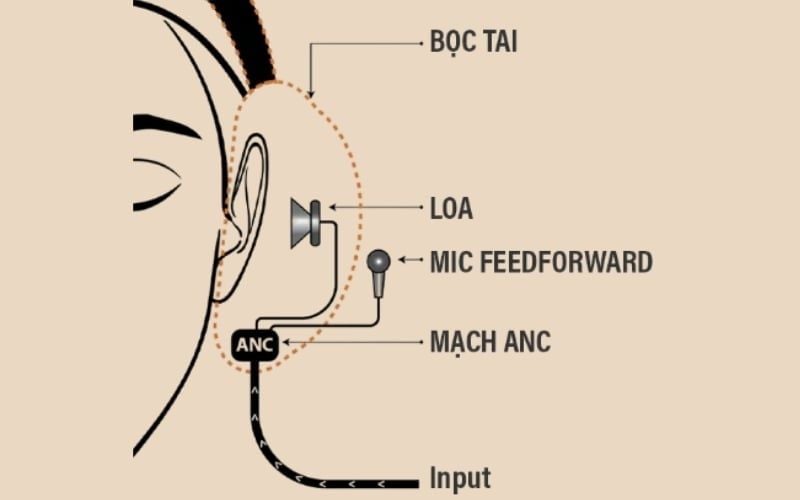
A feedforward system places a microphone on the outside of the ear cup or earbud. It detects noise before that sound reaches the ear and gives the processor time to respond.
Its performance depends on accurate modeling of the fit and acoustic path. The external microphone is exposed to wind and contact noise. Feedforward is not inherently best for speech or midrange sound.
Feedback ANC
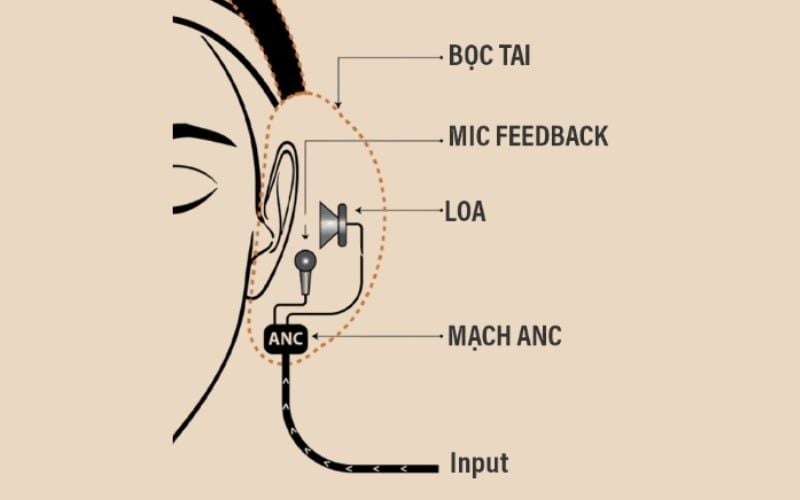
A feedback microphone sits inside the ear cup or near the ear canal and measures the combined result that the listener receives. The system can correct for fit changes and driver variation.
Because the microphone also hears the headphone's own output, the control loop must remain stable. Poor implementation can add tonal changes, artifacts, or feedback. Product design matters more than the topology name.
Hybrid and adaptive ANC
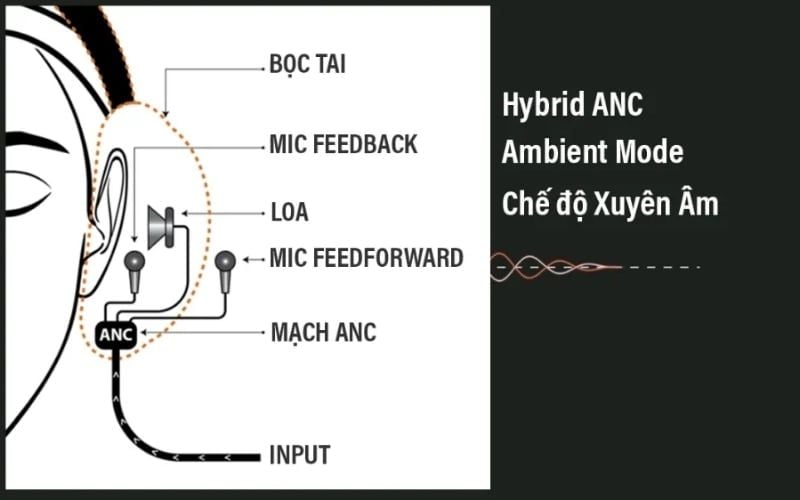
Hybrid ANC combines outside and inside microphones, giving the processor more information. It can cover a broad range effectively, but more microphones do not guarantee better cancellation; placement, algorithms, fit, and tuning remain critical.
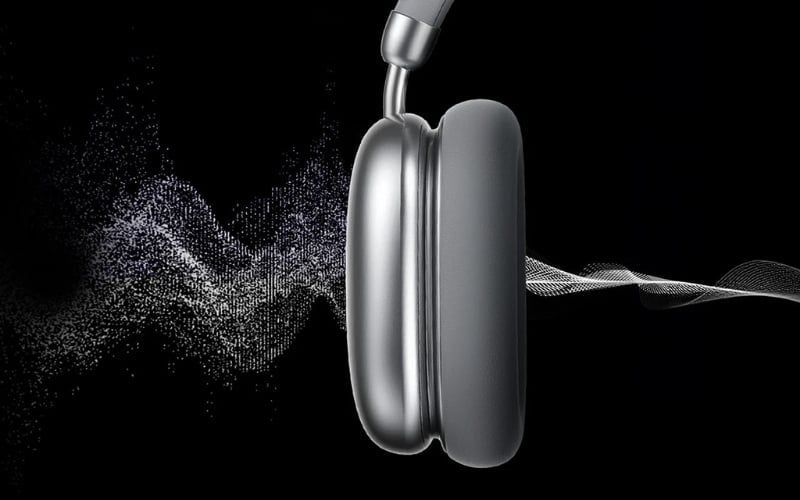
Adaptive ANC changes processing based on detected environment, leakage, movement, or fit. The term is used differently by manufacturers: one product may adjust automatically, another may offer several manual levels, and another may combine cancellation with an awareness mode. Independent measurements and a real fit test are more informative than the label.
ANC, passive isolation, and call noise reduction
| Feature | How it works | Who benefits |
|---|---|---|
| Active noise cancellation | Microphones and processing generate a compensating signal in the listener's audio path | The wearer |
| Passive isolation | Ear tips, pads, and sealed enclosures physically reduce incoming sound | The wearer |
| Microphone noise reduction, sometimes marketed as ENC | Beamforming and processing attempt to separate the user's voice from background noise | The person on the other end of a call or voice chat |
| Transparency or awareness mode | Microphones intentionally feed selected outside sound into the headphones | The wearer needing more awareness |
“ENC” is not a single consumer standard and can mean different processing in different products. Listen to microphone recordings instead of assuming the acronym guarantees clear calls.
What ANC handles well
- Aircraft and train rumble
- Vehicle engine and road noise
- Air-conditioning and fan hum
- Other relatively steady low-frequency sounds
Passive isolation remains important for voices and higher-frequency sounds. A sealed in-ear tip or well-fitting closed ear cup gives ANC a better starting point. Open-fit earbuds can use ANC, but leakage makes strong low-frequency cancellation harder.
What ANC cannot guarantee
- Complete removal of conversations, alarms, keyboard clicks, or sudden impacts
- Protection from every hazardous noise level
- Better sound quality or deeper bass
- A comfortable fit for every listener
- Clearer microphone audio for callers
- Low gaming latency
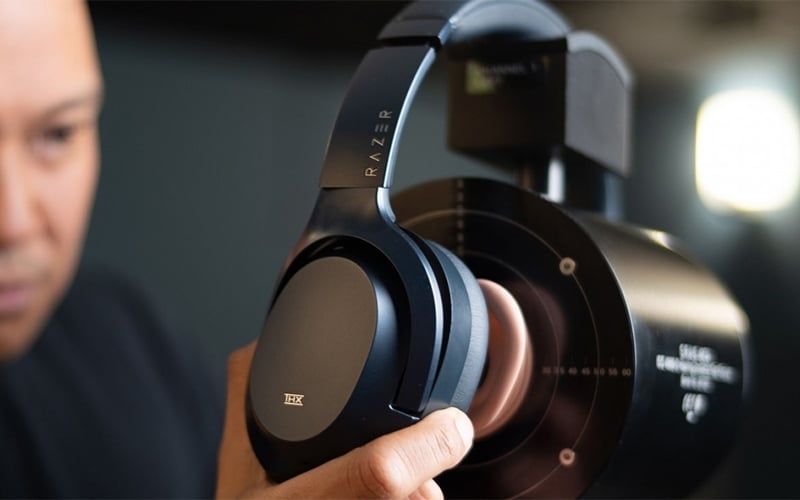
Does ANC protect hearing?
ANC can make music intelligible at a lower volume in noisy surroundings, which may help a listener avoid turning playback up to mask the environment. ANC itself is not hearing protection, and the headphones can still play at unsafe levels. It should not replace certified protective equipment in a workplace, at a shooting range, or around hazardous machinery.
Keep playback moderate, limit time around loud sound, use fit and isolation appropriately, and follow device exposure warnings. ANC is a tool for reducing distraction, not a license to ignore volume.
Comfort and side effects
Some users experience a pressure-like sensation, mild nausea, or discomfort with ANC even though the system does not create air-pressure changes like altitude. Low-frequency cancellation, seal, processing artifacts, and individual sensitivity may contribute.
Try a lower ANC setting, change ear tips or pad position, or turn the feature off. Stop using the headphones if symptoms persist. Transparency mode also needs caution: loud or distorted microphone feed can be unpleasant, and it should not be trusted as the only safety cue in traffic.
Battery and sound tradeoffs
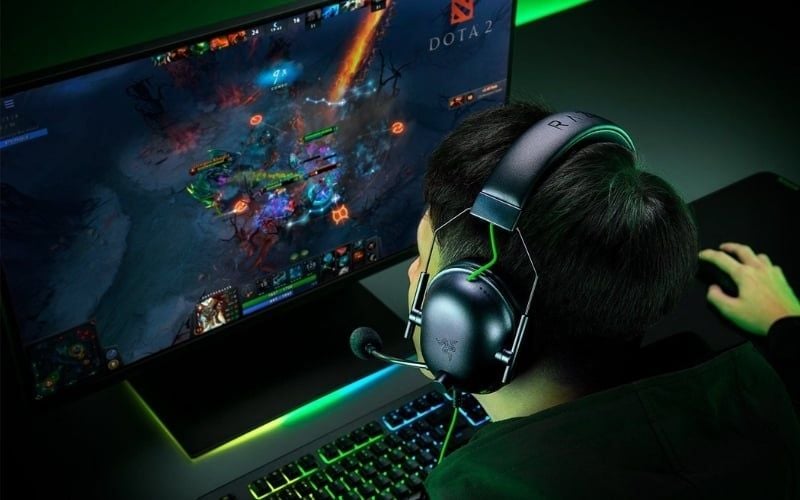
ANC requires microphones and processing, so it normally shortens wireless battery life. The difference varies by model, codec, volume, call use, temperature, and whether transparency is active; a universal 20–30% figure is not reliable.
Turning ANC on can also change frequency response because the system interacts with the driver and seal. A well-tuned headphone compensates for this; other models sound noticeably different with ANC off. Compare both modes.
ANC for gaming
ANC is useful when fan, air-conditioner, or room noise masks quiet game details. It does not make reactions faster by itself and may do little against nearby mechanical-keyboard clicks or voices.
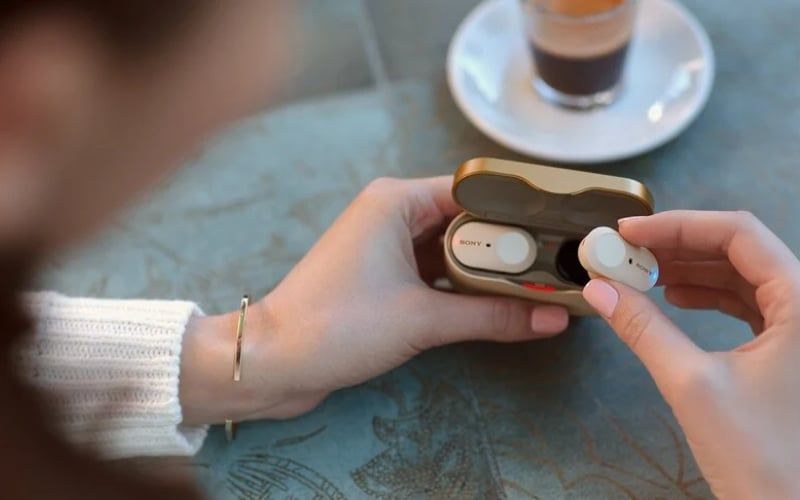
Connection latency is independent of ANC. A well-designed USB or 2.4GHz receiver often offers predictable low latency, but some Bluetooth products and codecs may also be acceptable for casual use. Check measured latency with the exact platform and read what Bluetooth version numbers do not guarantee.
Choosing ANC headphones
- Test cancellation with recordings of aircraft, traffic, voices, and wind—not only a showroom hum.
- Check passive fit and comfort before activating ANC.
- Compare sound with ANC on, off, and in transparency mode.
- Review microphone samples separately from listener-side cancellation.
- Check battery figures in the mode you will actually use.
- Confirm wired, USB, Bluetooth, receiver, multipoint, and platform behavior.
- Look for replaceable pads or tips and ongoing firmware support.

For portable use, compare the seal and stability of open-fit earbuds and in-ear headphones. For larger models, the over-ear, on-ear, and in-ear comparison explains how physical design affects passive isolation.

Related Articles
 How to Use Active Noise Cancellation Properly7 minutes read
 How to Turn on Active Noise Cancellation on Airpod Pros5 minutes read
 The Most Valuable Feature on Airpods Pro Is Having Problems After4 minutes read
 Samsung Launches True Wireless Headset AKG N400: Active4 minutes read
 Honor Launches New True Wireless Headphones with 'Hybrid' Active4 minutes read
 What Is ENC Technology?7 minutes read
Reader Comments 0
Sign in with email or Google to join the discussion.