Table of Contents
In everyday product listings, “earbuds” can mean almost any small earphone. For a useful comparison, this article uses earbuds for open-fit or semi-in-ear models that rest at the ear opening, and in-ear headphones for models with silicone or foam tips that seal the ear canal. The seal—not whether the product is wired or wireless—is the main difference.
What are in-ear headphones?
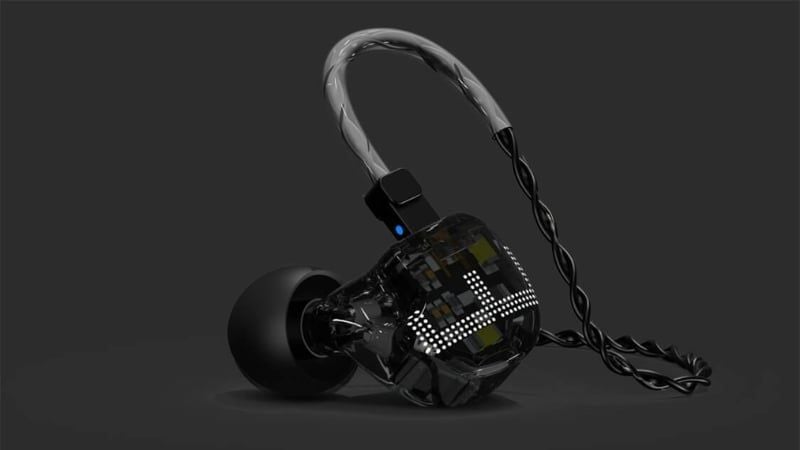
In-ear headphones, sometimes called in-ear monitors or canalphones, use a replaceable or fixed tip that sits at the entrance to the ear canal and forms an acoustic seal. Most do not need to be pushed deeply. The correct insertion depth depends on the design and should never cause pain.
Advantages
- A good seal provides passive isolation from outside sound.
- The seal supports consistent low-frequency response without requiring excessive volume.
- Different silicone or foam tip sizes can improve fit.
- Wings or hooks on sports models can add stability.
Limitations
- Some people dislike the sealed or “plugged” feeling.
- The wrong tip size can loosen bass, reduce isolation, or create pressure and soreness.
- Tips collect earwax and need regular cleaning or replacement.
- Strong isolation can reduce awareness of traffic, alarms, or nearby people.
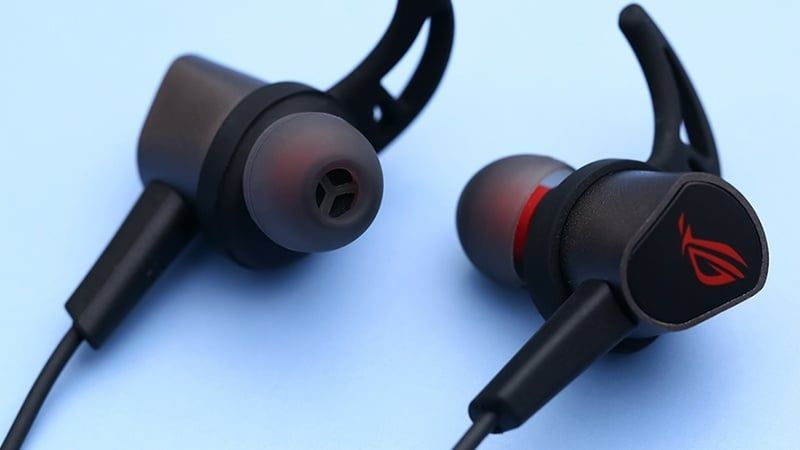
In-ear tips should seal gently at the canal entrance; they should not be forced deeper.
What are open-fit earbuds?
Open-fit earbuds have a hard or softly covered speaker housing that rests in the concha and near the ear-canal opening without sealing it. Some manufacturers call this style semi-in-ear. The fit depends heavily on ear shape because there is no interchangeable tip to fill the gap.
Advantages
- No pressure from an ear-canal tip, which some listeners find more comfortable.
- More outside sound remains audible, useful when situational awareness is appropriate.
- Easy to insert and remove.
- Less sealed “occlusion” sensation from footsteps, chewing, or your own voice.
Limitations
- Less passive isolation and more sound leakage.
- Bass response can vary greatly with individual ear shape and placement.
- A fixed housing that does not match the ear can create pressure points or fall out.
- Users may raise the volume in a noisy environment, increasing listening risk.
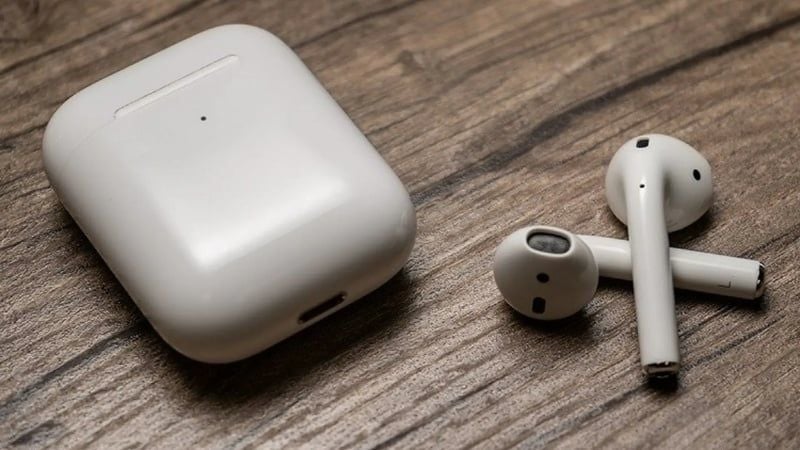
An open-fit earbud rests near the canal rather than sealing it.
Earbuds and in-ear headphones compared
| Criteria | Sealed in-ear headphones | Open-fit earbuds |
|---|---|---|
| Wearing position | Tip seals at the ear-canal entrance | Housing rests in the outer ear near the opening |
| Passive isolation | Usually moderate to strong with a correct seal | Low |
| Bass consistency | Usually more consistent when properly sealed | More dependent on ear shape and placement |
| Comfort | Tip material, size, and insertion matter | No canal-tip pressure, but the fixed shell can create pressure points |
| Stability | Can be secure with the right tip, wing, or hook | Varies widely with ear shape |
| Awareness | Reduced unless transparency mode is used | More ambient sound is normally audible |
| Cleaning | Clean tips and nozzle filters | Clean speaker mesh and housing |
Does one design sound better?
No. Tuning, driver design, acoustic chamber, fit, digital signal processing, codec, and recording quality all affect sound. A sealed design can reproduce bass more reliably because air is not leaking around the tip, but it does not guarantee “deep, detailed” sound. An open-fit model can sound excellent, although low bass usually varies more between listeners.
Driver size alone is also not a quality score. Frequency response, distortion, fit, and tuning are more useful than a single millimeter specification.
Passive isolation, ANC, and transparency are different
Passive isolation comes from the physical seal. Active noise cancellation (ANC) uses microphones and signal processing to reduce some external noise, particularly steady low-frequency sound. Either form factor may include ANC, but an open fit generally gives the electronics a more difficult starting point.
Transparency or awareness mode intentionally mixes outside sound through microphones. It can be helpful, but it is not a substitute for looking and listening carefully in traffic or other hazardous surroundings. See the noise-cancelling headphone overview for examples of how ANC and awareness modes are implemented.
Which should you choose?
Choose sealed in-ear headphones when:
- you commute or work around steady background noise;
- you want reliable bass at a moderate volume;
- the included tips fit securely, or the model accepts alternatives;
- you need compact stage monitoring or a stable sports fit.
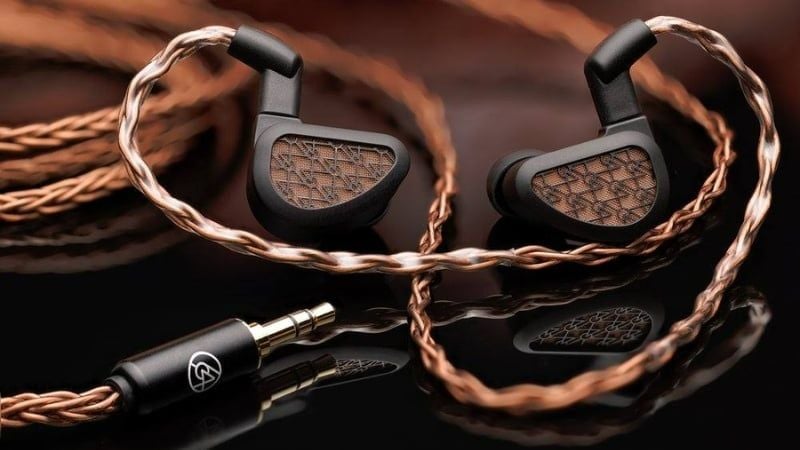
Gaming performance is not determined by the seal alone. For competitive games, check positional tuning, latency, platform compatibility, microphone quality, and whether the game produces accurate spatial audio. A wired in-ear model avoids Bluetooth codec latency, but many wireless models offer a low-latency mode.
Choose open-fit earbuds when:
- you cannot tolerate ear tips;
- you prefer less occlusion during speech and calls;
- you listen mainly in a quiet room;
- the shell matches your ear and remains secure without pressure.
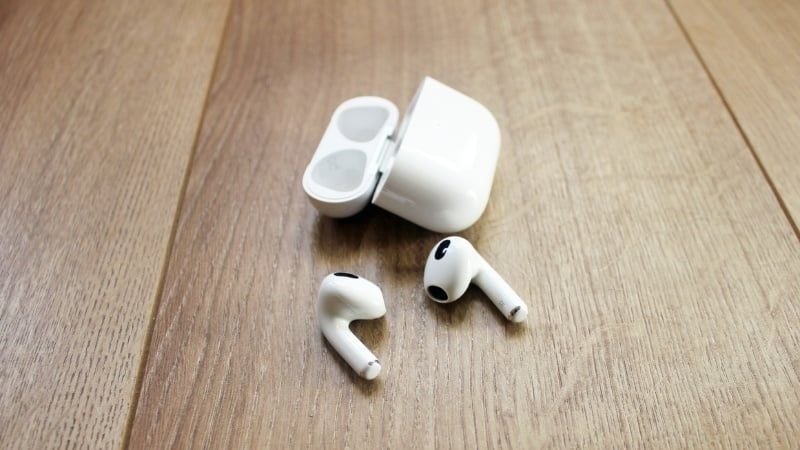
Open fit can help you hear more of the environment, but do not assume that makes any earbud safe for cycling or road use. Follow local rules, keep the volume low, and remove the earphones when full attention is required.
How to check the fit
For in-ear headphones
- Start with the medium tips, then test smaller and larger sizes in each ear independently.
- Insert with a gentle twist. Stop if there is pain, sharp pressure, or irritation.
- Play familiar audio at low volume. A weak, uneven bass response often indicates a poor seal.
- Move your jaw and walk around. The tips should stay sealed without being forced.

For open-fit earbuds
The speaker opening should point toward the canal, the housing should not press painfully on cartilage, and both sides should sound balanced. Because the shell size is fixed, a different product may be the only solution when the fit is loose or painful.
Cleaning and hearing comfort
Wipe the housings after use and clean removable tips according to the manufacturer's instructions. Do not push objects through a nozzle filter or share earphones without cleaning them. Let all parts dry fully before reassembly.
Use the lowest volume that remains clear, especially in noisy places. Take breaks, and stop using the earphones if you develop pain, persistent ringing, muffled hearing, discharge, or skin irritation. Seek qualified medical advice for symptoms that persist.
Other buying factors
After choosing the form factor, compare microphone performance, controls, battery life, repairability, water-resistance rating, replacement-tip availability, multipoint support, and latency. If you prefer cable-free models, the wireless earbud comparison shows the types of features worth checking, even though specific product availability changes over time.
Related Articles
 Spending Tens of Millions for an Earbuds Instead of Headphones or9 minutes read
 Sony MDR-EX15AP Review: Small Headphones, Sound Quality, Everyone Can5 minutes read
 Top 3 In-ear Headphones Worth Buying for Less Than 500 Thousand7 minutes read
 Sennheiser MX 475 Review: 'Great' Earpiece Model for Lyrical, Gentle6 minutes read
 Choose Headphones Like In-ear, On-ear or Over-ear?8 minutes read
 Sennheiser CX 213 Review: Great Mid-range Headphones6 minutes read
Reader Comments 0
Sign in with email or Google to join the discussion.