Table of Contents
AI writing tools are most useful for research, outlines, alternatives, and first drafts—not for publishing unchecked text at scale. The right product depends on the work: Sudowrite is designed around fiction, QuillBot emphasizes revision, Perplexity emphasizes sourced research, and platforms such as Jasper, Writesonic, and Copy.ai target marketing workflows.
This comparison avoids a fixed “best overall” ranking. Features, model access, credits, and subscriptions change frequently, so test each candidate with the same real assignment and confirm current terms on the official site before paying.
Quick comparison
| Tool | Best fit | Important limitation |
|---|---|---|
| Sudowrite | Fiction planning and scene development | Credit-based paid product; not a research or SEO tool |
| Claude | Long-form drafts, document analysis, revision | Facts and citations still require verification |
| ChatGPT | Versatile drafting and tool-assisted workflows | Quality varies with context, model, and instructions |
| Jasper | Brand-governed marketing teams | More platform than an individual writer may need |
| QuillBot Flow | Rewriting, grammar, summaries, and editing | Paraphrasing does not eliminate plagiarism risk |
| Rytr | Short-form copy on a modest budget | Long articles need stronger structure and editing |
| Perplexity | Web research and source discovery | A citation may not fully support the generated claim |
| Writesonic | SEO, AI-search visibility, and content operations | Specialized marketing platform with plan-based limits |
| Copy.ai | Enterprise go-to-market workflows | No longer primarily a simple low-cost writing app |
| ParagraphAI | Quick writing assistance in a browser or phone | Less suitable for research-heavy or complex long-form work |
1. Sudowrite: fiction planning and prose development
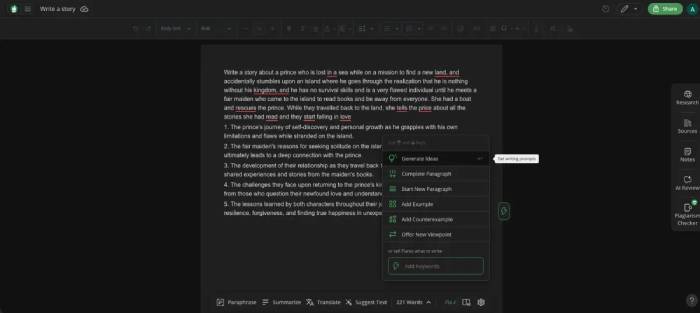
Sudowrite is purpose-built for novelists and screenwriters. Its tools can suggest sensory detail, alternative phrasing, plot directions, character material, and scene continuations. That makes it a stronger fit for overcoming a specific creative block than a general chatbot with no story context.
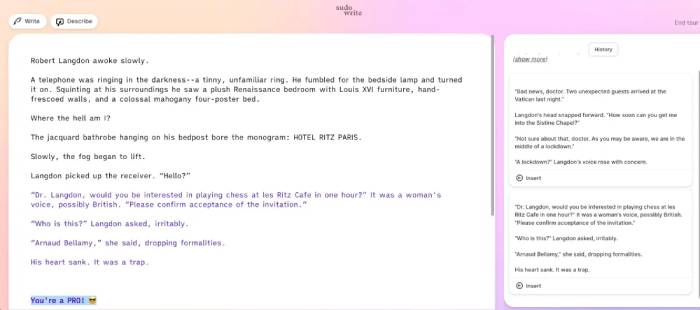
Use it to generate possibilities, then choose and rewrite rather than asking it to author an entire book unattended. Check point of view, tense, continuity, character motivation, and repeated imagery across scenes. Sudowrite has a free trial and paid credit-based plans; feature usage can consume different amounts of credit. Confirm details on the Sudowrite pricing page.
Choose it when: the project is fiction and you want specialized scene and story tools. Skip it when: the job depends on current facts, citations, or SEO analysis.
2. Claude: long-form drafting and document work
Claude is a general AI assistant that is useful for outlining, transforming supplied documents, comparing revisions, and developing a long draft over several passes. It can follow a detailed style brief and work with uploaded material, which helps when the writer already has notes, interviews, or source documents.
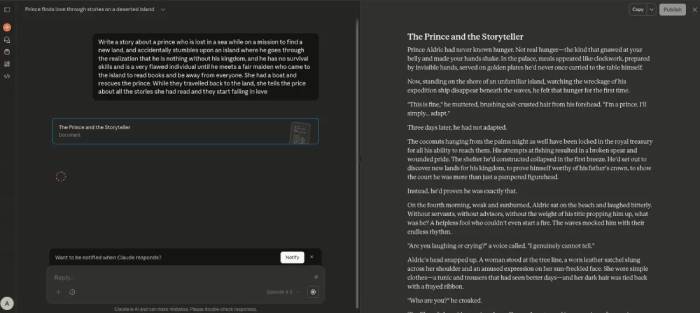
Do not rely on an appealing tone as evidence of accuracy. Ask Claude to separate supplied facts from inference, mark missing information, and preserve quotations exactly. For a large project, work section by section and maintain a source-of-truth outline so later edits do not contradict earlier ones.
Choose it when: you need sustained work on documents or a substantial draft. Watch out for: invented facts, flattened authorial voice, and silent changes to quoted or technical material.
3. ChatGPT: the most flexible general workflow
ChatGPT can brainstorm, outline, draft, edit, analyze files, search when the product supplies browsing, and work with connected tools. Its main advantage is flexibility: the same workspace can turn an interview transcript into themes, propose several structures, draft a section, and review the final copy against a checklist.
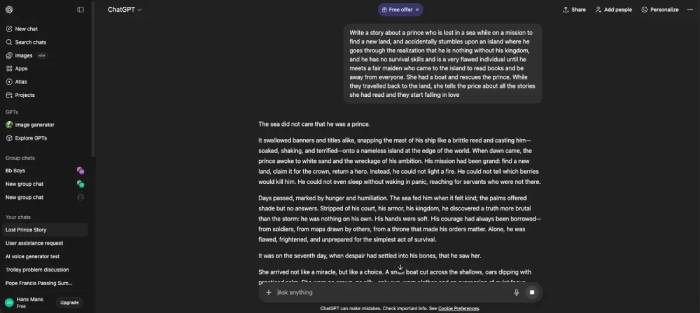
Give it the audience, purpose, evidence, prohibited claims, examples of the desired voice, and a definition of done. A useful instruction is “If the source pack does not support a statement, insert [SOURCE NEEDED] instead of guessing.” Product tools and model access vary by plan; verify them on the official ChatGPT overview.
Choose it when: you want one adaptable assistant for many stages. Watch out for: generic transitions, unsupported claims, excessive headings, and text that imitates the structure of source material too closely.
4. Jasper: brand governance for marketing teams
Jasper is positioned as a marketing platform rather than only a blank-page text generator. Brand Voice and related controls help a team apply approved tone, terminology, product information, and messaging across assets. This is most valuable when many contributors produce campaigns for several audiences or markets.
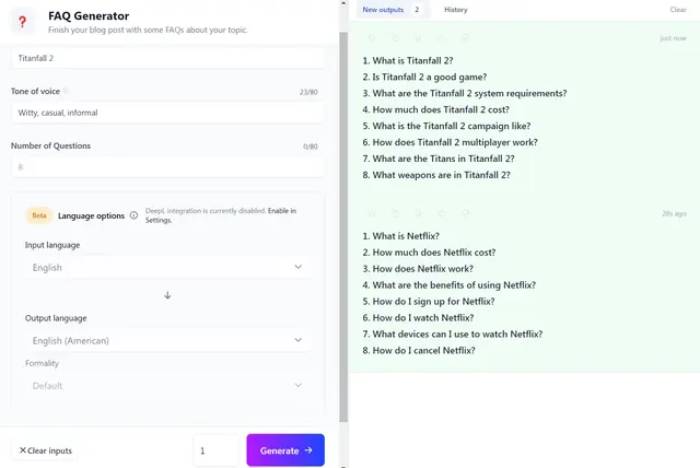
A saved brand voice cannot decide whether the underlying message is truthful, differentiated, or legally approved. Teams still need fact owners, review stages, permissions, and a process for updating old product claims. Review current capabilities on Jasper’s Brand Voice page.
Choose it when: consistency and team governance justify a specialized platform. Skip it when: one writer only needs occasional drafts from a general chatbot.
5. QuillBot Flow: revision and rewriting in a document workspace
QuillBot Flow brings writing, paraphrasing, grammar checking, summarization, and related tools into a document-style workspace. It is convenient for tightening an existing draft, exploring alternate sentence structures, or improving clarity without moving text among several tabs.
Paraphrasing a source does not make its ideas yours and does not remove the need for attribution. Compare every rewrite with the original meaning, preserve technical terms, and cite the source where required. QuillBot offers free tools and paid limits; check QuillBot Flow for the current workspace.
Choose it when: revision is the main task. Watch out for: changed meaning, lost qualifications, accidental plagiarism, and prose made longer without becoming clearer.
6. Rytr: quick short-form copy
Rytr focuses on short, structured outputs such as captions, descriptions, emails, calls to action, and ad variants. Templates and tone controls reduce setup time for someone who needs several small drafts rather than a deeply researched article.
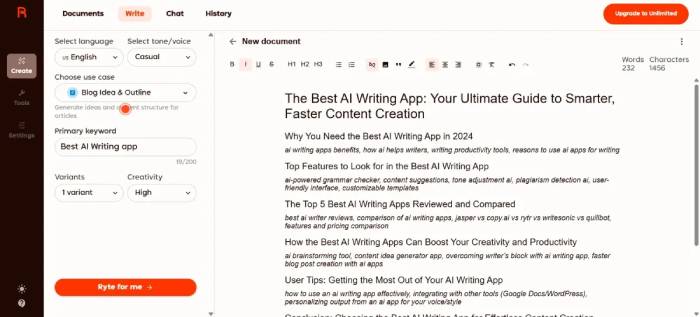
Give the tool concrete product facts and prohibited claims. Short marketing copy is especially vulnerable to fabricated superlatives such as “best,” “fastest,” or “guaranteed.” Rytr currently lists a limited free tier and paid plans, but character, tone, and usage allowances can change; see the official Rytr pricing page.
Choose it when: you need quick variations and a simple interface. Skip it when: the content requires deep research, complex narrative structure, or many internal references.
7. Perplexity: research before writing
Perplexity is better considered an AI search and research tool than a dedicated prose editor. It searches the web and returns answers with links, which helps a writer discover primary sources, recent developments, and competing explanations before drafting.
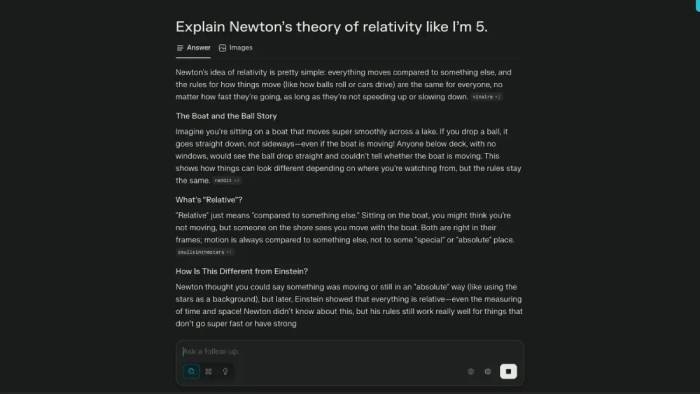
Open each important citation. A linked page may discuss the topic without supporting the exact number or conclusion beside it. For journalism, academic work, health, law, or finance, read the original material and contact an appropriate expert rather than citing the AI answer. Perplexity’s help center explains its source-linked search approach.
Choose it when: source discovery and current web information come first. Pair it with: a document editor or general assistant for sustained voice and structural revision.
8. Writesonic: SEO and AI-search content operations
Writesonic has expanded beyond a basic article generator into a platform for SEO, AI-search visibility, audits, and content workflows. Its Article Writer remains relevant to teams that want research, citations, keyword guidance, and internal-link support in one process.
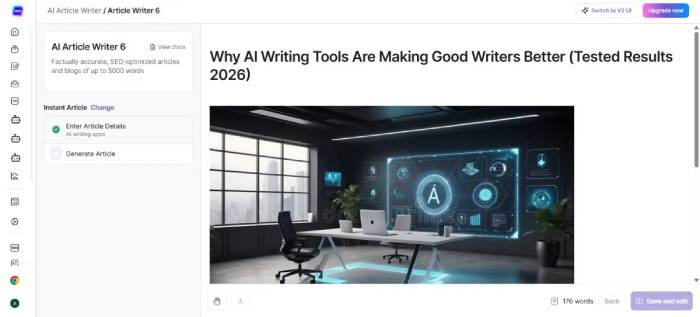
No tool can guarantee rankings or citations in AI answers. Search performance depends on usefulness, evidence, technical quality, competition, reputation, and many factors outside the draft. Check the source of every statistic and inspect every suggested internal link before publishing. The Writesonic Article Writer page shows its current direction and trial options.
Choose it when: content production is tied to an established SEO or AI-visibility program. Skip it when: you only need occasional copy and will not use the analytics or workflow features.
9. Copy.ai: go-to-market workflow automation
Copy.ai originally became known for generating marketing copy, but its current positioning is an enterprise go-to-market platform. It combines reusable workflows, actions, agents, brand information, and integrations to automate repeatable sales and marketing processes.
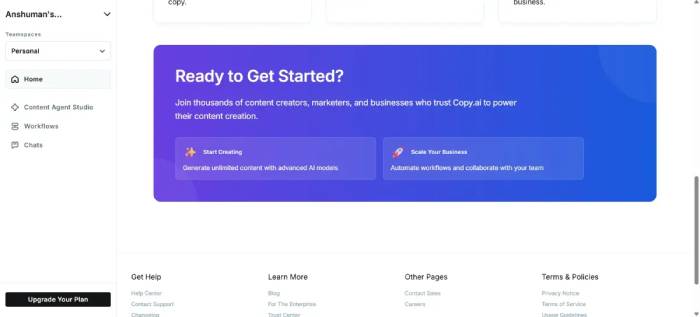
This can make sense for a business automating product briefs, account research, campaign variants, or sales enablement across systems. It is not a straightforward replacement for a low-cost personal writing app, and current pricing is oriented toward organizations. Review the official Copy.ai platform overview and request details relevant to your team.
Choose it when: the problem is a repeated multi-step business workflow. Skip it when: the problem is simply drafting one blog post or email.
10. ParagraphAI: lightweight help where you type
ParagraphAI provides browser and mobile writing assistance for drafting, replying, correcting, and adjusting everyday text. The format is useful for someone who wants help inside common writing surfaces instead of a separate content-production platform.
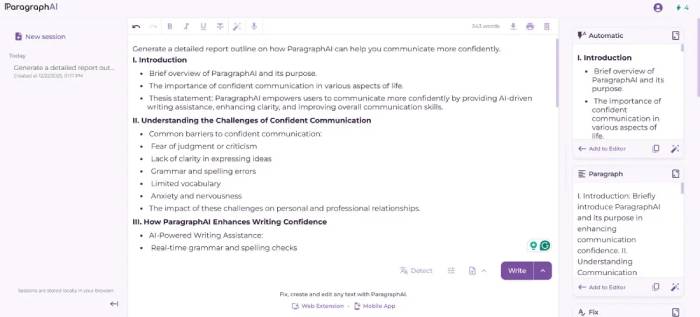
A browser extension or keyboard can potentially receive sensitive text entered into other services. Review permissions, privacy terms, account controls, and workplace policy before using any writing extension with customer data, confidential email, legal material, or credentials.
Choose it when: convenience for short everyday writing matters most. Skip it when: the assignment needs a source library, complex brand governance, or long-form editorial control.
Which tool should you choose?
- Novel or screenplay: start with Sudowrite; compare its suggestions with a general assistant for critique.
- Research-based article: use Perplexity or another research system to find sources, then draft in Claude, ChatGPT, or your editor.
- Individual marketing writer: test ChatGPT, Claude, Rytr, and QuillBot on the same brief before buying a specialist platform.
- SEO content team: evaluate Writesonic against the team’s existing keyword, analytics, internal-link, and editorial tools.
- Brand team at scale: test Jasper’s governance and approval fit, not only its sample output.
- Enterprise sales and marketing operations: assess Copy.ai as workflow automation with integration, security, and ownership requirements.
A safer AI-assisted writing process
- Write the brief. Define audience, purpose, sources, voice, length, conversion goal, and prohibited claims.
- Gather evidence. Prefer primary sources and record dates, authors, and links before drafting.
- Generate structure, not bulk. Review the outline and evidence map before requesting prose.
- Draft in sections. Require [SOURCE NEEDED] where evidence is missing.
- Verify every fact and quotation. Open sources; do not trust a citation marker alone.
- Edit for originality and voice. Remove repetition, generic transitions, false certainty, and phrases copied too closely from sources.
- Check policy and rights. Consider confidentiality, copyright, disclosure, academic rules, and client requirements.
- Measure the outcome. Compare total research, drafting, correction, and review time—not just generation speed.
AI-generated text is not automatically SEO-friendly, accurate, original, or ready to publish. The best tool is the one that improves a controlled editorial process while leaving a human clearly responsible for the final claims and wording.
Related Articles
 5 Best AI Content Writing Tools Of 202611 minutes read
 7 Top AI Writing Tools Today: Recommended Choices10 minutes read
 How to Use AI Writing Tools on TeraBox3 minutes read
 Top AI Tools to Support Essay Writing and Scientific Research9 minutes read
 The Secret to Becoming an Expert in Web Content Writing14 minutes read
 6 Steps to Write Good Content in SEO18 minutes read
Reader Comments 0
Sign in with email or Google to join the discussion.