Table of Contents
This updated guide examines How to Install Blender and organizes the essential facts, background, and practical takeaways in clear American English.
Part 1of 2:
Windows
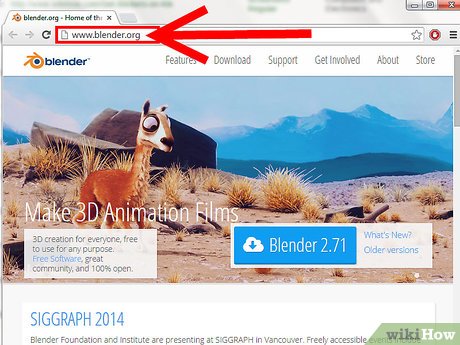 Navigate to the Blender website.
 You can click onthis linkto go directly to the Blender download page. Blender is available for the following operating systems, but we will be using Windows in this article.
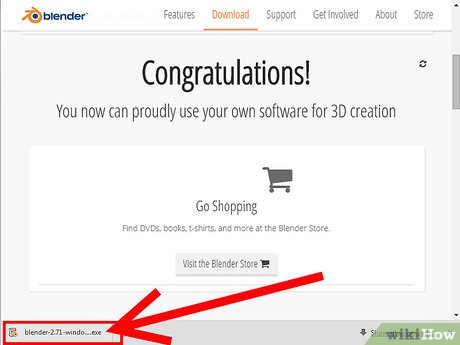 Run the installer. It will usually be located in your download folder.
- If you used Google Chrome to download the installer, the download will be located at the bottom of the window's screen. Click the.exe file to start the Installation Wizard.
- If you used Firefox to download the installer, the download will be located in the toolbar under the arrow icon.
- If you don't want to launch the installer in your browser, you can always locate it in your Downloads folder. Just double-click on it.
 Start the installation process. ClickNext.
 Agree to the Terms and Conditions. When prompted, clickI Agreein the installation wizard.
- Your computer will need to have at least 226.2 MB of empty storage on your hard disk for the installation to be successful.
 Choose a destination folder. The default location is the Program Files folder of Drive C: in your computer. You may change the location of the application by clickingBrowse.... Then clickInstall.
 Wait for Blender to install. The status bar indicates the progress of the installation. Depending on your computer processor and speed, it will probably take less than 5 minutes.
 Finish the installation. ClickFinishwhen the installation is completed. Blender is now installed in your computer. You can start exploring the application when it starts automatically.
- If you left the Run Blender option unchecked, there will be a shortcut icon of Blender located on your desktop. Just double-click on it to launch Blender.
Part 2of 2:
GNU/Linux
 Navigate to the Blender website. Then go to the download page. You can do that by clicking on this link.
 Download the Linux package. Scroll down until you see the Linux Download packages. Download the correct package for your operating system. Be sure you download the correct package for your computer architecture system.
- If you don't know if your Ubuntu installation is 32-bit or 64-bit, open the terminal and type inuname -m. If the response is
x86_64, you have a 64-bit kernel; if the response isi686, you have a 32-bit kernel.
- If you don't know if your Ubuntu installation is 32-bit or 64-bit, open the terminal and type inuname -m. If the response is
 Create a new folder inside your Home folder. Extract the contents of the tarball into that folder. In the screenshot above, we used the name Programs for this folder.
 Make the blender file executable. You can do this by right-clicking the
blenderfile and clicking on Properties . Then select the Permissions tab and select the Allow executing file as program option. Create a shortcut for Blender. Right-click the
blenderexecutable and select Make Link . Then drag the new link to your Desktop or anywhere you like.
FAQ
What is How to Install Blender about?
It provides a structured overview of blender, explains the main context, and highlights practical takeaways for readers.
Why does this topic matter?
Understanding the main concepts helps readers evaluate the issue, avoid common mistakes, and make better-informed decisions.
How should readers use this information?
Use the guidance as a practical starting point, confirm details that may have changed, and follow current product, safety, or security recommendations.
Related Articles
 How to Install Blender 3D on Ubuntu 20.044 minutes read
 Blender - Free and Powerful 3D Modeling Tool7 minutes read
 What's New in Blender 3.04 minutes read
 Common Mistakes When Using Blender and How to Fix It7 minutes read
 How to Install Blender 3d on Ubuntu3 minutes read
![Is Osaka Blender Good: [Review] Is the Osaka Blender Good?](/data/thumbs_200x120/[review]-is-the-osaka-blender-good_thumbs_200x120_5MHR2bTZg.jpg) Is Osaka Blender Good: [Review] Is the Osaka Blender Good?8 minutes read
Is Osaka Blender Good: [Review] Is the Osaka Blender Good?8 minutes read
Reader Comments 0
Sign in with email or Google to join the discussion.