Table of Contents
This guide provides a clear, practical overview of what's new in blender 3.0, with useful context, important details, and straightforward takeaways for everyday readers.
New Features, Updates and Improvements in Blender 3.0
Blender 3.0 is finally here. While a lot has changed since Blender 2.0 first came out in August 2000, it's this latest release that really got the Blender community excited. A lot has changed, but everything users love is still as great as before.
Blender's official YouTube channel covers the start of everything you'd expect (especially if just getting started with Blender).
Some notable highlights include:
- Improved shading, Ray-tracing and Subsurface Scattering effects (the effect of light passing through an object and scattering inwards).
- Render faster than ever. Blender claims to be 2 to 8 times faster
- The Knife tool is greatly improved, as well as adding a lot of small tweaks to other tools.
- Augmented reality (VR) tools.
- Expands Grease Pencil and its abilities.
- More than 100 new nodes, as well as many new modifiers.
- Better editing and posing features.
- Optimized user interface.
- New ways to store, manage, and reuse poses, textures, lighting, and more.
These more exciting developments come with the usual bug fixes and small usability tweaks (you can read the full details of any changes in the Blender 3.0 release notes).
Now, let's take a closer look at some of the new features worth trying in Blender.
New tools in Blender 3.0 (same updated favorites)
As mentioned in the video, the Blender 3.0 Knife tool now supports multi-object editing, among many other additional tweaks worth noting.
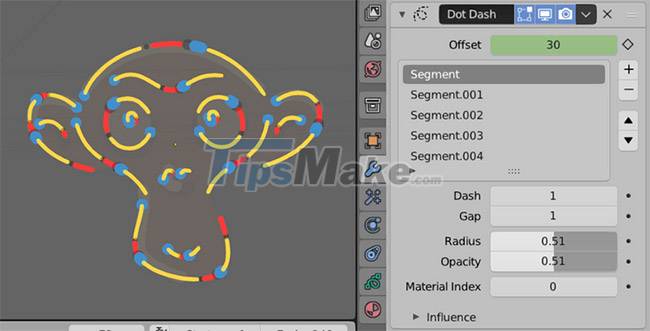
One tool that has received a significant improvement is the Blender Grease Pencil tool. It has been refined and now works more realistically than ever; such as applying modifiers to Grease Pencil benchmarks, it's now much easier to apply modifiers to Grease Pencil standards.
Changing poses in Blender 3.0
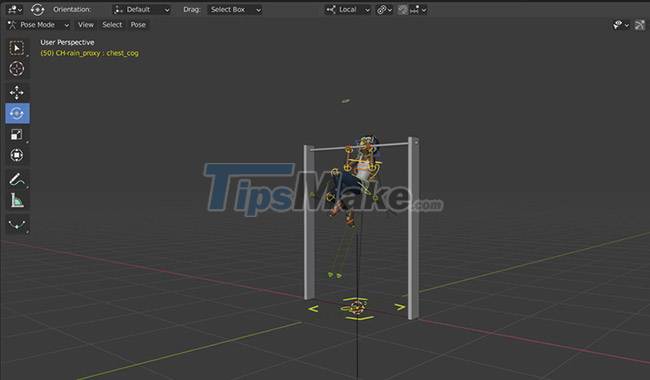
Pose Sliding allows you to switch easily between two main poses or between multiple poses. Blender's entire new line of editing tools dedicated to pose analysis offers a much greater degree of control over how you characterize each pause, breath, and development.
Asset Browser in Blender 3.0 and new libraries

Blender has been hinting at its Asset Browser for a while now. Blender 3.0 brings users the first official version of the system and it proves to be useful as expected.
With the Asset Browser, you can manage objects, documents, poses, and worlds with one of the libraries. Pose Library is one of the standout features for animators. All of your character's most iconic expressions can be collected and stored, ready to be retrieved whenever you need them.
Key Takeaways
Use the information above as a practical reference for what's new in blender 3.0. Review each step carefully, confirm any requirements, and choose the option that best fits your situation.
FAQ
What does this guide explain about What's New in Blender 3.0?
It explains the main concepts, practical considerations, and useful steps related to what's new in blender 3.0 without requiring advanced knowledge.
Who can benefit from learning about What's New in Blender 3.0?
This information is useful for readers who want a clear overview, practical guidance, and reliable steps related to what's new in blender 3.0.
What should I check before applying this information?
Review the requirements, confirm that your device, software, or situation matches the instructions, and back up important data before making major changes.
Related Articles
 Blender - Free and Powerful 3D Modeling Tool7 minutes read
 Common Mistakes When Using Blender and How to Fix It7 minutes read
![Is Osaka Blender Good: [Review] Is the Osaka Blender Good?](/data/thumbs_200x120/[review]-is-the-osaka-blender-good_thumbs_200x120_5MHR2bTZg.jpg) Is Osaka Blender Good: [Review] Is the Osaka Blender Good?8 minutes read
Is Osaka Blender Good: [Review] Is the Osaka Blender Good?8 minutes read A Few Notes That Help Extend the Life of the Blender8 minutes read
 How to Install Blender4 minutes read
 How to Install Blender 3D on Ubuntu 20.044 minutes read
Reader Comments 0
Sign in with email or Google to join the discussion.