Table of Contents
Steps to enable duplex printing in Windows 10
This guide explains how to enable Duplex Printing in Windows 10, with clear steps, practical tips, and important checks before you begin.
Step 1. Click the "Notifications" icon on the taskbar. You can find it in the bottom right corner of the screen.
Step 2. Now, click "All Settings" button to open Settings.
Step 3. After opening the Settings app, go to the Devices page .
Step 4. Select the Printers & Scanners page on the left panel.
Step 5. Click the default printer and click the Manage button .
Step 6. Select the Printing Properties link from the list of options.
Step 7. Go to the Device Settings tab
Step 8. Select the Installed option from "Duplex Unit" .
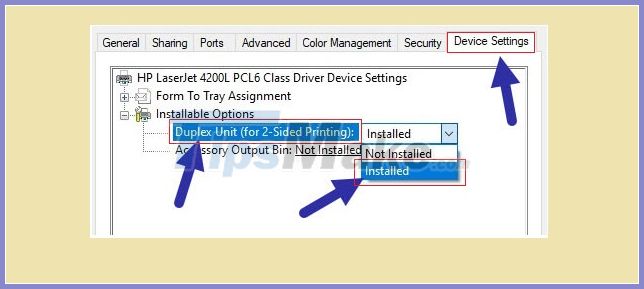
Step 9. Click OK to save the changes.
Step 10. Close the Properties window .
Step 11. Close the Settings app .
From now on, you will be able to print on both sides of the paper thanks to the duplex feature.
Important Note
If you cannot see the duplex option in the Printer Properties window, your printer might not support it or the driver needs to be updated. If the problem is with the driver, try the steps again after updating the driver.
Depending on your printer and its driver, the two-sided printing option might be in a tab or another option. So see all tabs if you cannot find the two-sided printing option shown in the steps above.
To print on both sides of the paper, you need to select the duplex option while sending the printing instructions. Generally, the option will be available in the Advanced options section in the print dialog.
FAQ
What should I know about Enable Duplex Printing in Windows 10?
Focus on the key features, requirements, limitations, and practical use cases explained in this guide.
How do I get the best results with Enable Duplex Printing in Windows 10?
Follow the recommended steps, use current software or information, confirm compatibility, and review settings before major changes.
Are there any risks or limitations?
Potential limitations depend on compatibility, data quality, cost, privacy, support, and how the product or method is used.
Related Articles
 How to Enable Two-sided Printing on Windows: Clear Instructions4 minutes read
 How to Print 2 Sides in Excel Word: Step-by-Step Guide7 minutes read
 Instructions for Printing Two-Sided Paper in Word, PDF, Excel6 minutes read
 Learn About Simplex, Half Duplex and Full Duplex10 minutes read
 How to Set up Paper Duplex Printing on Windows 114 minutes read
 2-sided Printing in Word 20104 minutes read
Reader Comments 0
Sign in with email or Google to join the discussion.