Table of Contents
This practical guide explains how to create a double exposure effect using snapseed with clear steps and useful context. It also covers common requirements, potential problems, and the details that can help you get better results.
Snapseed la mot trong nhung ung dung chinh sua anh huu ich nhat danh cho đien thoai thong minh va đi kem voi mot tinh nang goi la Double Exposure. Nhu ten cho thay, tinh nang nay cho phep ban hop nhat hai hinh anh ma khong can đo mo hoi. Ngoai ra, no cung cap nhieu blending mode đe ban thu nghiem.
Bai viet hom nay se huong dan ban cach tao hieu ung phoi sang kep bang Snapseed.
Cach Su Dung Cong Cu Double Exposure Trong Snapseed
Tao hieu ung phoi sang kep đep mat trong Snapseed la mot qua trinh gom hai phan. Đau tien, ban phai chuyen hinh anh bong đen tren nen trang, đuoc ho tro boi cac blending mode khi hien thi hinh anh thu hai. Truoc khi bat đau, ban co the tai xuong ung dung Snapseed mien phi.
Đay la cach tao hinh anh bong đen tren nen trang:
Step 1. Open Snapseed and import your image.
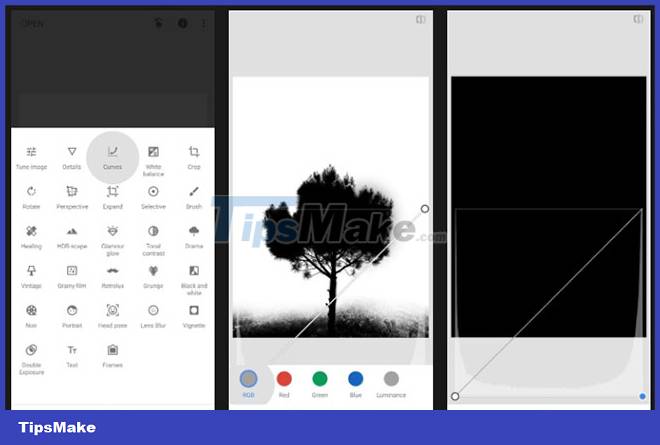
Step 2. Go to Tools > Black and White and choose Color Filter to make your background light.

Step 3. Adjust Brightness and Contrast to get a black shadow on a white background. Keep Contrast at 100 for best results.
Step 4. Click the checkmark to save your edit.

Step 5. Go to Tools > Curves and select the RGB color channel.
Step 6. Bring the right cursor all the way down to make your image completely black and save it by touching the check mark.
Step 7. Open the Edit Stack > View edits option, click on Curves and open the Slack Brush.
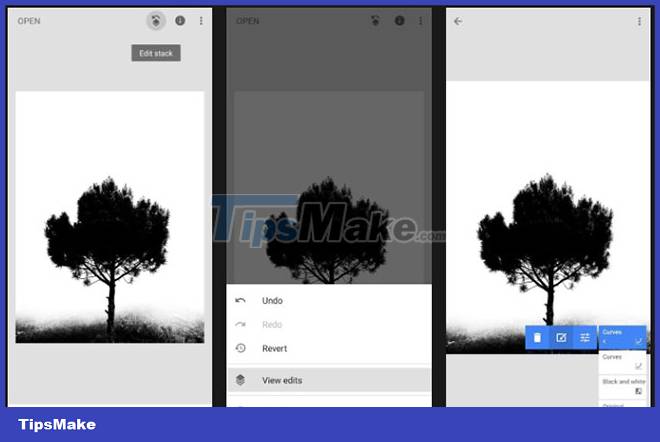
Step 8. Erase any white spots on the object using the Brush.

You have completed the first step of creating a double exposure image. Make sure the shape you want to keep is black and the part you don't want is white (usually the background). You will understand what it means when working with Blending modes.
Here's how to use the Double Exposure feature:
Step 1. After finishing editing to a black shadow on a white background, go to Tools > Double Exposure.
Step 2. Click the Open Image option to add a second image.
Step 3. Position the second image as you want and choose the Lighten blending mode from the Style options. The image will only display in the dark area.
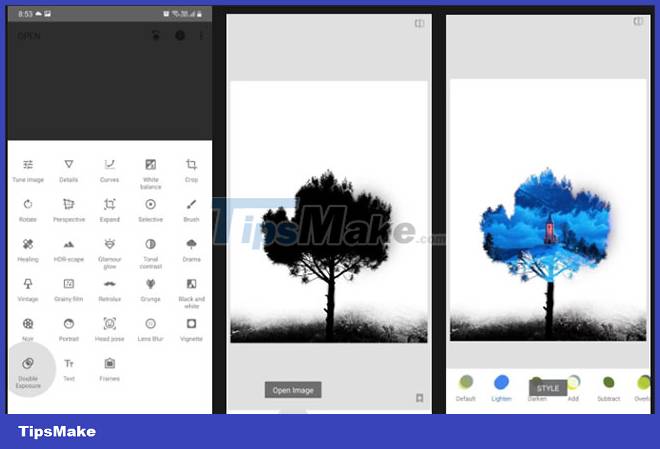
Step 4. Add another image and set the Blending mode to Darken or Subtract. It will add the image on the white part.
Step 5. Go to Stack Options, open View edits, click on the closest Double Exposure edit and select the Slack Brush. Use it to remove unnecessary parts from the image.
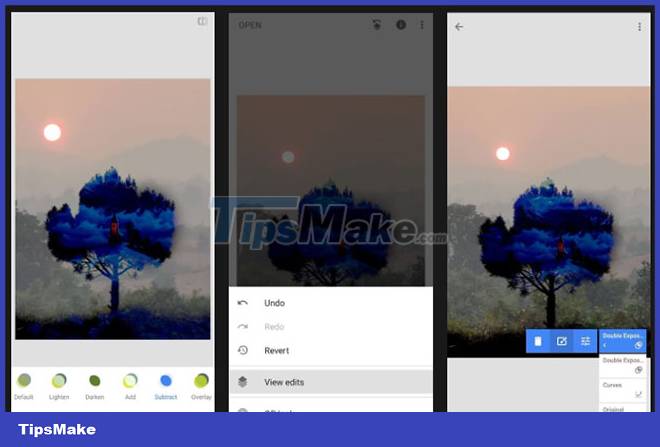
Step 6. Refine your image with some final tweaks, adding effects and filters if required before exporting the final edited result.
You already have your double exposure and can experiment with it a lot more however you like. You can add objects to another image or create something similar to a movie poster. TipsMake also has a tutorial for creating a double exposure effect in Photoshop .
Two important steps while using the Double Exposure function is to use the Blending modes properly and use the Slack Brush to mask the less important areas. Slack Brush is similar to using layers and masks in Photoshop.
Conclusion
Understanding Snapseed makes it easier to compare options, avoid common mistakes, and apply the information in this guide more effectively. Review the relevant requirements before making changes or choosing a solution.
FAQ
How do you create a double exposure effect using snapseed?
Follow the steps in this guide in order, confirm the required settings or tools, and verify the result before making additional changes.
Is it safe to create a double exposure effect using snapseed?
It is generally safe when you follow the recommended instructions, use trusted tools, and avoid changing settings you do not understand.
What should you do if the process does not work?
Recheck the requirements, restart the device or application when appropriate, and review each step for missed settings or compatibility issues.
Related Articles
 Instructions for Creating Double Exposure Images in Photoshop8 minutes read
 6 Mobile Apps to Help Create Double Exposure Effects8 minutes read
 How to Use Photoshop CS6 (Part 3) - Create Manipulation Artwork with15 minutes read
 How to Create Artistic Text Using Snapseed Image Editing Application5 minutes read
 How to Delete an Image Object Using the Snapseed Application5 minutes read
 What Is Exposure and Exposure Triangle in Photography?11 minutes read
Reader Comments 0
Sign in with email or Google to join the discussion.