Table of Contents
This updated guide examines Check the Linux Version: How to Check Your Linux Version and organizes the essential facts, background, and practical takeaways in clear American English.
Operating system or kernel version: what's the difference?
The first thing to check is whether you are looking for an operating system version or Kernel version. For example, if you use Ubuntu, the operating system version might be 19.04. The kernel, on the other hand, is the core of Linux, the code that allows the software to communicate with the hardware.
Display the Linux version on the desktop version
In addition to the nine command line options below, you can check the Linux version from the desktop. This will vary depending on the desktop environment and operating system. However, if you want to check your Ubuntu version, CentOS version or distribution without a command line, you can use this method.
For example, to check the Ubuntu version from the desktop, go to System Settings> Details . Here, you will see the destro version is running. Although this does not provide detailed information like the command line, it is sufficient to determine the Linux version.
How to check your Kernel version and Linux distribution.
Desktop computers only provide basic information about the Linux version. For more information, you need to use the command line.
Many commands can reveal interesting information about Linux systems. In addition to information on Linux versions, you can find distribution distributions, code names and Kernel. This information can be useful in many situations such as troubleshooting or simply checking when an Linux version is needed.
Here are nine commands that help you check your Linux version and Kernel version from the Terminal.
1. Check the Linux operating system version with cat / etc / os-release
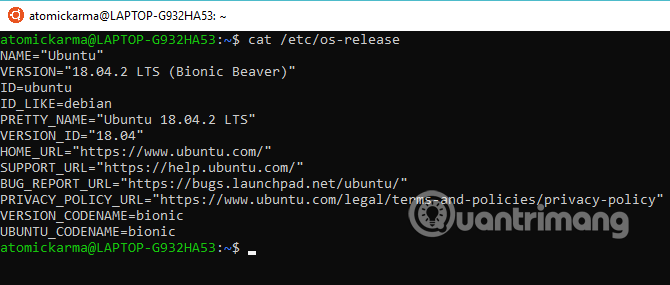
The first option is to check the os-release file in the / etc / directory. This file provides quite a lot of information about the Linux operating system version. To view this file, use the cat command (concatenate), display or create a new file.
cat /etc/os-releaseThe example here is done with Ubuntu and get the operating system, full version, version ID and code name.
2. Check the Linux version with cat / etc / * release
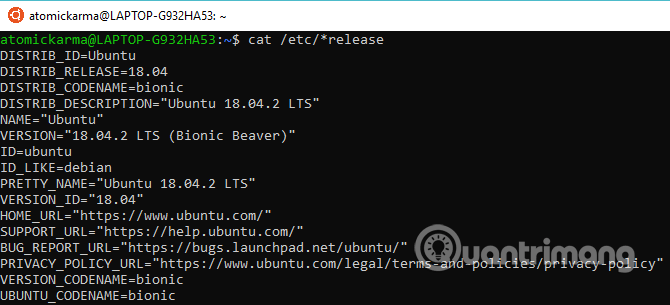
You can gather more information by using the * release file. It will display all the information from files ending with release in / etc / with a single output.
cat /etc/*releaseThe output is largely the same as the previous command but adds the distribution information.
3. Check the Linux version with cat / etc / issue

To get basic information about Linux operating system version numbers, try this cat command:
cat /etc/issueWith this command, you will see the name and destro version.
4. Check your Linux distribution with lsb_release -a

The lsb_release command will display Linux Standard Base (lsb) information about the Linux distribution.
lsb_release -aNote the distributor name as well as the destro name, release name and code name in the command output. This is a simple command with concise and clear results.
5. Display the Linux Kernel version with hostnamectl
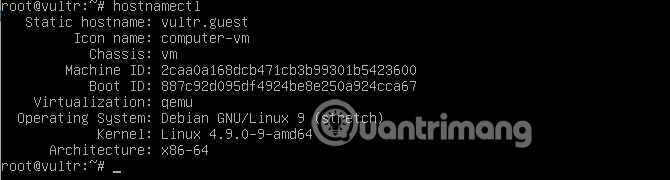
The hostnamectl command is used to change the system hostname but is used alone to display Linux version information.
hostnamectlUsing this command will display the host name of the device along with the device ID and structure. You can also see the Linux version and the Linux kernel version with hostnamectl.
6. Use uname -r to check the Linux Kernel version

Although the above command displays information about the Linux kernel version, if you want, you can try the uname -r command.
uname -rThis command will display the Linux kernel version number of the distribution. You will only see the version number and no text with this command.
7. Get more information about Linux kernel with uname -mrs

You can expand switch -r to mrs to get more information about the Linux version of the distribution you are currently using.
uname -mrs-Mrs command provides information about kernel name and hardware version. Here, we run the command on Raspberry Pi 4 showing armv71. Based on 32-bit or 64-bit Intel / AMD displays x86_64.
8. Show more information about Linux kernel version with uname -a

You get even more information about the Linux kernel with the -a command extension.
uname -aWith the above command, the device name, Linux kernel version, release date, architecture and on the full operating system will be revealed.
9. Details of Linux kernel with cat / proc / version

The last option to check the Linux kernel version is to use another cat command. This command uses the version file in / proc directory.
cat /proc/versionYou will see the Linux kernel version number, which is aggregated from the file information / proc / sys / kernel / ostype, / proc / sys / kernel / osrelease and / proc / sys / kernel / version.
With these nine command line options, you now know which version of Linux is running.
Hope you are succesful.
FAQ
What is Check the Linux Version: How to Check Your Linux Version about?
It provides a structured overview of check the linux version, explains the main context, and highlights practical takeaways for readers.
Why does this topic matter?
Understanding the main concepts helps readers evaluate the issue, avoid common mistakes, and make better-informed decisions.
How should readers use this information?
Use the guidance as a practical starting point, confirm details that may have changed, and follow current product, safety, or security recommendations.
Related Articles
 How to Check the PHP Version6 minutes read
 How to Check Python Version on Windows, Mac and Linux4 minutes read
 How to Check the Version of Excel in Use: Check the Office Version4 minutes read
 5 Best Linux Distributions for Windows Users7 minutes read
 How to Check Whether a Linux PC Is 64-bit or 32-bit by Command3 minutes read
 How to Check the Version of macOS in Use4 minutes read
Reader Comments 0
Sign in with email or Google to join the discussion.