Table of Contents
This updated guide examines Decode the 'Leaf' Icon That Appears in the Windows 10 Task and organizes the essential facts, background, and practical takeaways in clear American English.
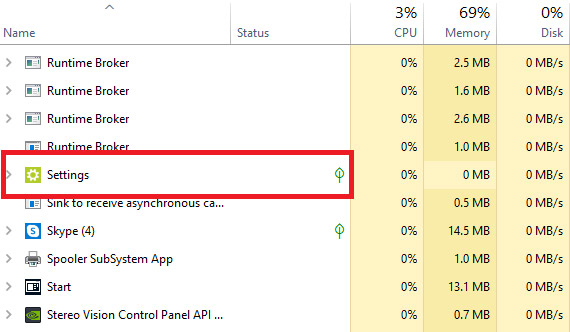
Looking at Task Manager, you will see that the applications that have the appearance of the leaf icon next to them are all applications that are either in a suspended state or a suspended state. Basically, you are not using these applications but they are still running.
For example, the Skype application in the picture below. At the time of taking the photo, the app was turned off but in fact it still runs in the background to check the message and will notify the user if a new message is detected.

In a nutshell, in Task Manager of Windows 10, a leaf icon will appear next to background apps. If you are using an application, it will never go into a suspended state. However, there are exceptions, that is when you open the application and let it 'play' for a long time. In the image below, the Settings app is opened but not used, so a leaf icon appears next to it in Task Manager.
- Facebook and Instagram prohibit the use of eggplant and peach symbols in sensitive content
- 'Laughing out of tears' topped the list of the 10 most popular emojis in the world
- Microsoft sent a 'closed screen' notification to persuade Windows 7 users to upgrade to Windows 10
FAQ
What is Decode the 'Leaf' Icon That Appears in the Windows 10 Task about?
It provides a structured overview of leaf icon in Task Manager, explains the main context, and highlights practical takeaways for readers.
Why does this topic matter?
Understanding the main concepts helps readers evaluate the issue, avoid common mistakes, and make better-informed decisions.
How should readers use this information?
Use the guidance as a practical starting point, confirm details that may have changed, and follow current product, safety, or security recommendations.
Related Articles
 Instructions to Fix Task Manager Has Been Disabled by Your4 minutes read
 All Problems About Using Task Manager6 minutes read
 Ways to Enable Task Manager in Windows 113 minutes read
 7 Simple Ways to Open Task Manager on Macbook, Windows 10,117 minutes read
 Preparing for a New Task Manager on Windows 113 minutes read
 4 How to Open Task Manager Windows 114 minutes read
Reader Comments 0
Sign in with email or Google to join the discussion.