Table of Contents
This guide provides a practical overview of Create Professional Avatars with Adobe Illustrator, including its main features, benefits, limitations, and important considerations.
Basic shapes and tools of Adobe Illustrator are the minimum requirements for drawing vector illustrations, you need to follow the previous articles of the ThuThuyMet Software. vn to know how to use them. During drawing this professional avatar, we will discover new tips and tricks such as using Pathfinder, Clipping Masks or some other features. Get started now!
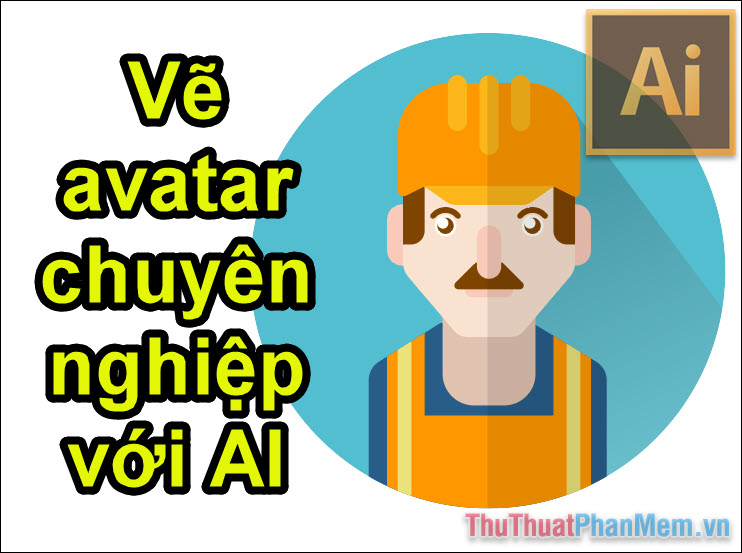
Create professional avatars with Adobe Illustrator
Step 1
Start by creating the character's head, take the Rectangle Tool and draw a 65 x 80 px rectangle with a light pink Fill color.
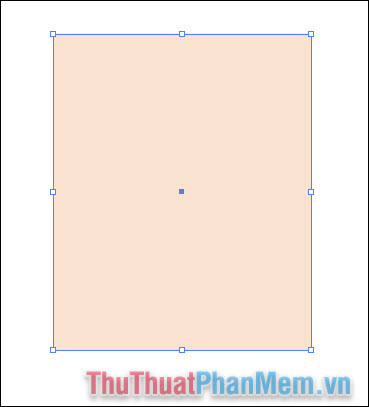
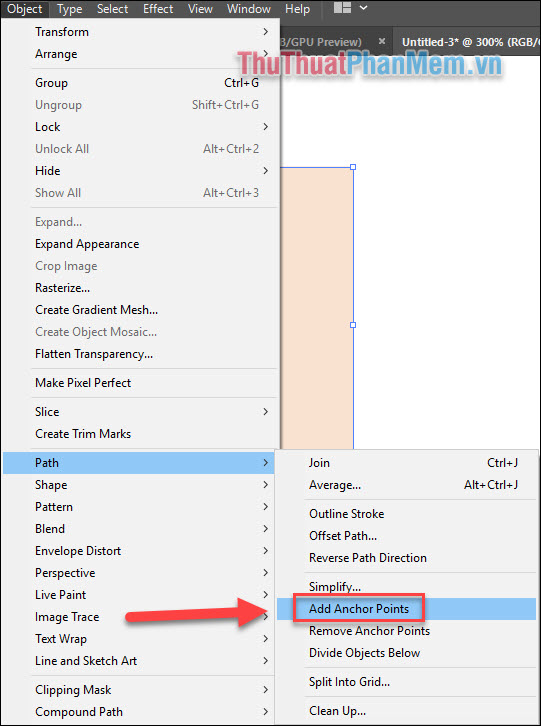
Select the shape with the Direct Selection Tool , then go to Object >> Path >> Add Anchor Points .
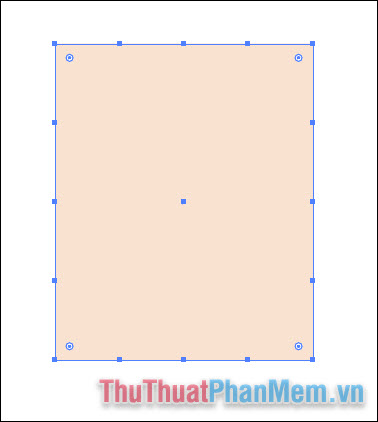
You will see that the image will be added with some anchor points to make it easier to customize. Repeat the operation again to get the following points:
Step 2
In fact, we do not need to use all the Anchor Points, to delete redundant points, use the Direct Selection Tool (A) , hold Shift and select 6 points on either side.
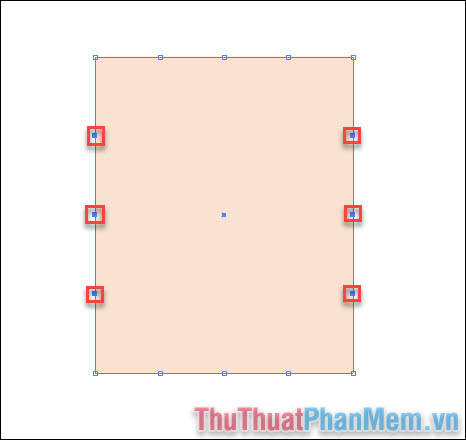
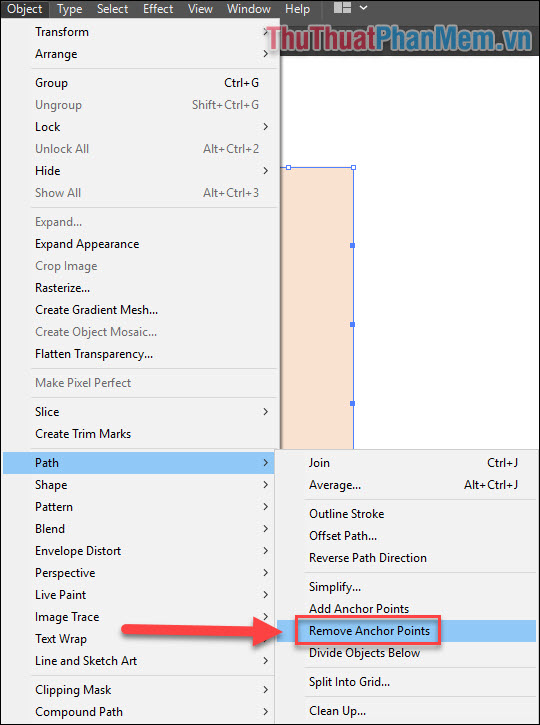
Select Object >> Path >> Remove Anchor Points .
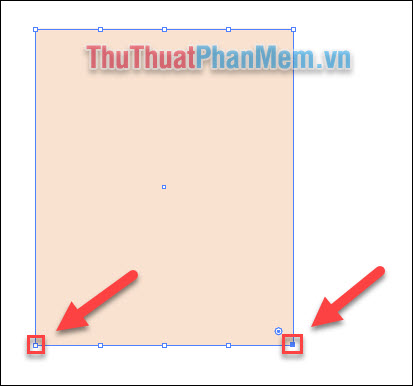
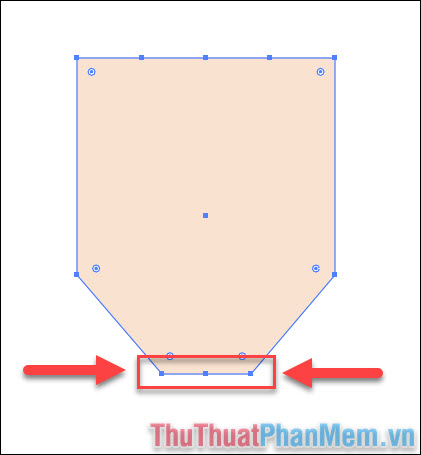
Now create the chin shape for the face, use the Direct Selection Tool to select 2 points in the bottom corner.
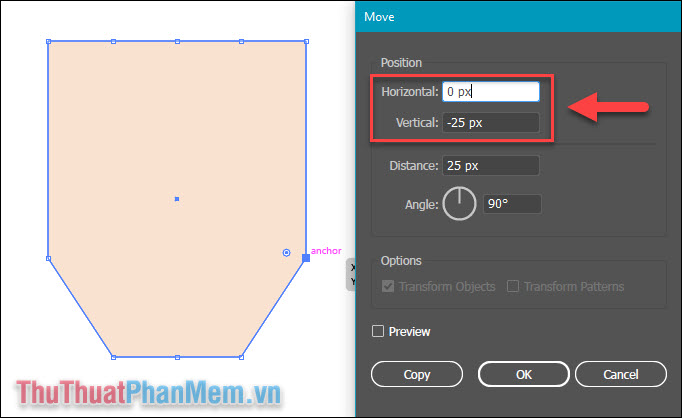
Press Enter to open the position adjustment window (Move) >> Set Horizontal = 0 px, Vertical = -25 px >> OK .
Step 3
If you want your chin to be wider or narrower, use the same way to move its anchor points. For example, to make the character's chin smaller, select the left anchor point, press Enter and set Horizontal = 5, Vertical = 0 >> OK ; for the right point Honrizontal = -5 . Here is the result:
Make the corners more rounded by using the Direct Selection Tool >> Select 1 Corner point >> drag it closer to the center , the closer it is, the more rounded your corner will be, choose a moderate angle.
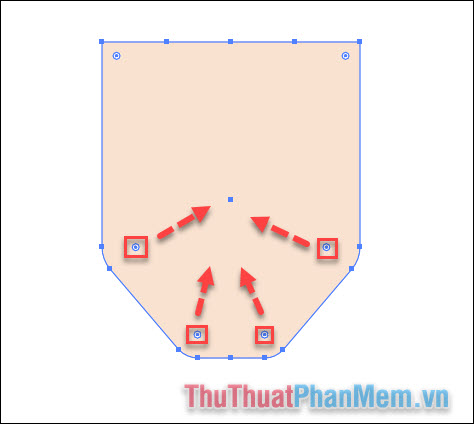
If you use an earlier version of Adobe Illustrator, there will be no Live Corners feature, but you can still do the same thing with Effect >> Stylize >> Round Corners .
Step 4
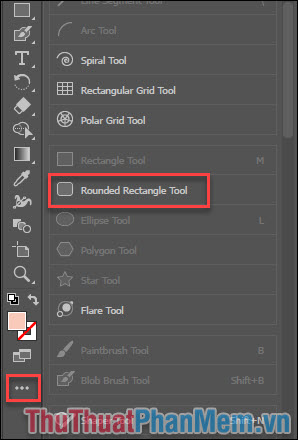
Open the Rounded Rectangle Tool by clicking the 3-dot icon in the toolbar >> Drag the Rounded Rectangle Tool to the toolbar.
To draw the nose, use the Rounded Rectangle Tool , draw a 9 x 20 px pink rectangle.
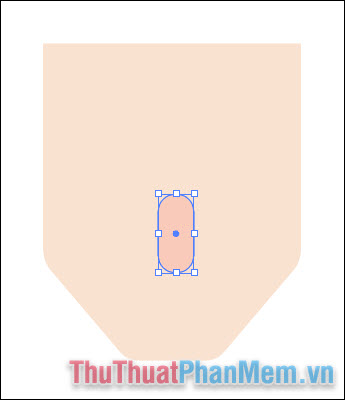
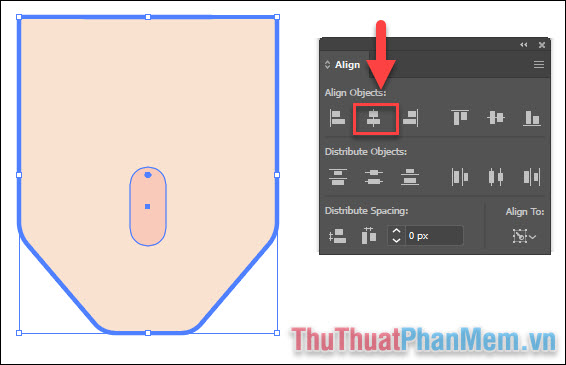
Hold down Shift and use the Selection Tool (V) to select both the nose and the face. Then hold Alt and click the face again to select it as the main object (with thick borders around it), meaning all other objects will be aligned to it.
Now open Windows >> Align >> select Horizontal Align Center . And the nose is well balanced in the middle of the face.
Step 5
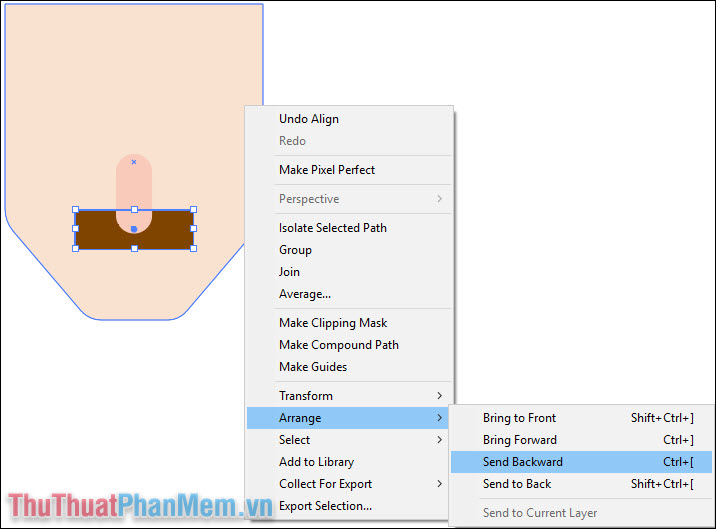
Add a mustache to the fun of the design! You create a 30 x 10 px brown rectangle. Put it in the right position, then right click >> Arrange >> Send Backward and it will be placed under the nose.
Step 6
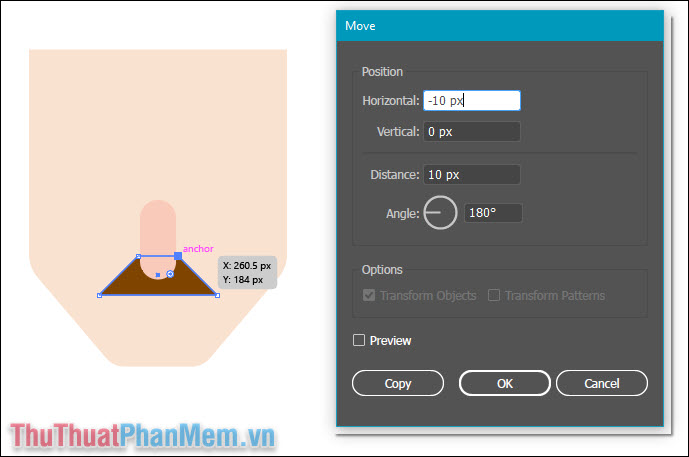
Select the top left anchor point for the mustache, press Enter and set Horizontal = 10px , Vertical = 0px so it is moved closer to the nose, the opposite of the other point.
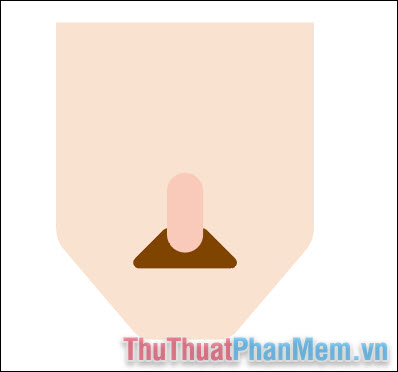
Make the lower mustache rounder with Live Corners .
Step 7
Use the Rounded Rectangle Tool to create a small shape as the lips, place it under the mustache with Ctrl + [ and align with Align .
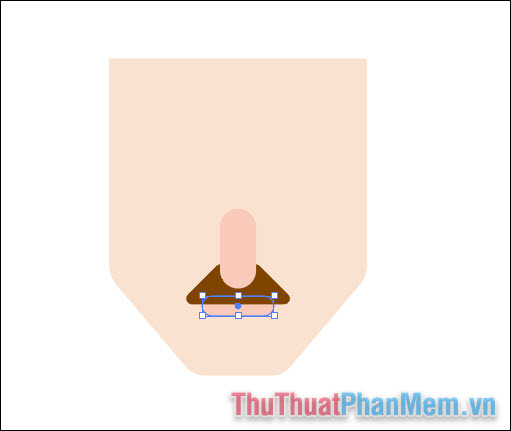
Step 8
Using Ellipse create an 8 x 8 px white circle as the eye, placing on it a 6 x 6 px brown circle.
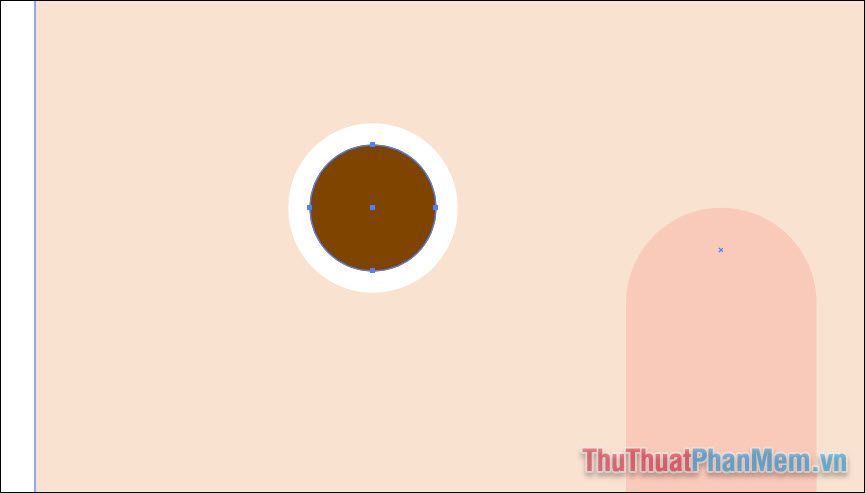
Continue drawing a small circle to create a highlight for the eyes.
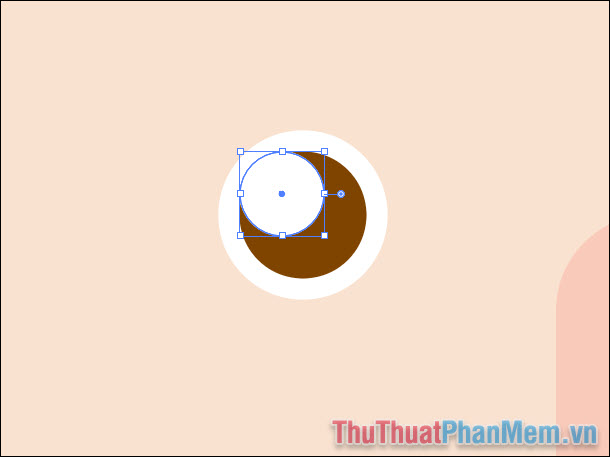
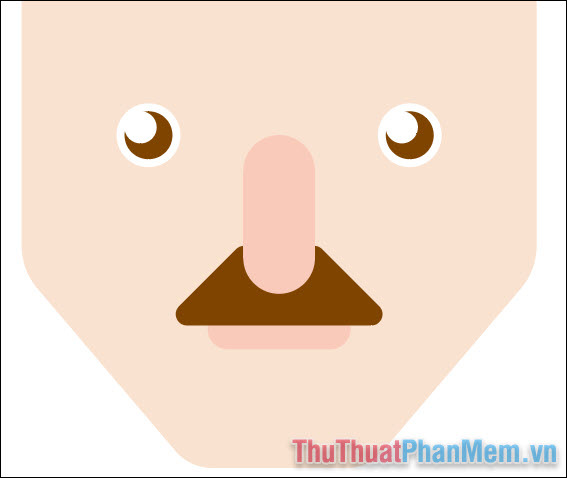
Select all three parts of the eye with the Selection Tool , then press Ctrl + C and Ctrl + V to make a copy of it and place the balance on the opposite side.
Step 9
Create a worker helmet that is a 65 x 39 px orange rectangle on the top of the head and rounded the top of the hat.
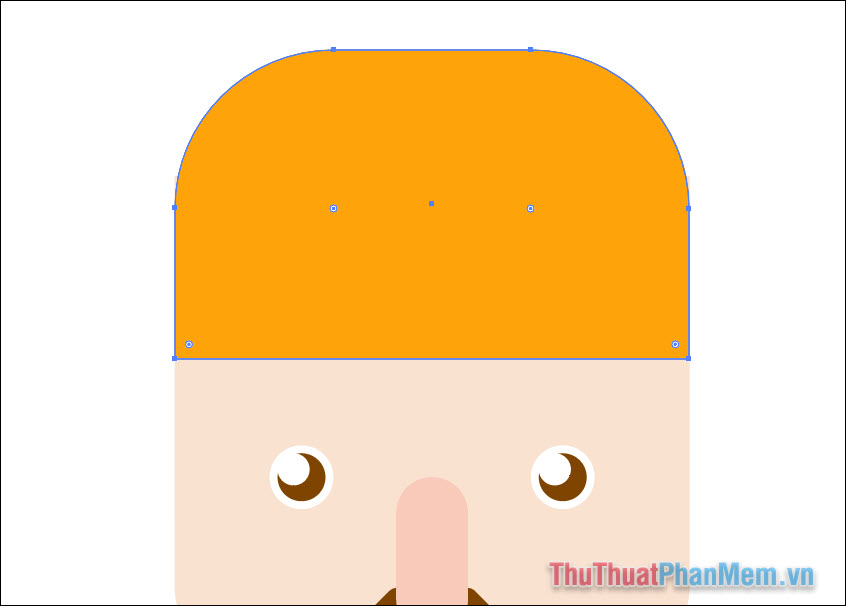
Step 10
Now it's time to add hair, draw a long rectangle on the corner of the face, and round it to an inner corner like this:
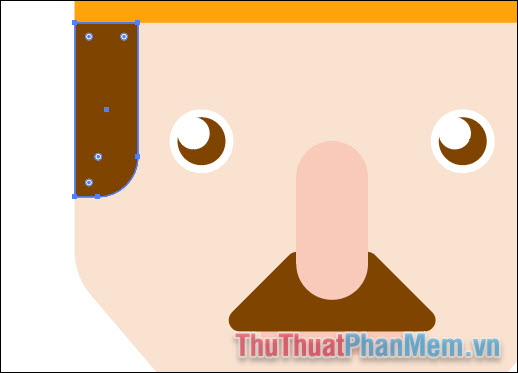
Make a copy of the hair, set on the opposite side. To flip the image, right click >> Transform >> Reflect. , check the box Vertical and then OK .
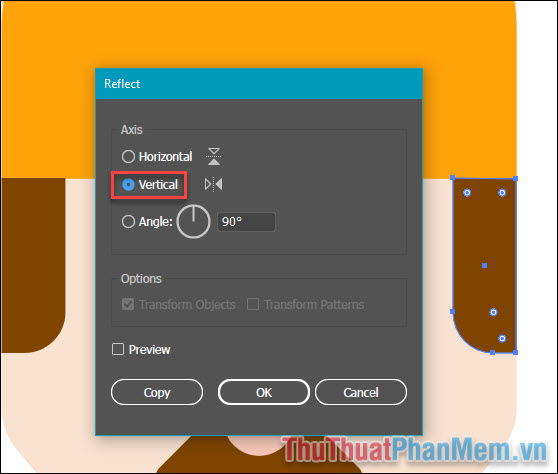
Step 11
Or slightly modified the hat. Select the hat, right click >> Arrange >> Bring To Front to bring it to the top.
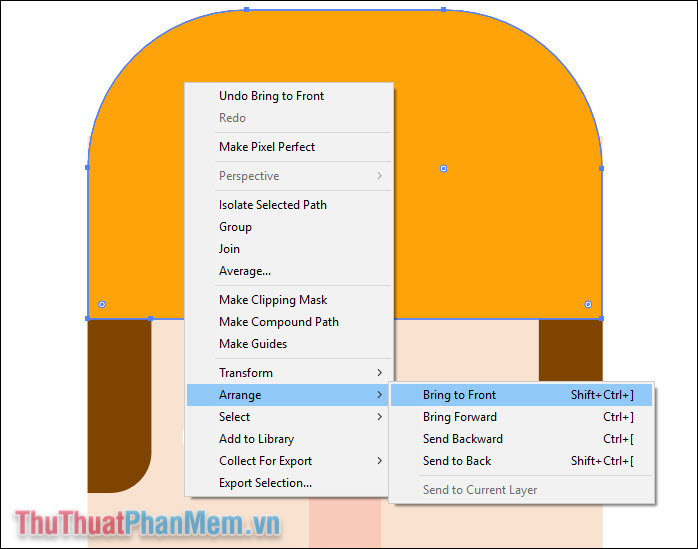
Using the Scrissor Tool (C) , a point of intersection between the hair and a hat is the point below, this time your line has been cut at the point.
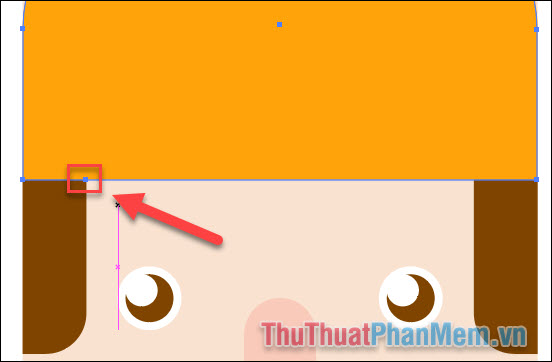
Select the outermost anchor point and press Enter , enter H = 0, V = 5 and then OK . The anchor point will be pulled down as follows:
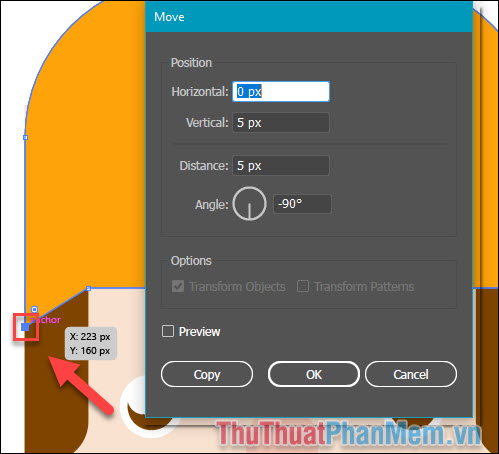
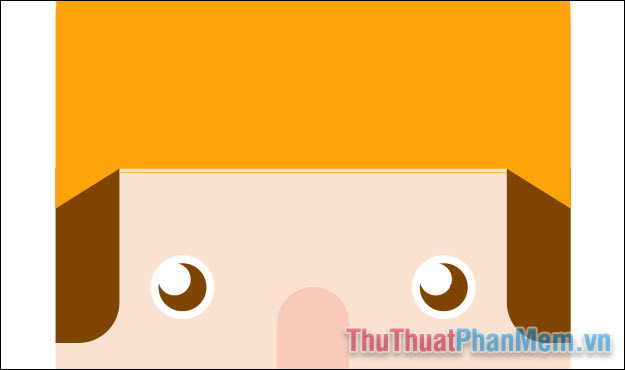
Do the same with the other side:
Step 12
As the cap for the hat, you create a longer, lighter orange rectangle attached to the hat.
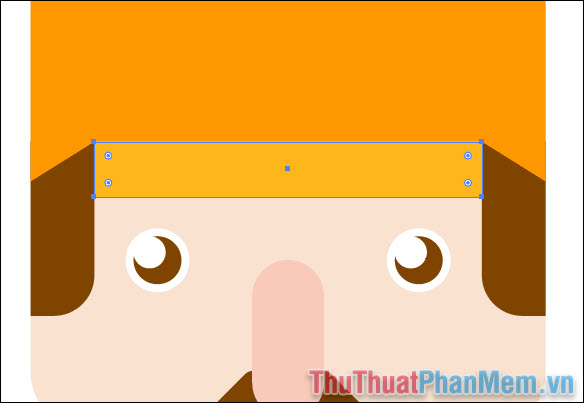
Using the Direct Selection Tool , select the Anchor point and drag it inside 10 px, creating a trapezoid like this:
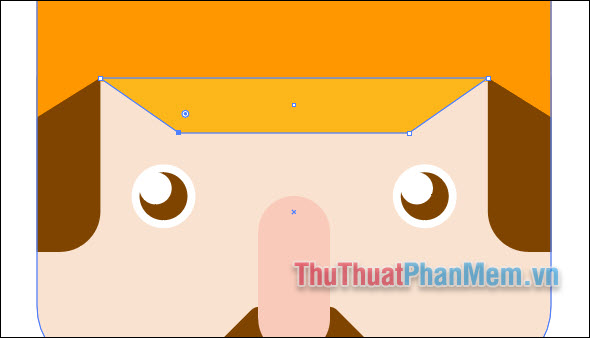
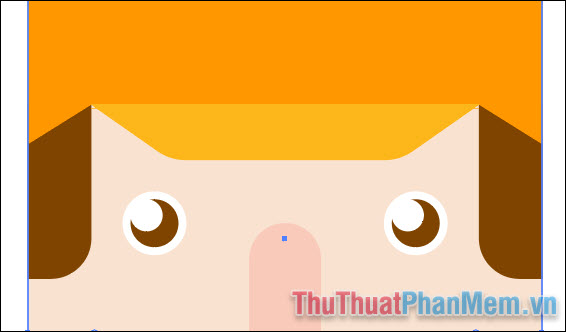
Round the 2 corners below a little bit.
Step 13
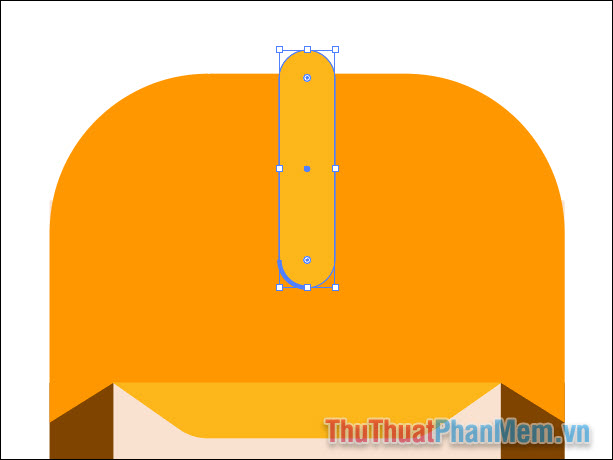
Use the Rounded Rectangle Tool and create a 7 x 30 px rectangle on top of the helmet. Align in the center of the hat.
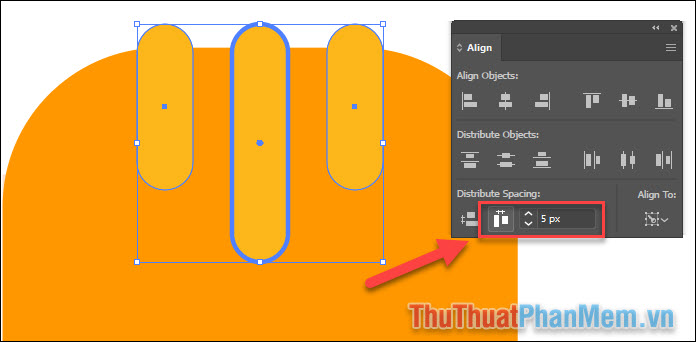
Continue to create 2 shorter images and place it flush with the middle one. Use Align to align distances correctly.
Step 14
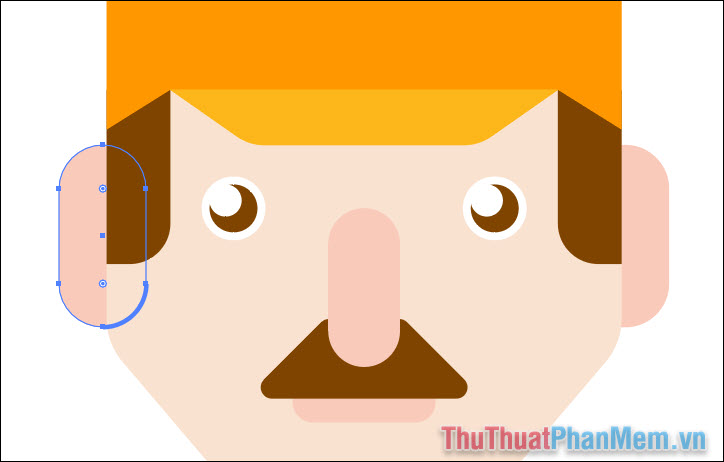
Use the Rounded Rectangle Tool to draw the ears. Draw a pink 11 x 23 px side on the left and place it below with Shift + Ctrl + [ . Create a copy on the opposite side.
Step 15
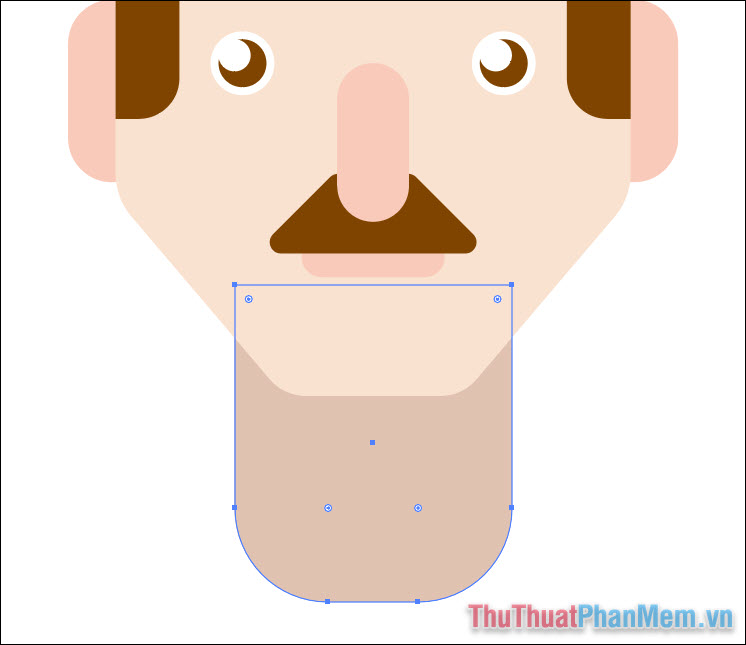
Create a 35 x 40 px rectangle for the neck with slightly darker skin than the face, making sure to circle the bottom.
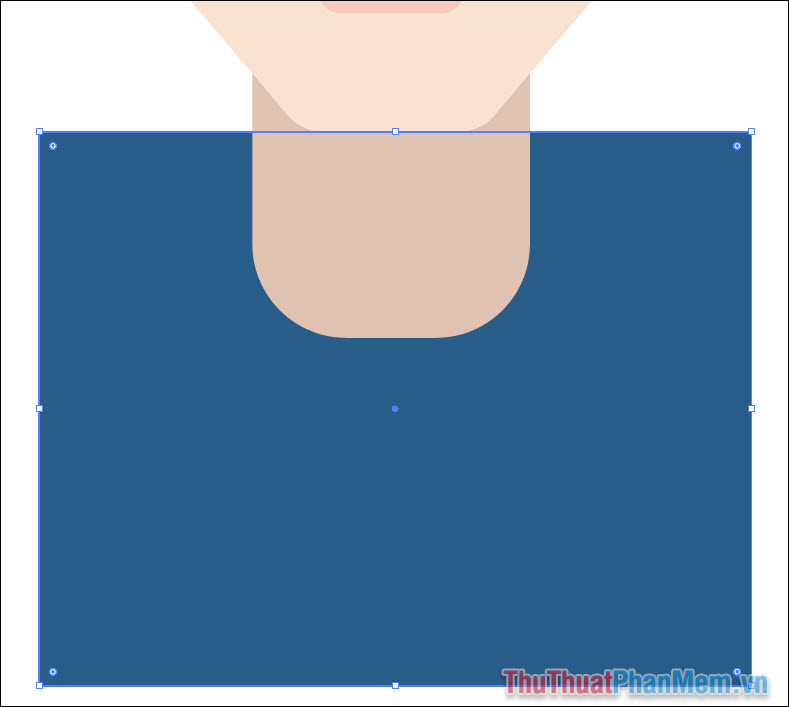
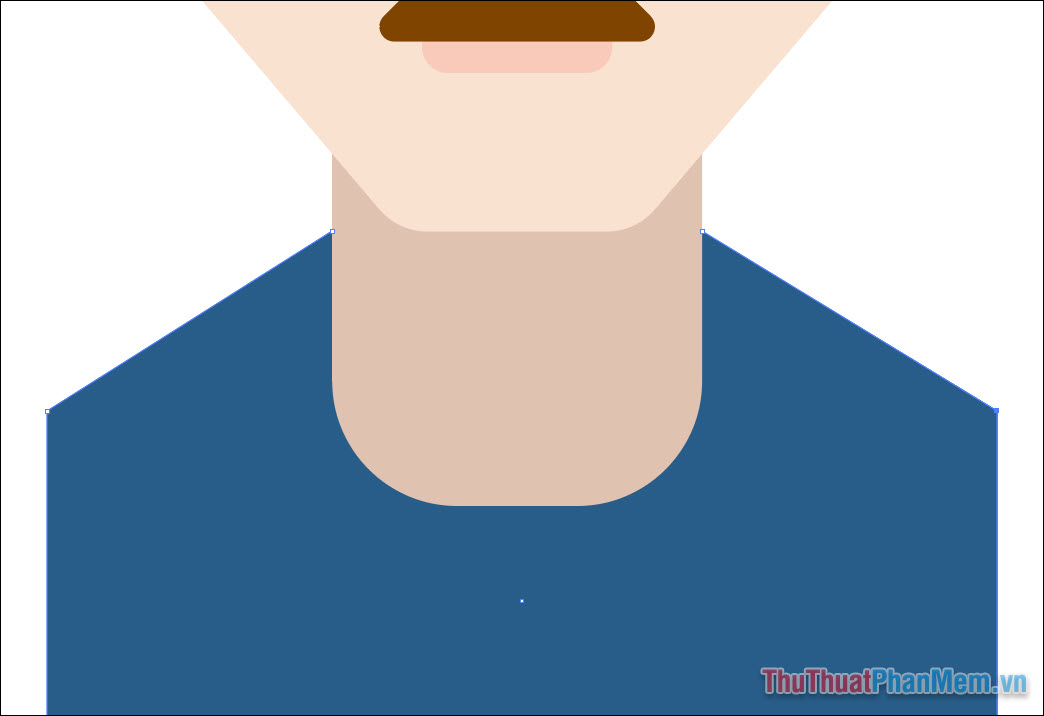
The worker shirt design is a dark blue rectangle measuring 90 x 70 px .
Take the Scrissors Tool and cut at two intersections between the neck and the shirt:
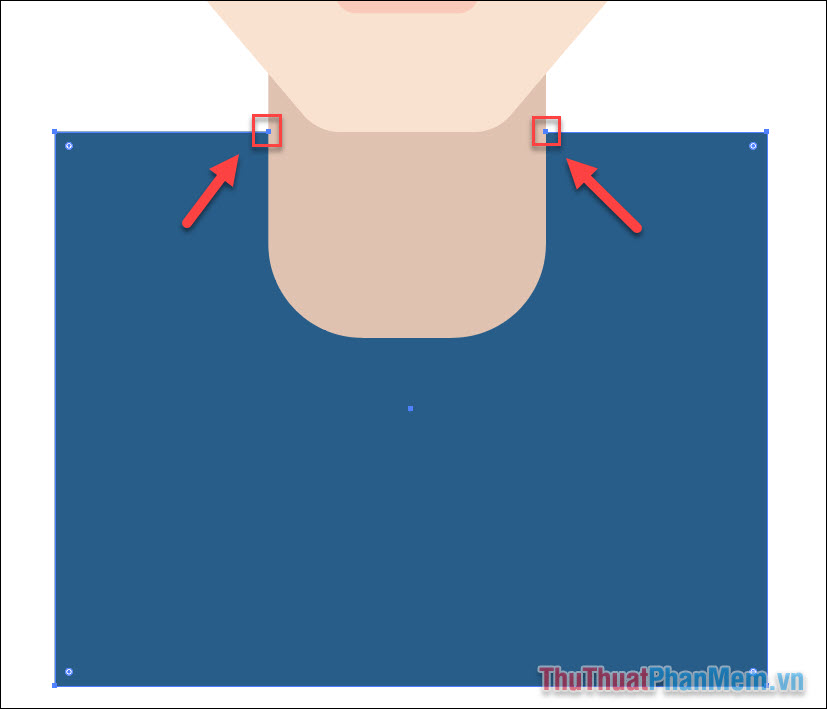
Then, using the Direct Selection Tool, drag the top two corners down about 17 px .
Step 16
Create a worker uniform with 2 orange stripes on the shoulder and 1 rectangle on the chest.
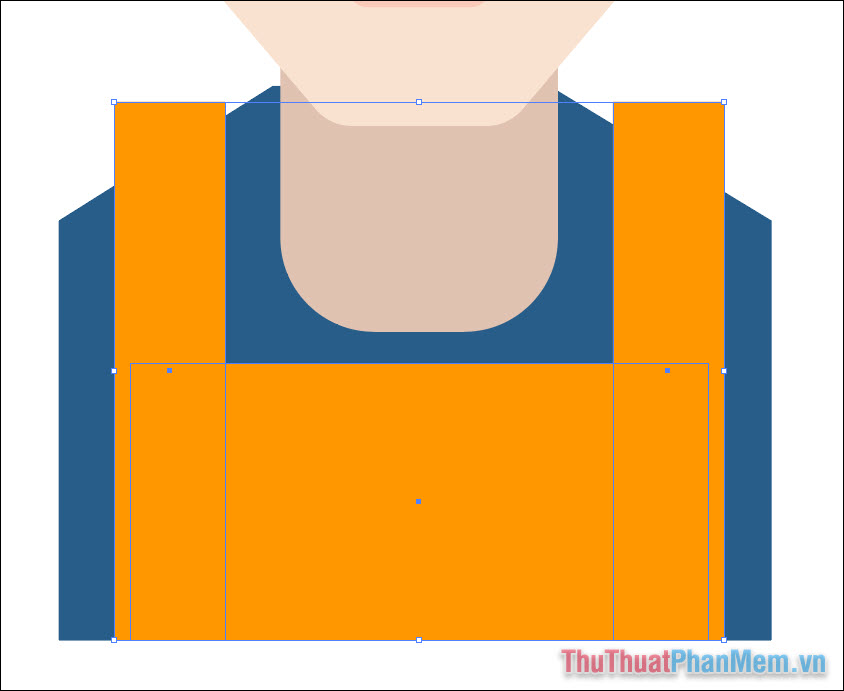
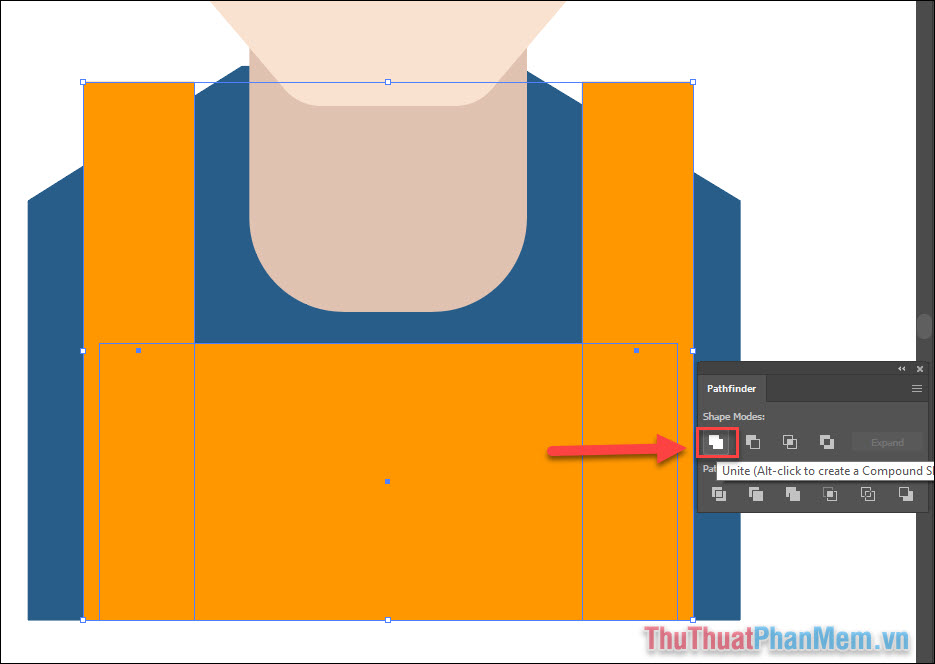
Open Windows >> Pathfinder and use the Unite feature to combine all three shapes into one.
Using the Selection Tool , hold Shift and select both the inner shirt and the uniform. Switch to Shape Builder tool (Shift + M) >> Hold Alt and click on the excess to delete it.
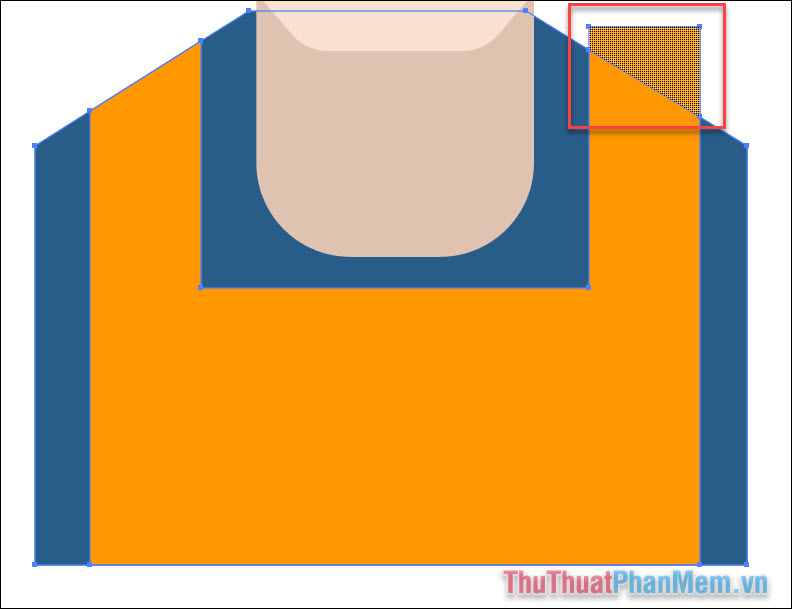
Do the same for the 2 smaller strips.
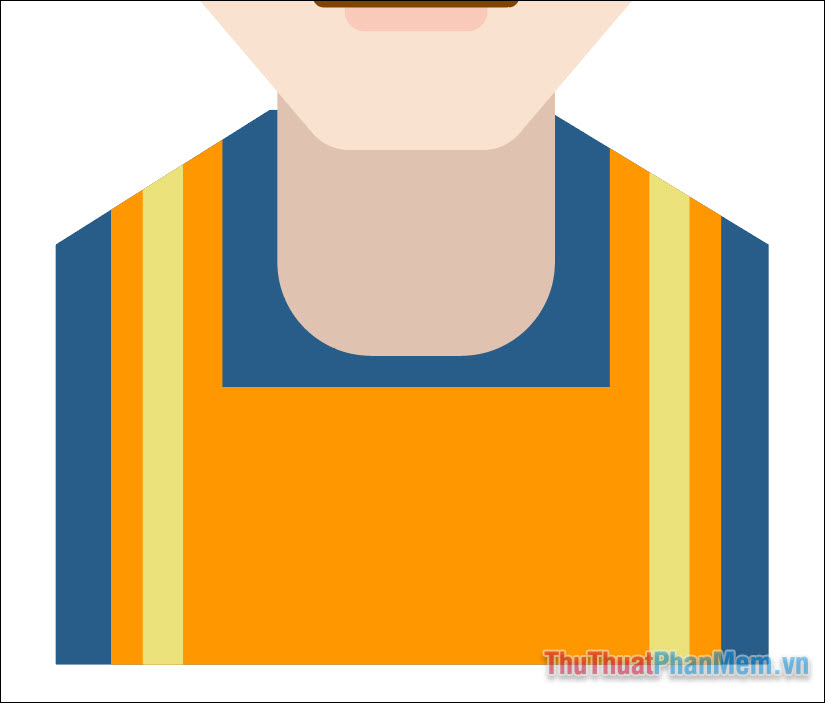
Step 18
To make the design more accentuated by darkening one side of it.
- Select all elements of the character (Control + A)
- Copy (Ctrl + C) and Paste (Ctrl + V) it to the front
- Use the Unite function in Pathfinder to combine details.
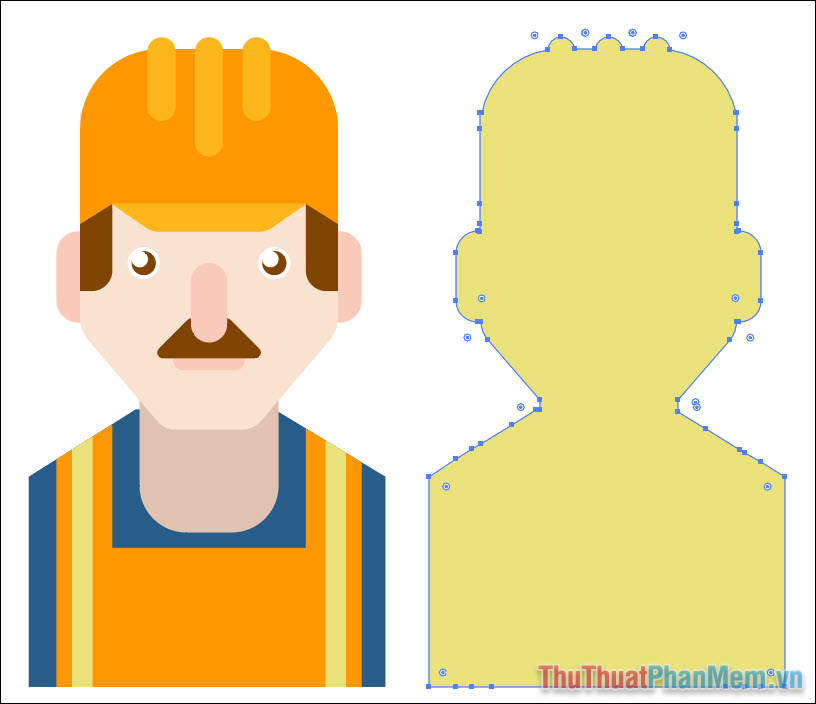
Step 19
Using the Line Segment Tool () , hold Shift and create a vertical line on the silhouette, aligning with Align for the line in the middle.
Select the line and the silhouette using the Selection Tool , the silhouette is the Main Object , then use the Divide feature of Pathfinder to cut the image in half.
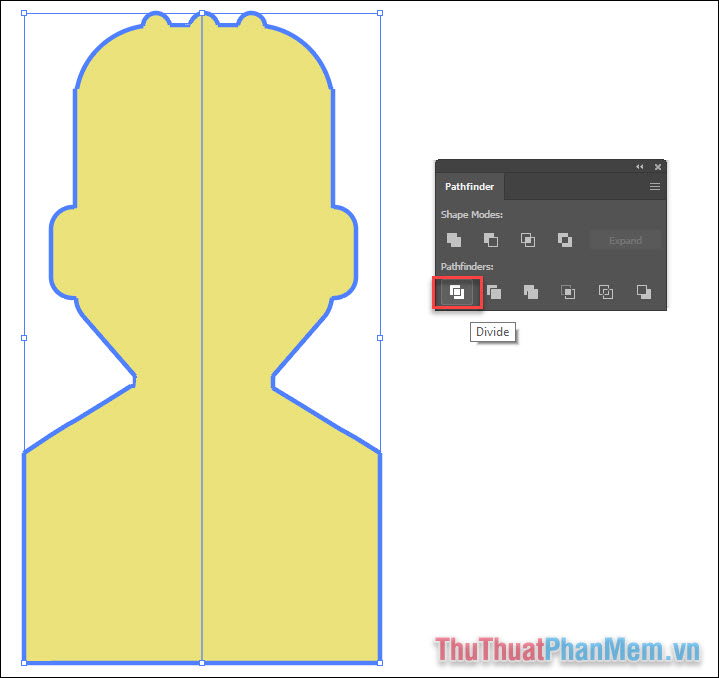
Step 20
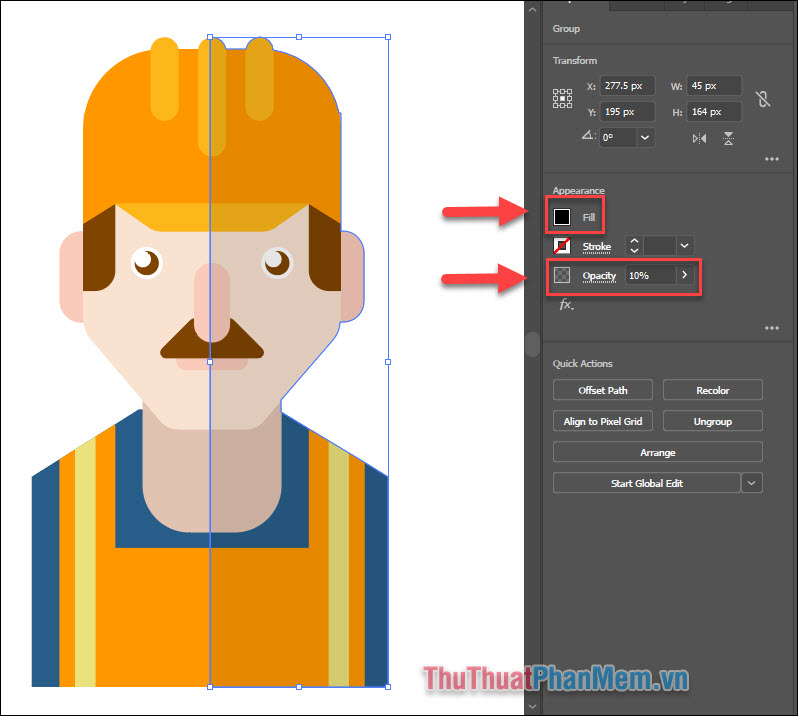
Delete the left half and put the right part back to fit the picture.
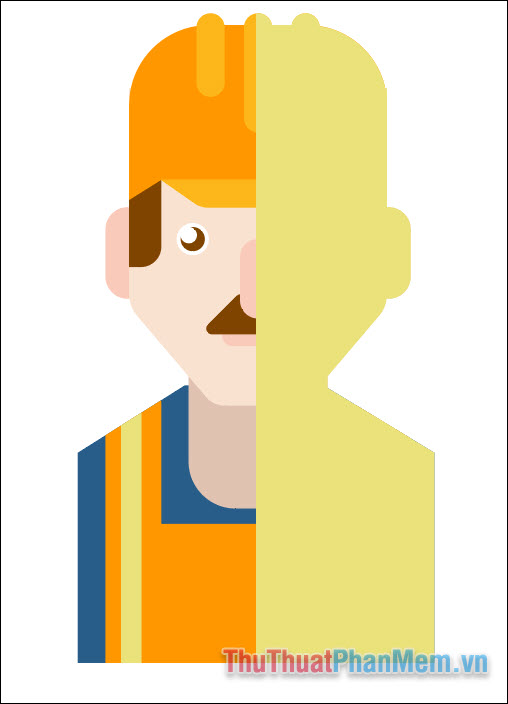
Choose black Fill and set the Opacity down to create a light shadow effect.
Step 21
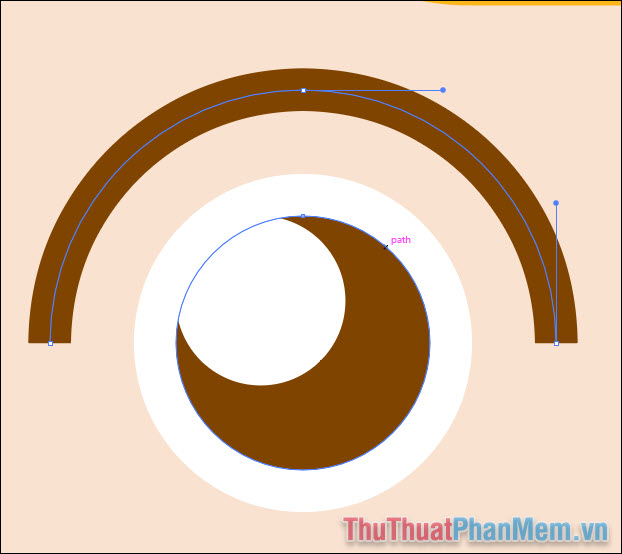
Looks like we've forgotten the eyebrow part. Create a circle around the eyes and set the Stroke color to the same as the other parts. Use the Scrissors Tool to cut half of the lower part.
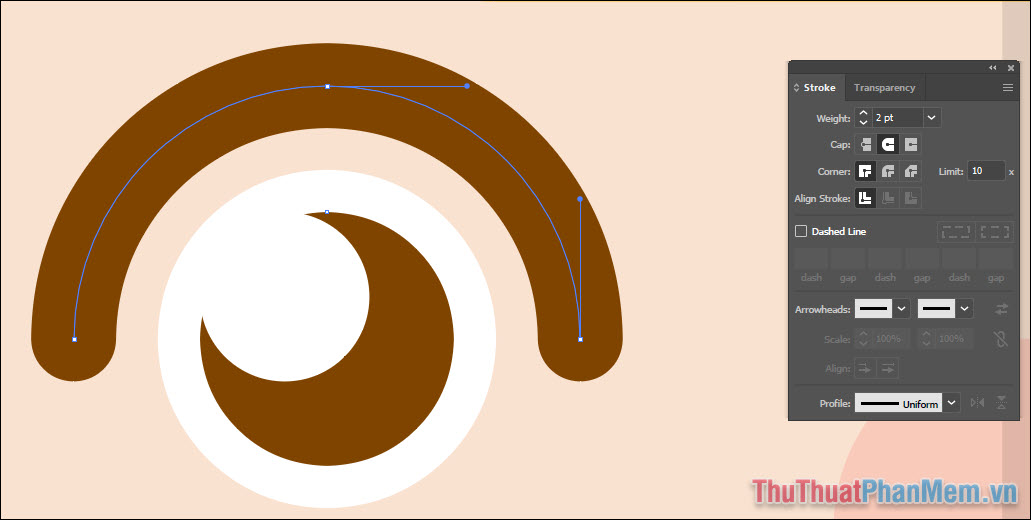
Open Windows >> Stroke >> select the thickness of 2pt and Cap round .
Step 22
Select the eyebrows with the Selection Tool , then take the Eraser Tool , hold Alt and draw a rectangle across the eyebrows. Then release the mouse, the eyebrows have been shortened.
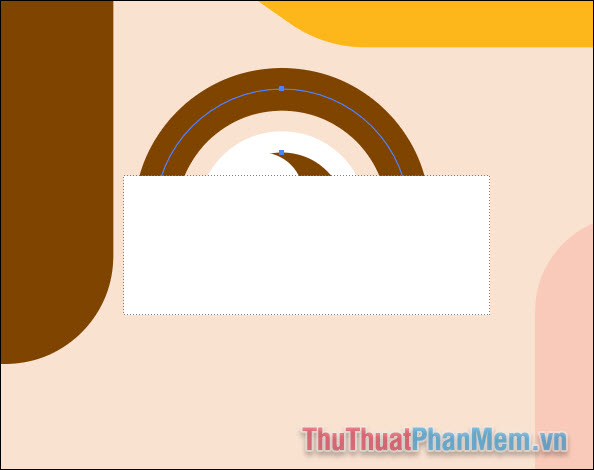
Create a copy on the other side.
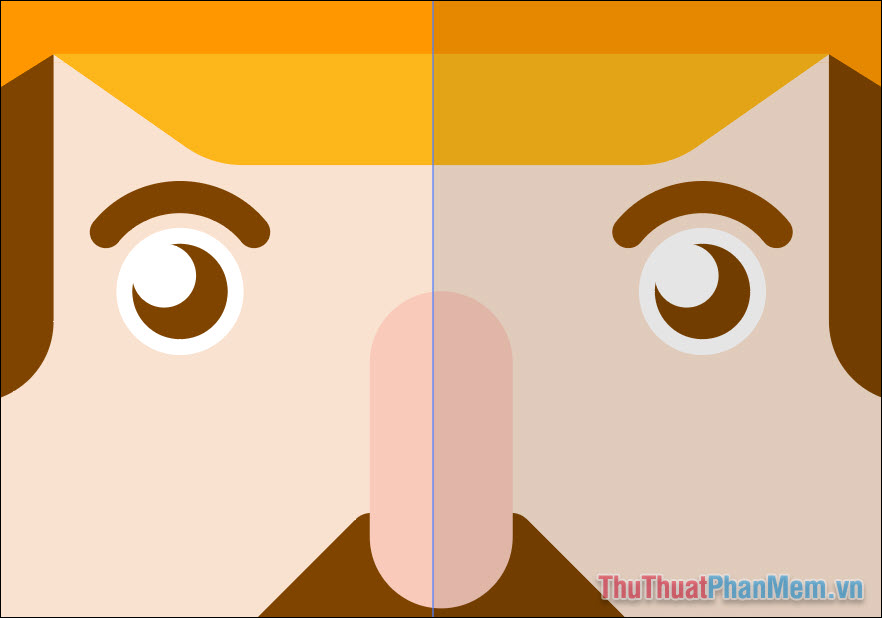
Step 23
Round the shoulders to softer.
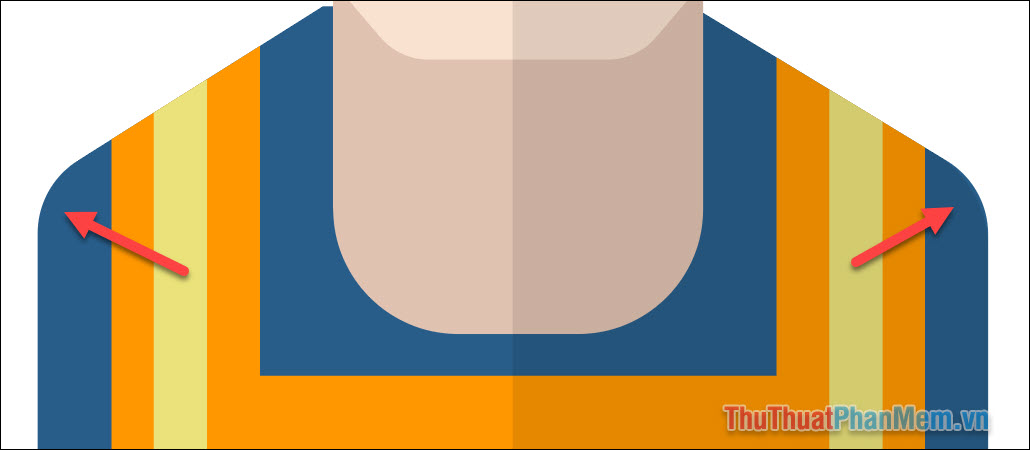
Step 24
The main element of the avatar is complete, the next we will create the background to make the object more prominent. Use Ellipse (L) to draw a 180 x 180 px circle. Fill it with bright blue
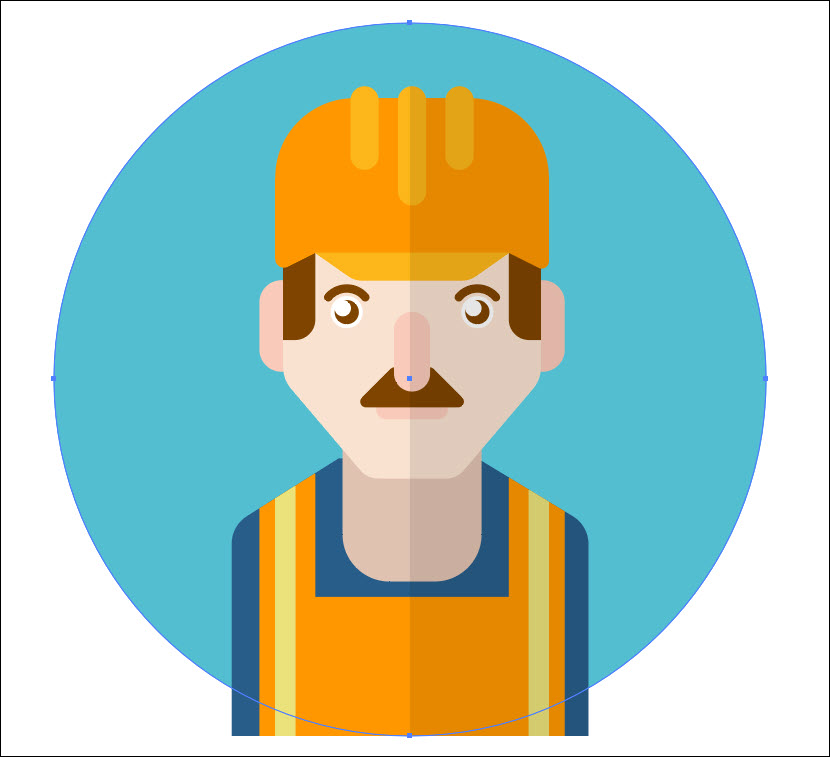
Make a copy and bring it to the front.
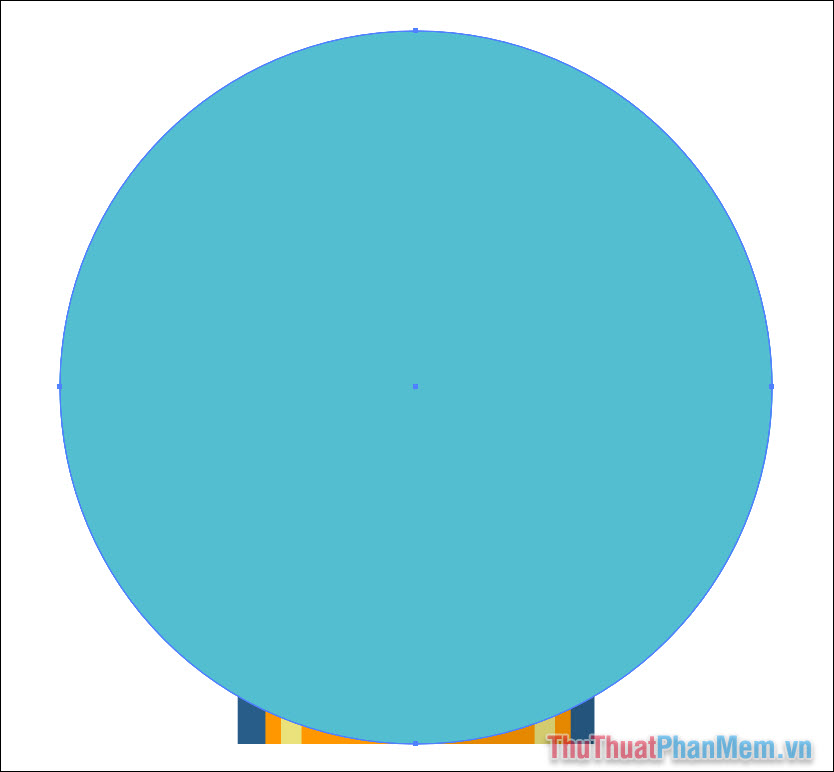
Press Ctrl + A to select all objects, then right click, select Make Clipping Mask .
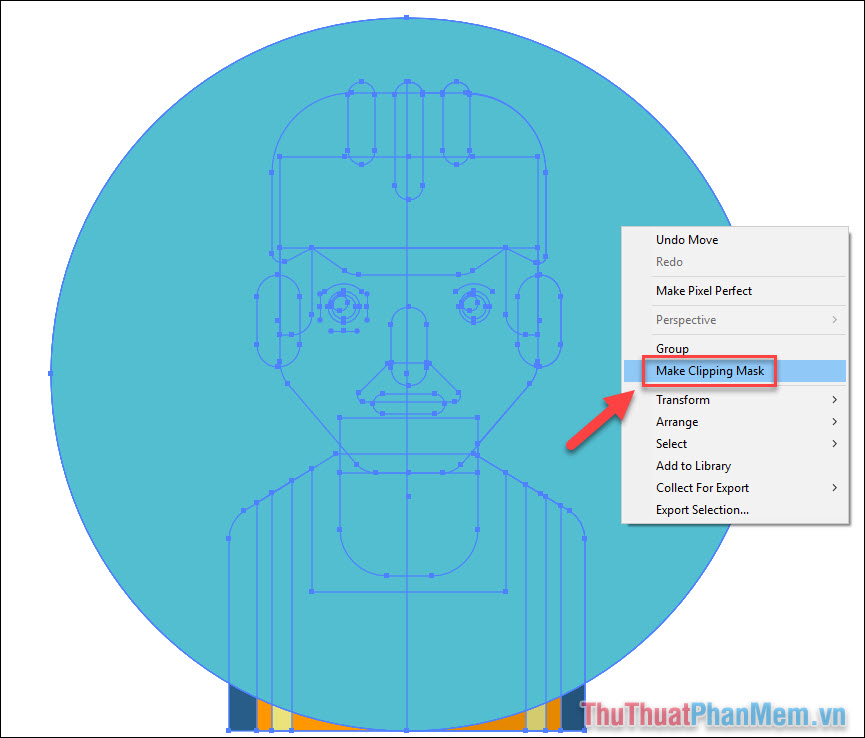
And we have a neat round avatar:
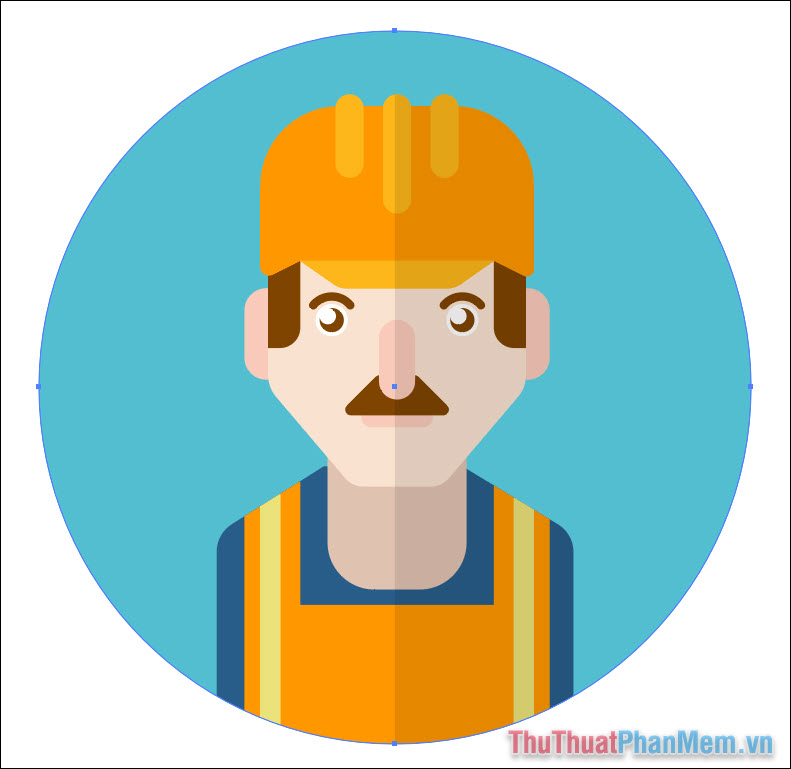
Step 25
In the last detail we will create a long shadow. Select the Rectangle Tool and create a large rectangle and lower the Opacity to see the images below. Hold down Shif t and rotate the image 45 degrees.
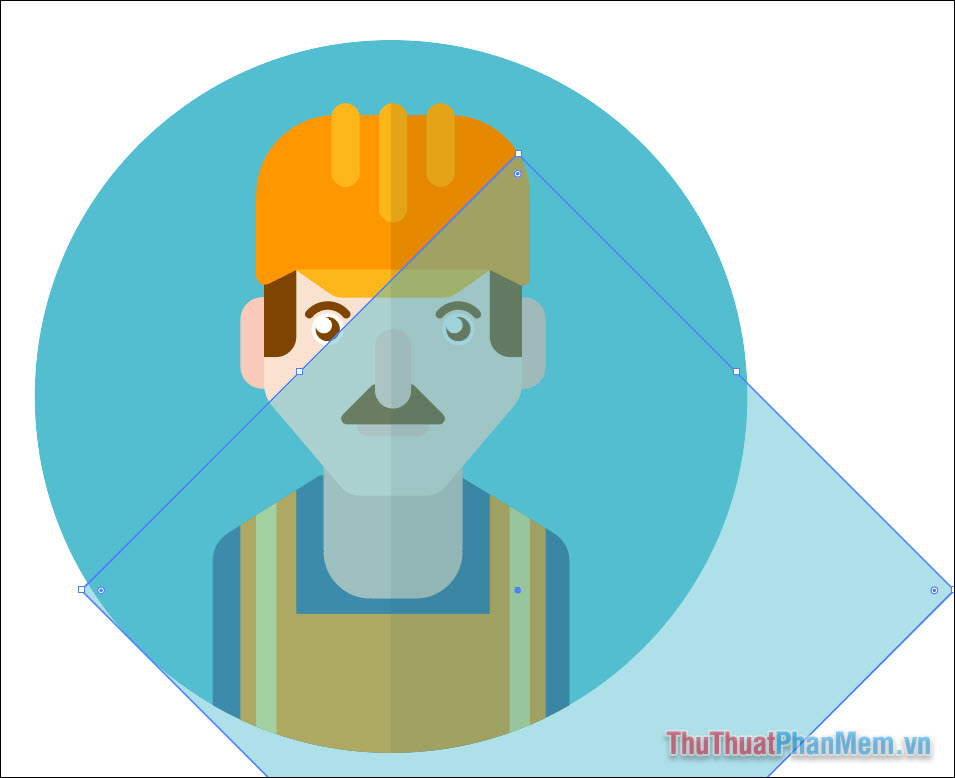
Use the Pen Tool to mark new anchor points and drag the points so that only the left side is left.
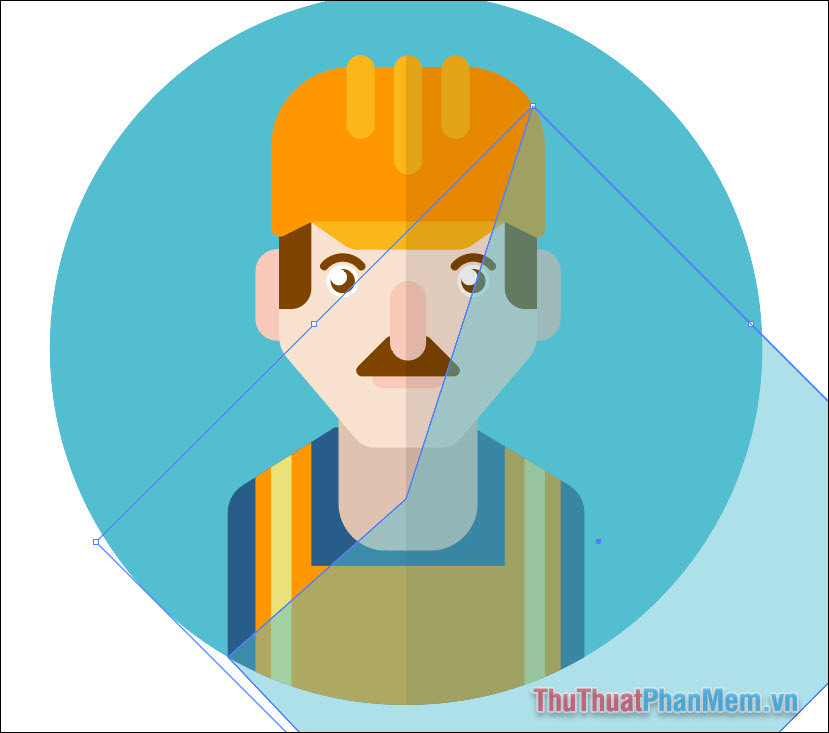
Drag the shadow layer into the Clip Mask and place it below the parts of the character, just above the background part.
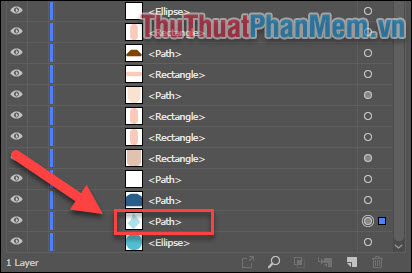
Change the ball to black and you have the result:
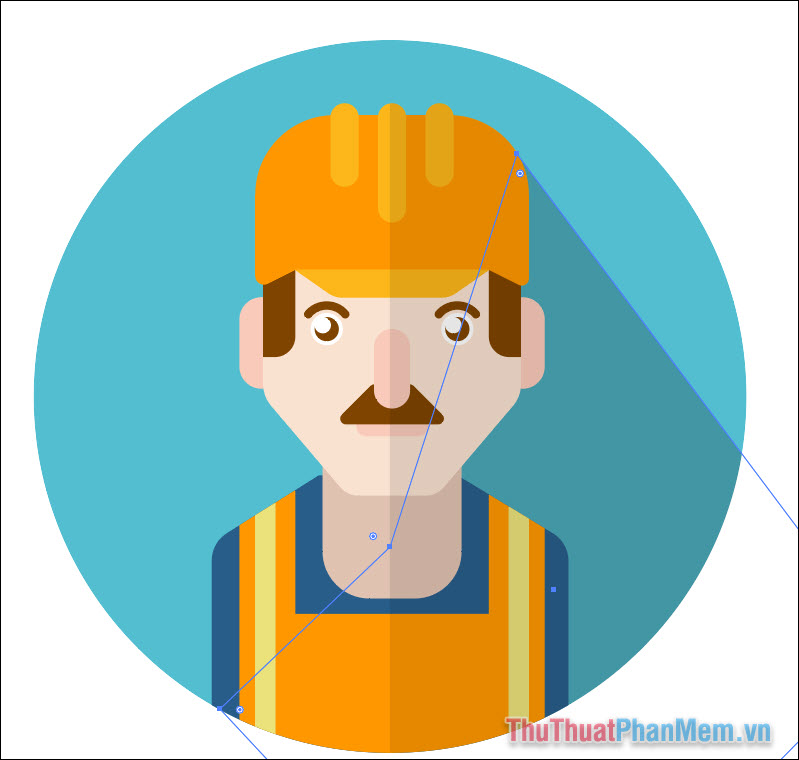
Thus, the process of creating professional avatars with Adobe Illustrator is completed. With these basic models, you can freely change and personalize the character by changing costumes, hairstyles, skin colors. to make it your own.
Let's get started and create your own unique avatar!
FAQ
What should I know about Create Professional Avatars with Adobe Illustrator?
Focus on the key features, requirements, limitations, and practical use cases explained in this guide.
How do I get the best results with Create Professional Avatars with Adobe Illustrator?
Follow the recommended steps, use current software or information, confirm compatibility, and review settings before major changes.
Are there any risks or limitations?
Potential limitations depend on compatibility, data quality, cost, privacy, support, and how the product or method is used.
Related Articles
 How to Create Avatars, Avatar Illustrations in Adobe Illustrator6 minutes read
 Adobe Illustrator: Complete Guide: Download Adobe Illustrator 2021.26.04 minutes read
 What Is Adobe Illustrator? Learn Adobe Illustrator for What5 minutes read
 What Is Adobe Illustrator?6 minutes read
 Tutorial Drawing. 'Unicorn' in Adobe Illustrator11 minutes read
 How to Cut Images in AI (Adobe Illustrator)2 minutes read
Reader Comments 0
Sign in with email or Google to join the discussion.