Table of Contents
Ctrl: Common Shortcut Keys is easier to understand when the core ideas are paired with practical examples. The sections below explain the topic clearly, highlight useful steps, and point out details that can prevent common errors.
Shortcuts (shortcuts) are key combinations that users manipulate on the keyboard to access the functions or processes that the manufacturer sets for their programs or software. With keyboard shortcuts, users can do the work that needs to be done faster than using a mouse, For instance, using a shortcut in graphics with Photoshop or simply in Windows. Here are some shortcuts in some commonly used programs with Windows XP: Windows shortcut : Ctrl + C : copy data Ctrl + X : copy and cut always copied data Ctrl + V : paste the copied data Ctrl + A : select all Ctrl + Z : restore the previous operation (Undo) Shift + Delete : Delete 'clean' data, not put into Recycle Bin. Note that with this deletion you will not be able to recover data from Recycle Bin or have to use third-party programs.  Alt + Enter : View the properties of the selected object Alt + F4 : Close the current object or program Alt + Spacebar : Open the shortcut menu for the current window Alt + Tab : switch between open windows Alt + Esc : switch between windows in the order that they are opened Ctrl + Shift + Esc : Open Windows Task Manager Windows Logo + D : display the desktop Windows Logo + M : minimize all windows Windows Logo + Shift + M : restore all windows Windows Logo + E : Open My Computer Windows Logo + F : Search for a file or folder Ctrl + Windows Logo + F : search for other computers in the network Windows Logo + R : Open the Run dialog box Windows Logo + U : Open the Utility Manager Music player Winamp : V : stop Shift + V : stop with FadeOut effect C : Pause and continue B : Next track Z : Track earlier J : Find items Control + Shift + 1 : Sort playlist by title Control + Shift + 2 : Sort playlist by file name Control + Shift + 3 : Sort playlist by path and name Yahoo Messenger (IM) message : Alt + A : Open the account management section on the website Alt + C : display call list Alt + D : View and edit contact information (Contact Details) Ctrl + Shift + L : Stop the call Alt + R : Hold and continue the call Alt + L : PC call / Callback Alt + M : turn on / off the sound Alt + S : backup to address book Ctrl + M : send an IM message Ctrl + T : Send a text message Ctrl + Y : Email Ctrl + K : call a phone number Ctrl + N : start a conversation Ctrl + F : displays only the friends list online Windows Media Player Alt + F : Display the File menu Ctrl + P : Play / pause a file Ctrl + S : stop playback Ctrl + Shift + C : turn off / open subtitles Ctrl + Shift + G : play at a faster speed than normal Ctrl + Shift + S : play at a slower speed than normal Ctrl + T : play the playlist again Ctrl + F : play the next track Ctrl + M : Display the toolbar in Full mode Ctrl + N : create a new playlist. Most software programs have shortcuts for faster use and operation. Therefore, you can look in the Help section or the accompanying documentation section for detailed software on shortcuts. Many software also allow you to set appropriate shortcuts accordingly. ONLINE
FAQ
What is Ctrl: Common Shortcut Keys?
Shortcuts (shortcuts) are key combinations that users manipulate on the keyboard to access the functions or processes that the manufacturer sets for their programs or software.
Why is Ctrl: Common Shortcut Keys important?
A clear understanding of Ctrl: Common Shortcut Keys helps you make informed decisions, avoid common mistakes, and use the relevant tools or techniques more effectively.
How should beginners approach Ctrl: Common Shortcut Keys?
Start with the fundamental concepts, follow the examples step by step, and test each change in a safe environment before applying it to important systems or data.
Related Articles
 List of Common Mac Shortcuts11 minutes read
 10 Priceless Shortcuts for Computer Users6 minutes read
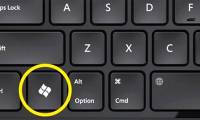 38 Great Uses of the 'Windows' Key on a Computer Keyboard, Not4 minutes read
 Summary of Convenient Facebook Shortcuts for Windows and Mac2 minutes read
 Word Shortcut Keys- Useful Shortcut Keys on Microsoft Word8 minutes read
 10 Shortcuts for Frequent Computer Users4 minutes read
Reader Comments 0
Sign in with email or Google to join the discussion.