Table of Contents
A dishwasher can clean some items beyond plates and cups, but “plastic,” “metal,” or “glass” is not enough to establish that an object is dishwasher-safe. Check the item's care instructions and the dishwasher manual before loading it.
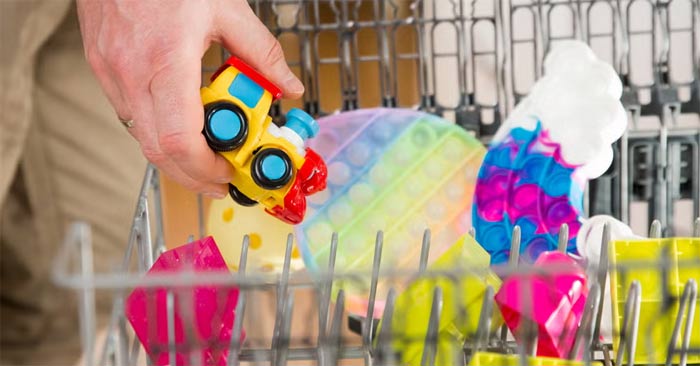
Start with the label, not a household hack
Heat, detergent, and water pressure can damage finishes, adhesives, seals, and materials. The top rack is not a universal safe zone. Use it for suitable items when the manufacturer specifies it, and secure small pieces so they cannot reach the spray arms or heater.
Whirlpool's dishwasher-safe material guide specifically cautions about materials including acrylic, delicate plastics, and wood.
Items that may be suitable—with confirmation
| Item | Check before loading |
|---|---|
| Plastic toys | Use only toys whose maker permits dishwashing. Exclude electronics, batteries, glued decorations, and parts that trap water. |
| Kitchen brushes | Check the handle, bristles, adhesive, and care label. A plastic handle alone does not establish compatibility. |
| Toothbrush holders | Remove loose residue and check material and finish. Position suitable holders so water can drain. |
| Plastic organizers | Confirm dishwasher suitability; do not assume acrylic trays are safe. Remove labels or inserts only as instructed. |
| Glass microwave turntable | Let it cool and check the microwave's care instructions. Make sure it fits without obstructing a spray arm. |
| Removable cup holders | Check the vehicle or child-seat manufacturer's instructions for that exact part, including removal and refitting. |
For example, LEGO explicitly says not to put its bricks in a dishwasher. A general recommendation about plastic toys should not override the toy maker's instructions.
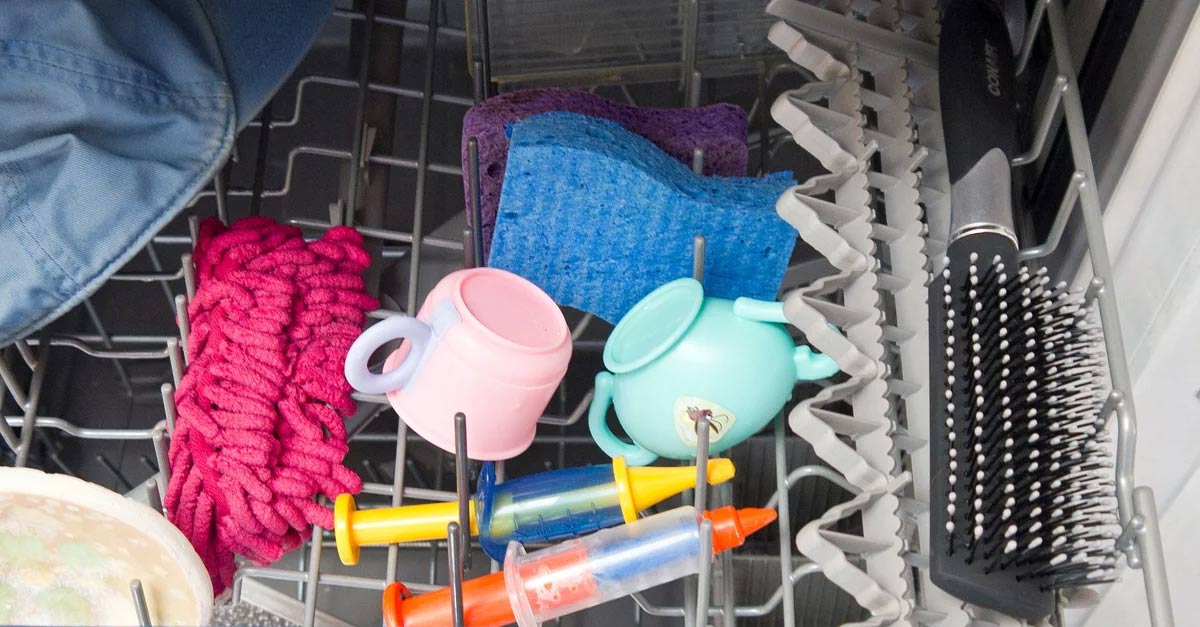
Items better cleaned by their own instructions
- Phone cases: use the case manufacturer's cleaning method. Coatings, magnets, decorations, and adhesives can be affected by heat and detergent. Never put the phone itself in the dishwasher.
- Plant pots and garden tools: soil, fertilizer, pesticide residue, rust, and plant debris do not belong in a normal dishwashing load. Clean these separately with an appropriate method.
- Painted or decorative ceramics: hand-painted surfaces, unknown glazes, cracks, and delicate finishes need individual care guidance.
- Sponges: do not assume a wash cycle sterilizes a worn sponge or makes it suitable for indefinite reuse. Follow its care instructions and replace it when its condition warrants.
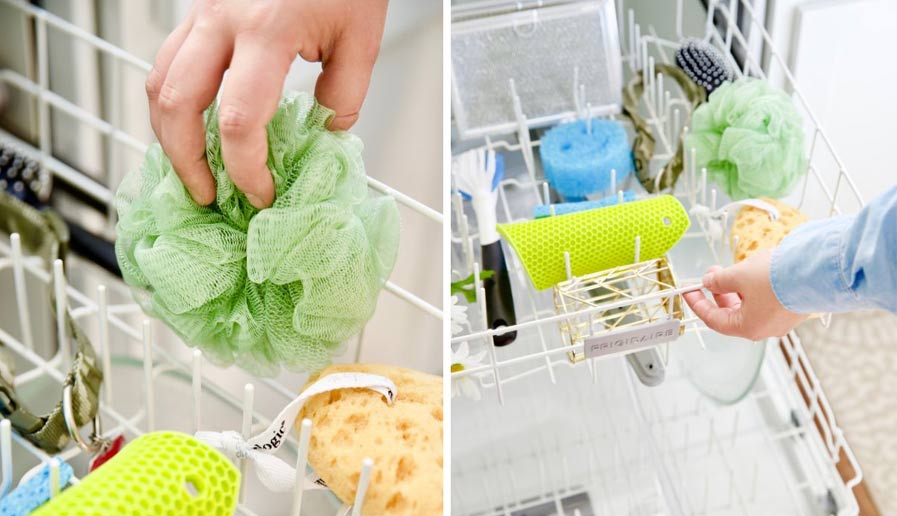
Load and dry suitable items properly
Remove large debris, avoid crowding, and check that the spray arms rotate freely. Choose a cycle compatible with every item in the load. Afterward, inspect and dry cavities fully before storage.
A clean appearance is not proof of sterilization. If an item needs a specified sanitizing process, use a verified method appropriate to that item rather than assuming an ordinary dishwasher cycle is sufficient.
Related Articles
 Can Pokemon Go be played on a computer? The answer is yes!
 Summary - How to play Pokemon GO, virtual reality game catch Pokemon on smartphone
 Poké Ball Types Explained: Generations III–V (Part 2)
 How to Earn and Use Stardust in Pokémon GO
 How to Hatch Eggs in Pokémon GO
 Poké Ball Types Explained: Generations I–II (Part 1)
Reader Comments 0
Sign in with email or Google to join the discussion.