Table of Contents
Every idea that springs from our brains is like a precious child. We don't want to give them up. Therefore, most ideas feel stronger than they actually are, especially when...
Every idea that springs from our brains is like a precious child. We don't want to give them up. Therefore, most ideas feel stronger than they actually are, especially when we're brimming with inspiration in the early stages. When something flashes into our minds, we're often too lazy to fully question it. ChatGPT isn't always helpful here either, as AI models often agree or remain neutral instead of directly challenging you. This implicit AI consensus is useful for searching or summarizing, but it carries risks for decision-making.
Therefore, some people began to develop the habit of using a Socratic prompt to elicit and analyze any important ideas. They wanted ChatGPT to ask questions, challenge, and explore instead of keeping things within their comfort zone. And almost every time, it pointed out blind spots that people were unaware of.
For more context before choosing a tool, compare Claude and ChatGPT and review these practical AI tools for students.
This prompt turns ChatGPT into a reviewer.
It is forced to provide honest feedback, step by step.
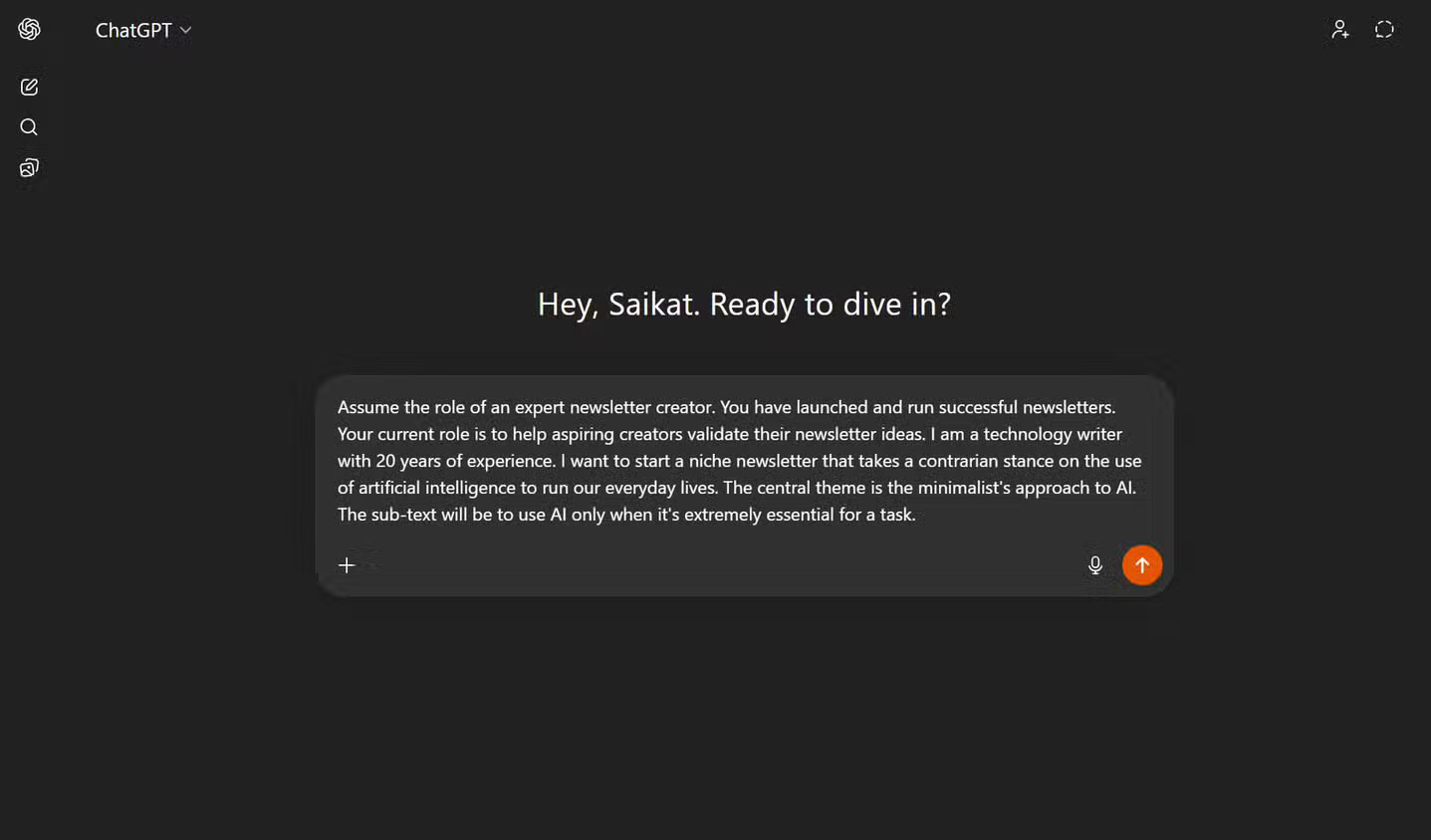
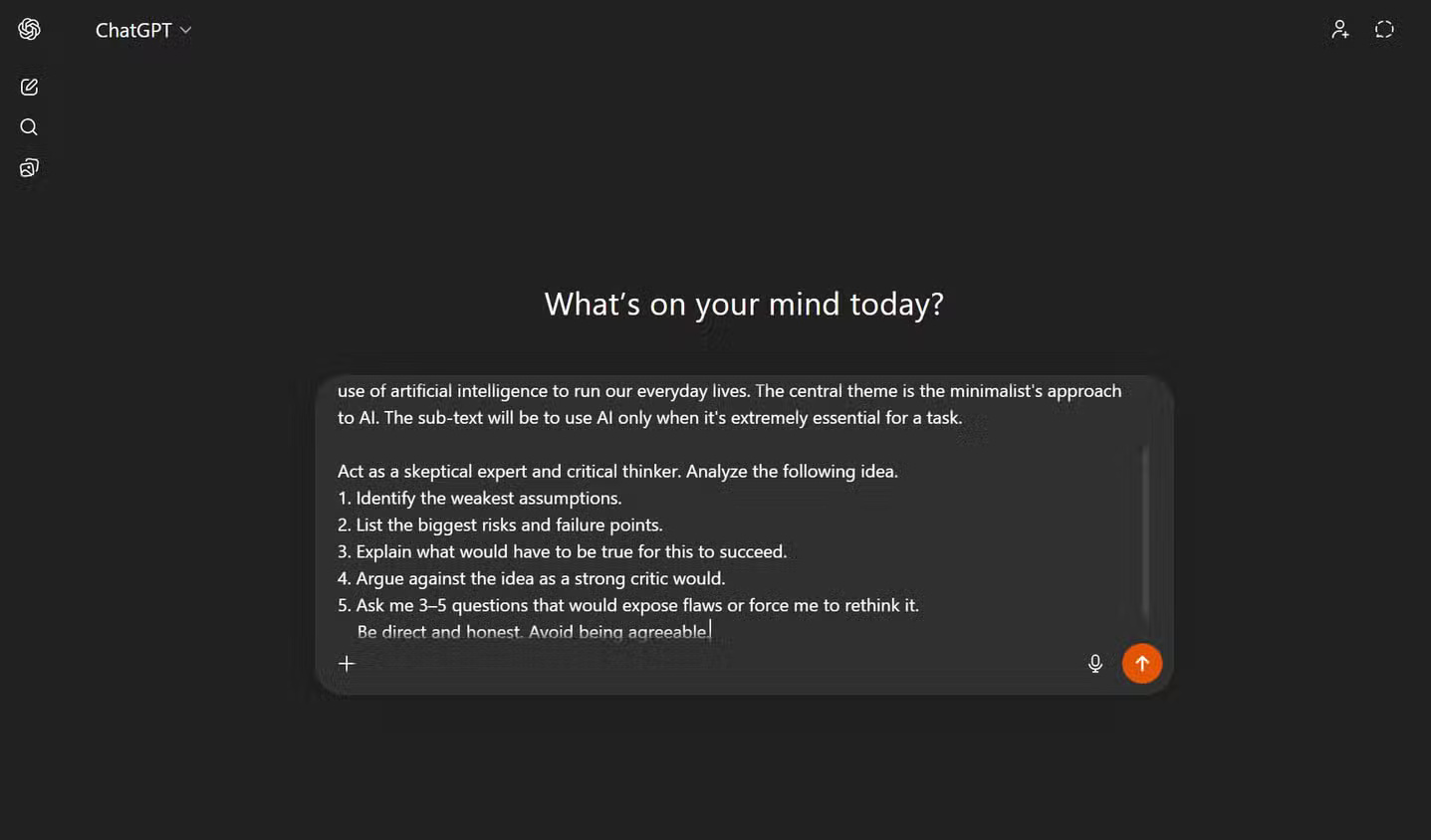
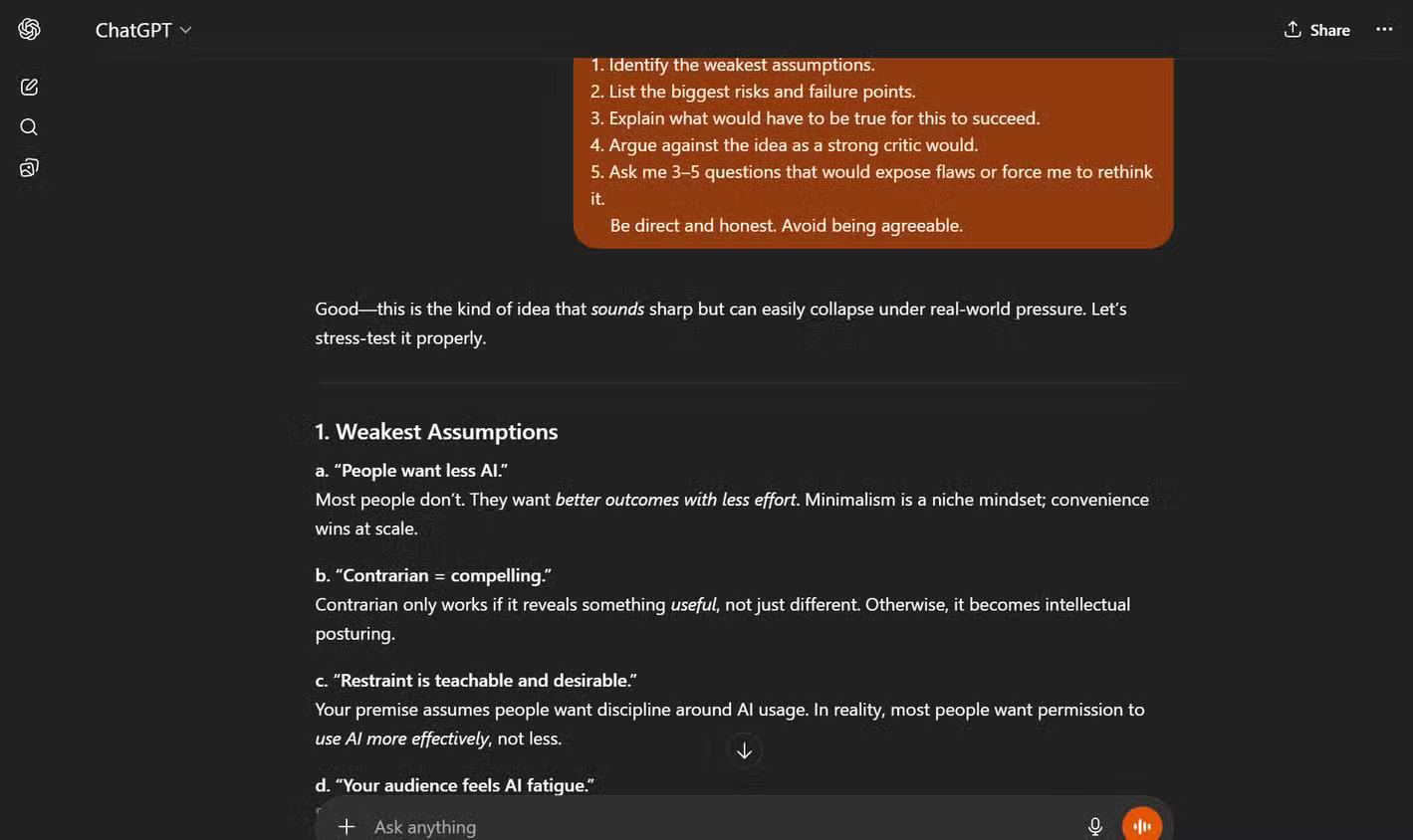
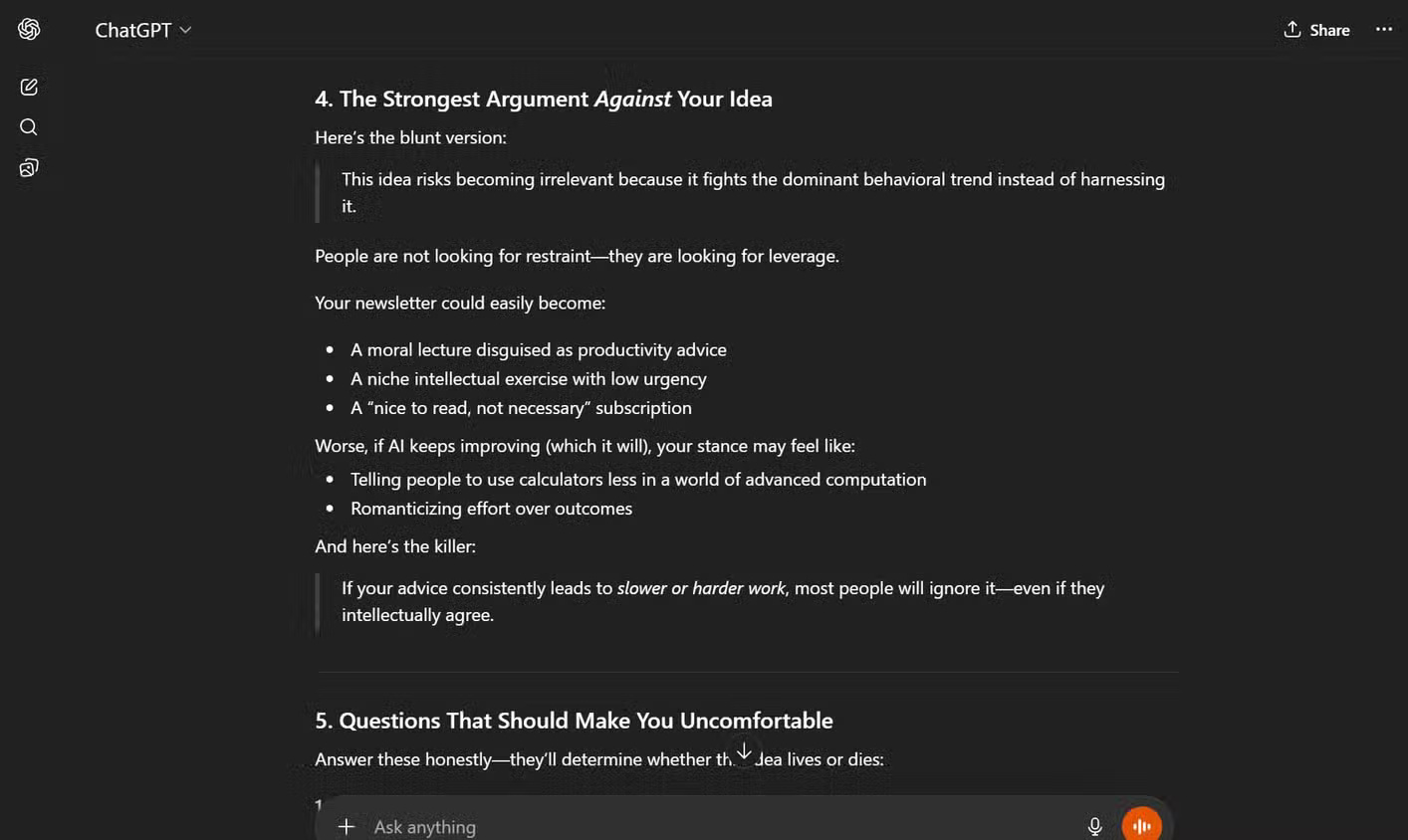
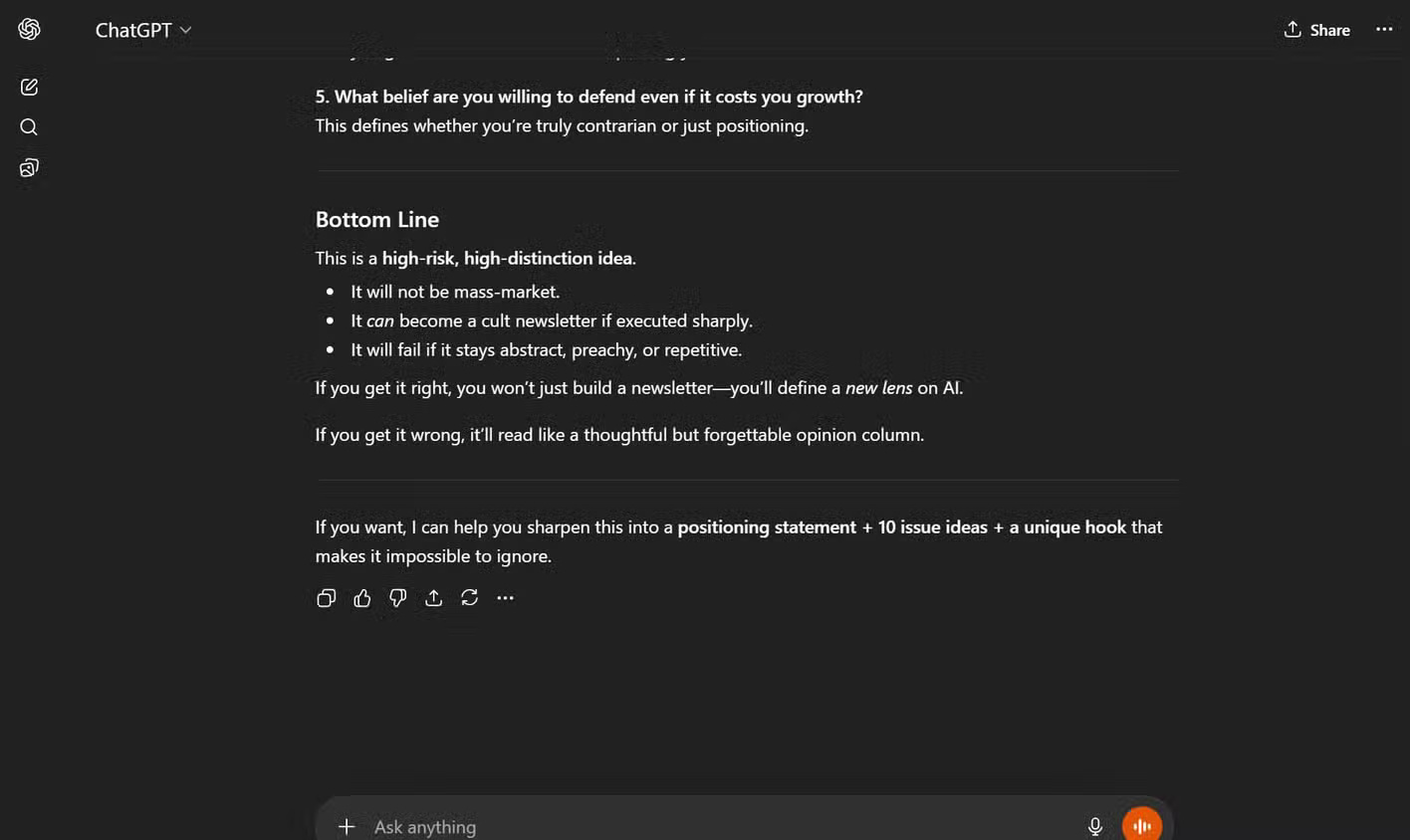
Let's begin with the Socratic question used to test the durability of any idea. In the following sections, we will analyze it and see why this self-testing method is so useful. Here, providing context for ChatGPT is the fundamental rule that works in every case. The quality of any question depends on this rule.
Hãy đóng vai trò là một chuyên gia hoài nghi và nhà tư duy phản biện. Phân tích ý tưởng sau đây. Xác định những giả định yếu nhất. Liệt kê những rủi ro và điểm thất bại lớn nhất. Giải thích điều gì phải đúng để điều này thành công. Hãy tranh luận chống lại ý tưởng như một nhà phê bình mạnh mẽ. Hỏi tôi 3-5 câu hỏi để vạch trần những thiếu sót hoặc buộc tôi phải suy nghĩ lại. Hãy trực tiếp và trung thực. Tránh tỏ ra dễ dãi.Admittedly, the first time many people use this feature, they feel like they're experiencing a productivity nightmare. After all, we use ChatGPT to find quick answers. People aren't used to seeing their ideas challenged so directly, especially when they're so excited about them.
But that's precisely why it works. It pushes ChatGPT into a socratic role, where it needs to ask questions collaboratively instead of automatically agreeing. This shift alone encourages critical thinking.
Tip: Use Socratic questions whenever the cost of a confidently incorrect answer is very high. For example, career-related research. It could be any situation where "sounding right" isn't enough. Investing time in Socratic questions is less useful for simple, practical information searches where a direct statement is quicker and more sufficient.
Most ideas fail because of our underlying assumptions.
Ask yourself what needs to be right for this to work!
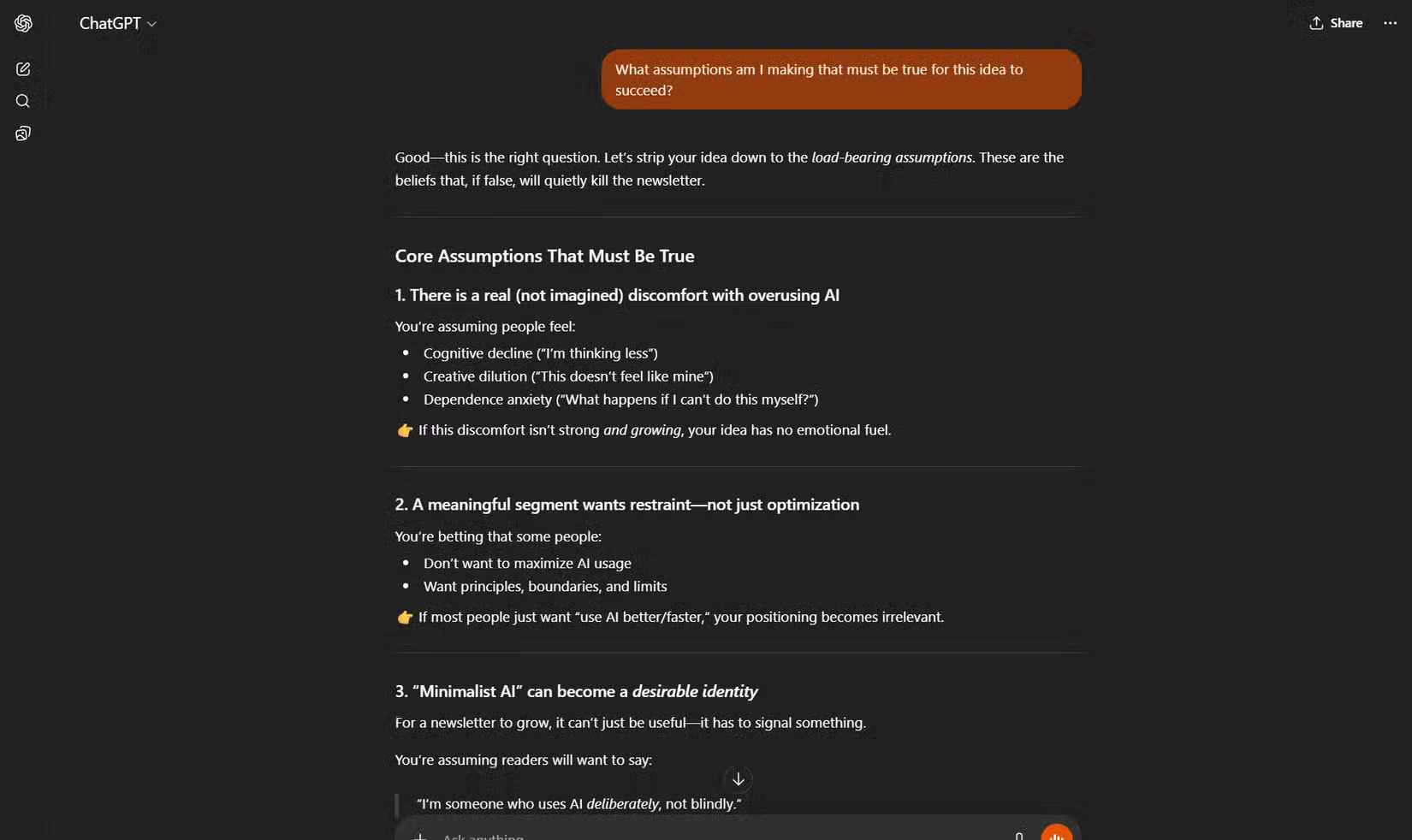
A large part of the question focuses on assumptions. You could break that part down into a Socratic-style question to highlight those implicit assumptions.
Tôi đang đưa ra những giả định nào mà nhất định phải đúng để ý tưởng này thành công?This question forces you to clarify things you often overlook. For a writer, it might help them determine if their audience is genuinely interested, or if the idea is too generic.
Many people used to skip this step because they felt like they were overthinking things. If an idea sounded promising, they assumed it was worth pursuing without much further analysis.
But assumptions are where most ideas fail. Questioning them from the start doesn't actually slow you down; it helps avoid wasted effort or at least refine the idea. The Socratic questioning method is similar to asking ChatGPT to act as a critiquer.
It highlights risks that you often overlook.
Ask yourself what could actually go wrong!
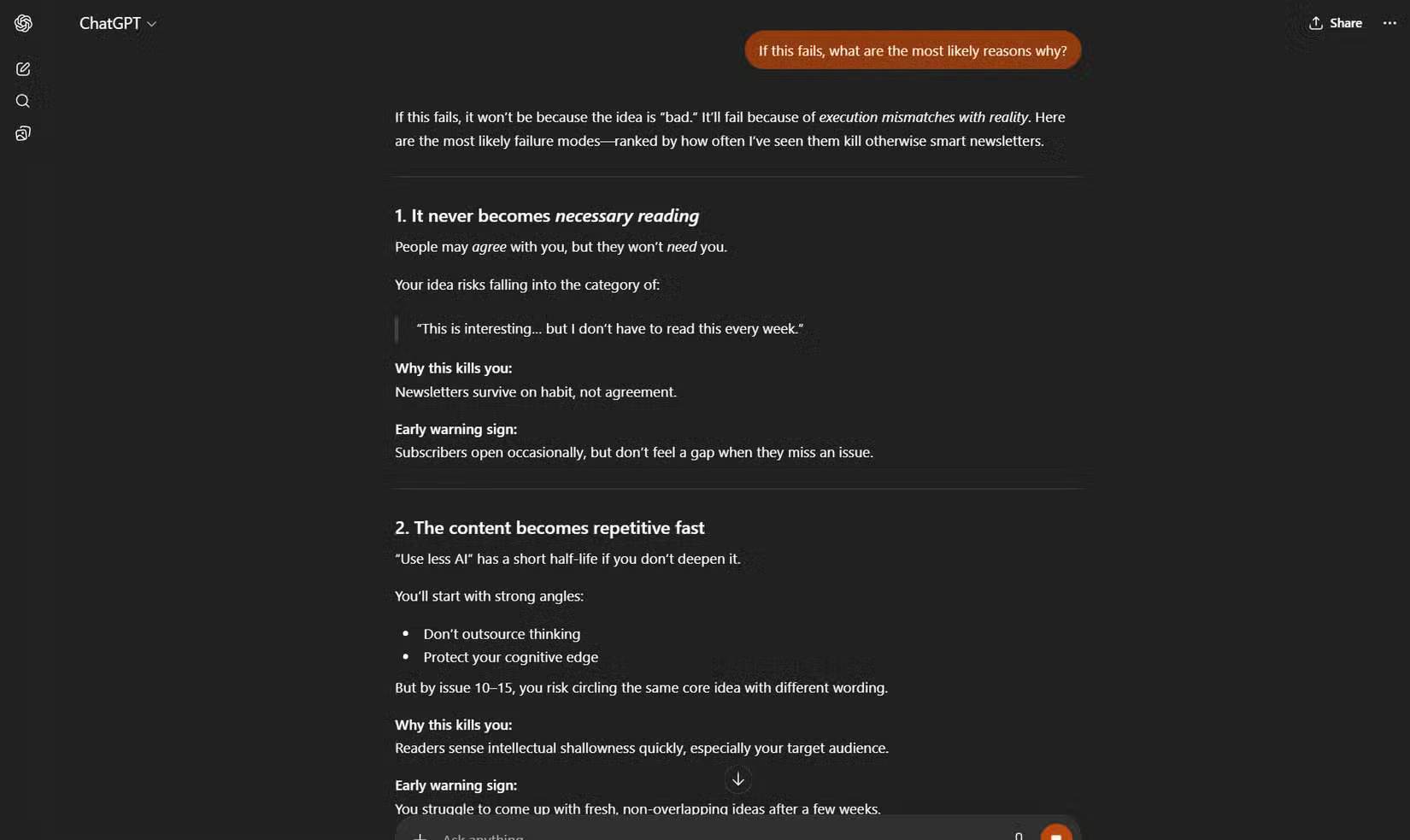
Another part of the prompt focuses on risk. You could turn that into a simple and separate Socratic-style question:
Nếu điều này thất bại, đâu là những lý do có khả năng nhất?This shifts your thinking from optimism to realism. Instead of vague anxieties, you begin to notice more concrete problems such as inefficiency, unclear messaging, or a lack of resources.
When you're excited about an idea, you don't want to focus on the potential problems. But this isn't negativity; it's about anticipating the future and planning backward. Identifying risks early gives you a chance to fix them before they become real problems.
The question is more important than the answer.
Ask yourself what a critic would argue against here!
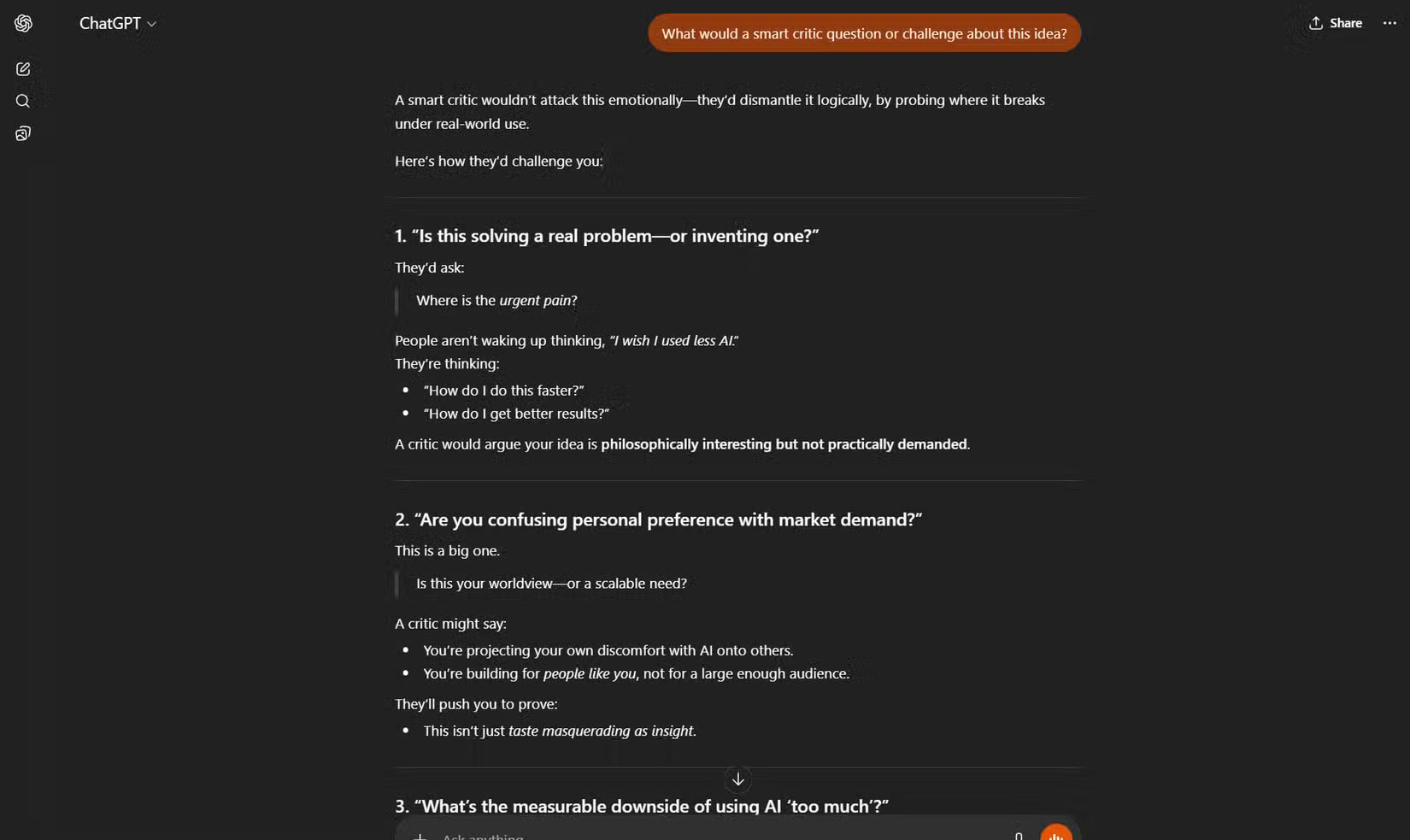
One of the most powerful aspects of a prompt is the questions it generates. You can emulate that by:
Một nhà phê bình thông minh sẽ đặt câu hỏi hoặc phản bác điều gì về ý tưởng này?This encourages you to step outside of your personal perspective and view ideas from a more objective point of view. You can also follow a basic rule of prompt creation and ask ChatGPT to act as a specific expert.
Questions might seem less helpful because they don't offer immediate guidance. But the right question can change everything. If you want to broaden your perspective, give ChatGPT more than one role. For example, you could filter your article ideas with a prompt like:
Một biên tập viên, một người mới bắt đầu và một người không rành công nghệ sẽ nhìn nhận lựa chọn này như thế nào?Use this method before every important decision!
Ask yourself what would make you change your mind!
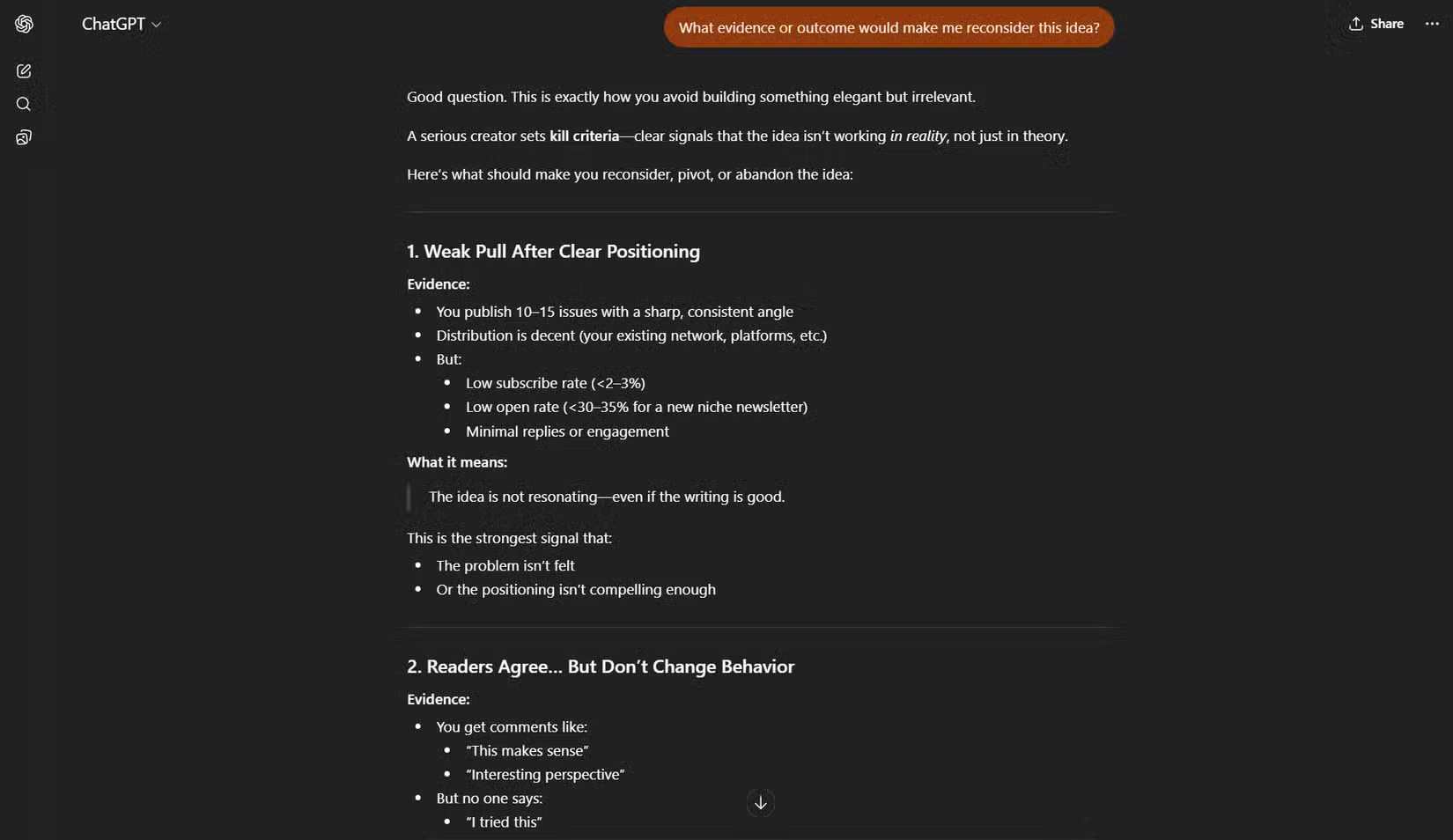
Before committing to any idea, add one final Socratic-style question:
Bằng chứng hoặc kết quả nào sẽ khiến tôi xem xét lại ý tưởng này?This helps you avoid emotional constraints. It creates an internal check mechanism that keeps your thinking flexible and solid. But that's precisely when it's most useful.
When you feel confident, you're least likely to question yourself. Furthermore, if an idea crumbles after just one challenge from a ChatGPT question, it's not as solid as it seems. But we shouldn't stop there. You can strengthen your ChatGPT results by doing further research online.
Let ChatGPT challenge your thinking!
Socratic questions broaden our horizons. The biggest benefit is the improvement in critical thinking. Instead of quick answers, experimenting with Socratic questions allows you to think about your ideas even without looking at the screen. One of the favorite Socratic prompts is:
Kết quả tồi tệ nhất có thể xảy ra là gì, và tôi có thể chấp nhận được điều đó không?Related Articles
 8 ChatGPT Prompts to Make Brainstorming More Effective: Explained10 minutes read
 Top Prompt ChatGPT for Marketing: Practical Guide9 minutes read
 How to Create a ChatGPT Prompt That Works in All Cases: Step-by-Step Guide11 minutes read
 Top ChatGPT Prompts for Administrators: Practical Guide8 minutes read
 Useful ChatGPT Prompt Templates for Professionals7 minutes read
 Top ChatGPT Prompts for HR: Practical Guide9 minutes read
Reader Comments 0
Sign in with email or Google to join the discussion.