Table of Contents
This guide provides a clear, practical overview of things to consider before creating a website, with useful context, important details, and straightforward takeaways for everyday readers.
In order for your website to become a success, you should plan ahead. Even if you've hired someone to help, don't just sit back and relax! It is important to take note of what your website should include.
1. Branding

The website represents your company. Therefore, it is important to take a close look at the branding for it. Why? This will help attract visitors and contribute to your overall return on investment.
Thinking about the brand throughout the entire development process is a surefire way to build a wildly successful website.
A website's trademark includes the following:
- Logo
- Main message
- Color scheme
- Design
- Font
Logos play a huge role in the identity of a business. Logos create a unique impression that visitors can easily recognize immediately. You can hire a graphic designer to create a logo for you. If you don't want to hire a designer, there are websites you can use to create your own logo.
The website should represent the core message of the business. Visitors can quickly understand your content when they land on the page. The website must create a consistent feel that connects to that core message.
The color schemes, designs, and fonts that you use in your website should complement your message and match the tone of your brand.
2. Usability

Customers are more likely to be attracted to your website if it is easy to use. You can increase the usability of your website by including the following:
- Navigation function
- Titles and labels
- Search bar
- Mobile-friendly website
The navigation menu gives visitors an idea of what content is included on your site. Providing seamless navigation also allows visitors to find the information they are looking for more easily.
If your website is easy to use, visitors are likely to spend more time browsing through it. Include headers and labels that allow visitors to better understand your site's content.
Depending on the context of your site, including a search bar can improve your site's usability. Visitors simply search and see what they're looking for instead of 'digging up' your site without knowing if they'll find it.
You must also make sure that your website is mobile-friendly. Many people use their phones to browse the Internet, and a mobile-friendly design will increase your credibility.
3. A consistent blog

An active blog on the site helps you engage your audience. Your blog should provide useful content for visitors. Producing regular content can increase traffic to your website and encourage users to spend more time on it.
Also, having a consistent blog makes your website a trusted source of information. When people have questions, your page will be where visitors turn to!
4. Website Security

Security threats are a website's worst enemy. Websites are hacked every day and it is very important to make sure that your website is secure.
Hackers can use your website to infect visitors with malware. You wouldn't want to risk your site's infrastructure being compromised. Fortunately, you can protect your website through web application firewall services and server-side security tools.
5. A Solid SEO Strategy
Your website needs a good SEO strategy. For a website to be successful, it needs to show up as much as possible and that's exactly what SEO does for you. When potential visitors use a search engine, they will most likely use keywords and terms associated with the content on your website.
Your job is to make sure that your site is optimized enough to appear on the results page. Even the bottom 1 position on Google can get you thousands of views per month.
6. Choose a domain name
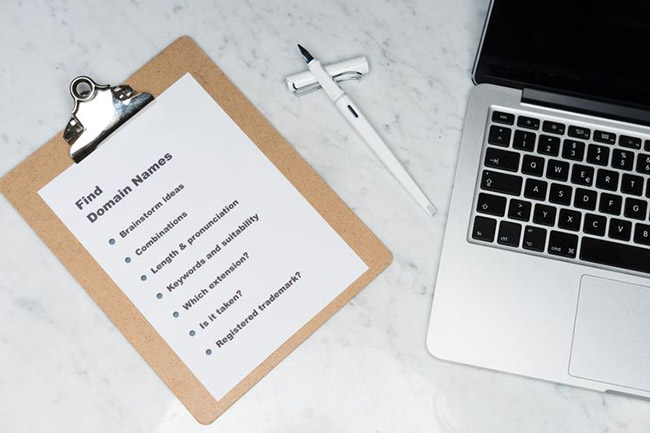
Finding a personal domain name you can be proud of is no easy feat. If you are looking to create a website for your business, it makes a lot of sense to use the same name for the website. However, if you're still looking for the perfect name, you might need to come up with a few ideas. A domain name is an opportunity for your website to get brand recognition.
It is important to have a domain name that is easy to remember and relevant to your target audience. Website domain names can be used for branding on all social media platforms, that way people will find you easier.
7. Cost

After considering all the factors mentioned above, it's time to think about the cost of creating a website. You have to ask yourself if you are going to hire an intermediary to help create the website or will you do everything yourself. Creating a website may require you to hire people like web designers and blog content writers.
However, you can do it all yourself, if you can't afford to spend money to hire people. There are a number of low-cost, even free tools that you can use to help create your website. For example, you can use websites to help you create a logo for your business.
Key Takeaways
Use the information above as a practical reference for things to consider before creating a website. Review each step carefully, confirm any requirements, and choose the option that best fits your situation.
FAQ
What does this guide explain about Things to Consider Before Creating a Website?
It explains the main concepts, practical considerations, and useful steps related to things to consider before creating a website without requiring advanced knowledge.
Who can benefit from learning about Things to Consider Before Creating a Website?
This information is useful for readers who want a clear overview, practical guidance, and reliable steps related to things to consider before creating a website.
What should I check before applying this information?
Review the requirements, confirm that your device, software, or situation matches the instructions, and back up important data before making major changes.
Related Articles
 Instructions for Creating Websites with Wordpress from a to Z (Part11 minutes read
 Don't Ignore These 10 Security Tips When Creating a New Website10 minutes read
 How to Create a Website Using 10Web AI3 minutes read
 TOP AI tools for creating the best e-commerce websites15 minutes read
 Anyone Can Create a Small and Simple Website with These 10 Websites10 minutes read
 Instructions for Creating a Website for Beginners: Create Website18 minutes read
Reader Comments 0
Sign in with email or Google to join the discussion.