Table of Contents
Explore the world's most terrifying lakes, including the key concepts, practical examples, important considerations, and useful guidance.
Then there are other lakes that are both dangerous and terrifying. The red Lake Natron in Tanzania has water so corrosive it can cause burns and is famous for its ability to embalm any creature that dies there. Finally, there's Lake Roopkund in India, known as the "Lake of Human Bones" because hundreds of human remains can be seen when the snow melts on these mysterious Himalayan waters. Certainly no one would want to go camping there.
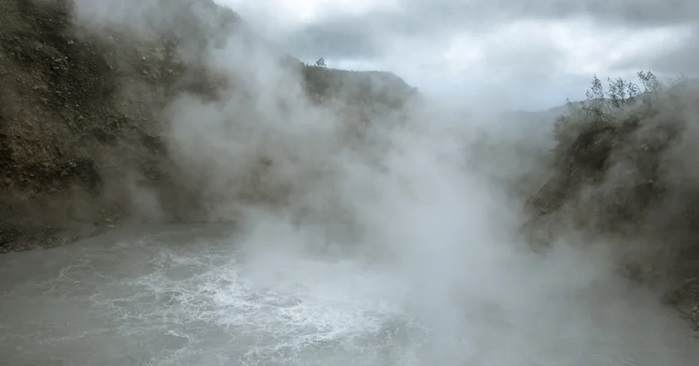
Boiling Lake is untouchable because it's too hot
The Caribbean island of Dominica boasts stunning black and white sand beaches with crystal-clear waters, but in the country's interior, amidst mountains, forests, and active volcanoes, you'll find a less appealing body of water called Boiling Lake. The name perfectly describes its danger. Located near the Valley of Desolation, this flooded volcanic vent, filled with boiling water and a layer of steam, is incredibly dangerous. The water can reach scorching temperatures of 90 degrees Celsius (194 degrees Fahrenheit). Falling into it will cause third-degree burns and can be fatal.
Although Boiling Lake is only the second largest of its kind—the largest being Frying Pan Lake in New Zealand—it is certainly the most feared due to its remote location and the many dangers associated with it. Over the years, people have died on the treacherous trails attempting to reach the lake and from it itself. Two people died in 1901 when Boiling Lake's water level dropped and spewed out toxic gases, causing them to suffocate.
Lake Kivu could explode
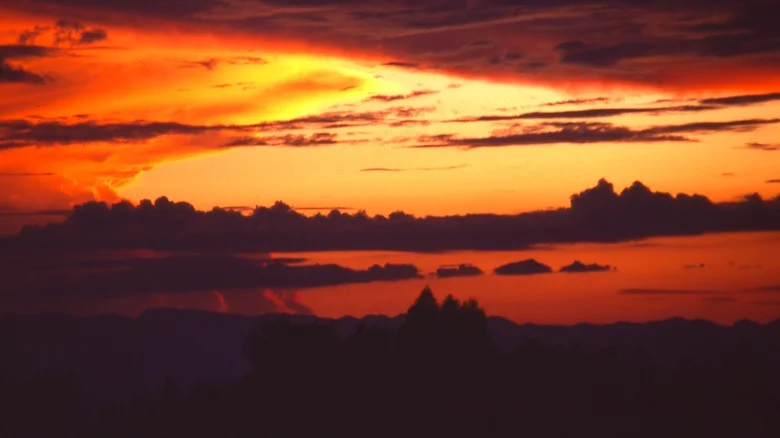
Lake Kivu, situated between Rwanda and the Democratic Republic of Congo in Africa, holds a deadly secret. It has the potential to explode in a phenomenon called hydrothermal venting, which occurs in some lakes when toxic gases trapped by water pressure suddenly burst forth, releasing a deadly cloud of gas. This hasn't happened at Lake Kivu in several thousand years, but it did happen at two other lakes in Cameroon in the 1980s, killing nearly 2,000 people and livestock.
In the case of Lake Kivu, its size, approximately 1,000 square miles, and the vast amounts of carbon dioxide, methane, and sulfuric acid it contains, pose a far more deadly threat than what happened in Cameroon in the 1980s. Millions of people living in the lake area could be in mortal danger of suffocation if the lake erupts and releases a cloud of gas. This ticking time bomb could be triggered by an earthquake or volcanic eruption.
Lake Salton
Unlike some of the exotic lakes that form naturally, Lake Salton in Southern California is a man-made disaster. This lake, the state's largest at nearly 350 square miles, was formed in 1905 when the Colorado River overflowed irrigation canals and poured into a portion of a desert basin, creating the lake. For years, Lake Salton was the site of numerous resorts, but today it is left with decaying dead fish and nearby ghost towns like Bombay Beach. Lake Salton is a downstream lake, meaning there is no outflow. It is also a highly saline mixture due to evaporation as the lake dries up, and contains tons of industrial agricultural chemicals from nearby farmlands.
The lake regularly releases clouds of dust filled with chemicals, resulting in poor air quality. Although some aquatic life remains, an estimated 97% of the fish population has died. Decaying dead fish now cover the shores in some areas. What was once a bustling resort with fishing, boating, and swimming activities is now deserted, with abandoned buildings and an eerie atmosphere surrounding it.
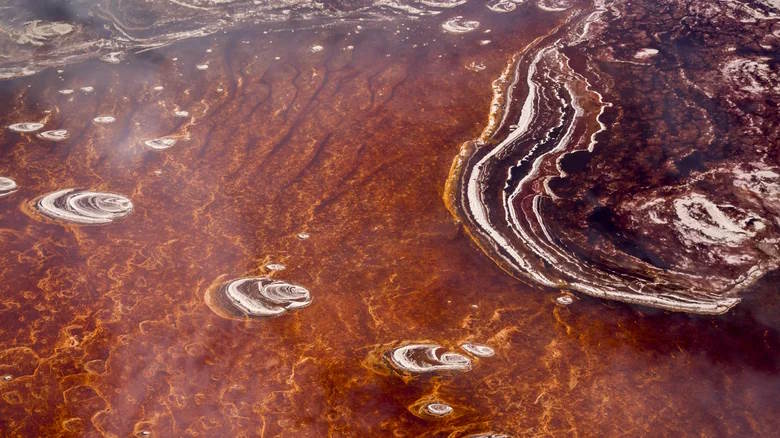
The red lake of Natron contains corrosive substances
Tanzania's Lake Natron, located near the African nation's border with Kenya, is a unique body of water for many reasons, but it's not a place you'd want to swim. The water is highly alkaline, with a pH sometimes close to that of household bleach. Swimming there can cause severe burns. Additionally, the water often appears red due to a type of red algae that thrives in this environment.
But what makes Lake Natron even more eerie is its ability to mummify animals that die in or near the water. The lake contains high levels of natron, a sodium carbonate that not only gives the lake its name but was also used by the ancient Egyptians in their mummification process. Animals that die in or near the lake often wither and dry out from being immersed in natron, which absorbs fluids and fats, leaving the carcasses preserved. There is some wildlife in this harsh environment, including tilapia adapted to life in the lake and thousands of flamingos that come there to breed.
The mysterious ruins of Roopkund Lake
Nestled high in the Himalayas, at the foot of one of India's highest mountains, Trisul, lies Roopkund Lake, teeming with skeletons. Though often covered in snow, the lake occasionally melts, revealing its dark secrets. Scattered within and around the lake are hundreds of human skeletons. It's estimated that as many as 800 people died there. In some cases, remnants of flesh remain among the scattered skeletons, and some are even better preserved, creating a macabre scene. How these people ended up there remains a mystery. Things became even stranger when scientists conducted DNA research on 38 skeletons in 2019.
They discovered that there were men and women from three different ethnic groups who died at the lake at different times in history. The first group, of South Asian origin, died there around 800 AD. Researchers believe they may have been a group of Hindu pilgrims visiting a temple of the mountain goddess Nanda Devi. The remaining group, who died there around 1800 AD, included people of Eastern Mediterranean origin and one person of Southeast Asian origin. The cause of their deaths is also a mystery. Research can only conclude that they were unlikely to have died from an epidemic. The lake containing the remains remains a haunting mystery.
Final Thoughts
Understanding the world's most terrifying lakes makes it easier to evaluate the information and apply the most relevant recommendations. Focus on the key points above and verify details that may change over time.
FAQ
What is the world's most terrifying lakes?
Explore the world's most terrifying lakes, including the key concepts, practical examples, important considerations, and useful guidance.
What key points does this article cover?
The article focuses on Boiling Lake is untouchable because it's too hot, Lake Kivu could explode, Lake Salton, with practical explanations and examples.
How can you use this information in practice?
Use the explanations to compare options, verify important details, and make a more informed decision. Apply the recommendations that best match your goals and situation.
Related Articles
 Anime World Simulator: Full Latest Giftcode and How to Redeem Code11 minutes read
 Why Do Rivers Never Flow in a Straight Line but Like to Twist?5 minutes read
 Ni No Kuni: Complete Guide5 minutes read
 Ni No Kuni: Cross Worlds - How to Turn Off Auto-Battle and Auto-Play4 minutes read
 Outer Worlds - Peril on Gorgon DLC: Complete Guide10 minutes read
 How to Create a Movable 3D World with Just a Simple Prompt4 minutes read
Reader Comments 0
Sign in with email or Google to join the discussion.