Table of Contents
OpenClaw – a personal AI assistant gaining attention in China – demonstrates a new trend in the artificial intelligence industry: compact, easy-to-deploy…
A new artificial intelligence tool called OpenClaw is rapidly gaining attention in the tech community. This digital assistant was developed by a young inventor born in Austria, and was later acquired and further developed by the American technology company OpenAI.
OpenClaw is built on an AI agent model – that is, an artificial intelligence agent capable of performing many tasks directly on the user's computer, instead of just answering questions like conventional chatbots.
The emergence of OpenClaw also reflects a new direction in the field of AI in China. Instead of just racing to build massive models requiring enormous computing power, many developers there are focusing on creating compact, easy-to-deploy tools that serve specific needs in daily life or work.
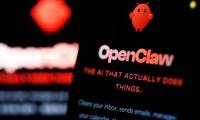
Unlike AI applications that only operate when users input requests, OpenClaw can automatically perform many processes such as managing emails, controlling web browsers, or coordinating between messaging applications to complete assigned tasks. The tool's red lobster icon has led the Chinese user community to give it the rather interesting nickname: 'AI lobster'.
On March 9, China's national supercomputing network – a state-backed system designed to run digital models at low cost – announced that OpenClaw has been connected to popular work platforms such as ByteDance's Feishu and Tencent's WeCom. This integration allows the AI assistant to directly participate in enterprise workflows.
Also on this day, technology giant Tencent Holdings introduced a new AI system called WorkBuddy. This is an AI agent designed to integrate with popular work and messaging applications in the country. According to Tencent, users only need about a minute to set up the AI assistant and connect it to applications such as QQ.
Previously, Xiaomi also announced that it was testing a mobile AI assistant called miclaw. This tool is built on Xiaomi's own AI model and deeply integrated with the company's device ecosystem. Users can use this assistant to plan trips, manage schedules, or control smart home devices.
Chu Hongyi, founder of the cybersecurity firm 360 Security Group and a member of the National Committee of the Chinese People's Political Consultative Conference, believes that the emergence of OpenClaw has helped transform cloud-based AI systems into personal assistants that can run directly on each user's computer.
According to him, advanced AI models were previously only available to large technology corporations due to high operating and infrastructure costs. However, tools like OpenClaw are helping to lower the barriers to access, allowing small businesses and individual users to leverage AI more easily.

Interest in OpenClaw in China was evident when nearly 1,000 people gathered outside Tencent's headquarters in Shenzhen for a free software installation event. On e-commerce platforms, remote OpenClaw installation services are currently being sold for between 50 and 300 yuan, while in-person installations can cost up to around 500 yuan.
Professor Chu Di, from Hangzhou University of Electronic Technology and a delegate to the National People's Congress, believes that the rapid popularity of 'AI lobster' stems from the fact that the tool accurately addresses the real needs of the market.
According to him, while the US is primarily focused on developing increasingly large AI models requiring enormous computing power, China is pursuing a different path: building lightweight, cost-effective, and easily deployable models in specialized fields such as industrial inspection or medical diagnostics.
However, the widespread use of an AI tool originating from abroad has also raised concerns among Chinese regulators. The Ministry of Industry and Information Technology warned that some versions of OpenClaw could pose high security risks, especially if the system is improperly configured and exposes sensitive user data.
With artificial intelligence rapidly shifting towards practical applications, the rise of AI agents like OpenClaw demonstrates a new trend: instead of focusing solely on massive models, the technology industry is moving towards compact yet useful tools that can act as personal assistants for individual users. Therefore, the competition to develop these 'digital assistants' is predicted to become increasingly intense in the near future.
FAQ
What is the main point of 'openclaw ai' and the emerging trend of compact digital assistants in china?
OpenClaw – a personal AI assistant gaining attention in China – demonstrates a new trend in the artificial intelligence industry: compact, easy-to-deploy...
Why is this development important?
Key takeaway: OpenClaw – a personal AI assistant gaining attention in China – demonstrates a new trend in the artificial intelligence industry: compact, easy-to-deploy...
What are the key takeaways?
A new artificial intelligence tool called OpenClaw is rapidly gaining attention in the tech community.
Related Articles
 Is OpenClaw Right for You?: What You Need to Know13 minutes read
 Proficient in OpenClaw: What You Need to Know10 minutes read
 Learn with OpenClaw: What You Need to Know15 minutes read
 How to Install OpenClaw on a VirtualBox Virtual Machine in a Very Simple Way10 minutes read
 7 Practical Applications of OpenClaw You Should Know6 minutes read
 What Can Tecno's New AI Agent Do That ChatGPT Can't?6 minutes read
Reader Comments 0
Sign in with email or Google to join the discussion.